Country Selector
Please enter a valid location
- The Hybrid Revolution
- Crop Science Golden Age
- The Biotech Boom
- Advanced Breeding
1920 - 1945
The Hybrid Revolution
As TV, penicillin, and modern aviation emerged, Henry A. Wallace and the founders of Pioneer revolutionized farming with hybrid seed corn — laying the foundation for the Pioneer® brand we know today.
The One That Started It All
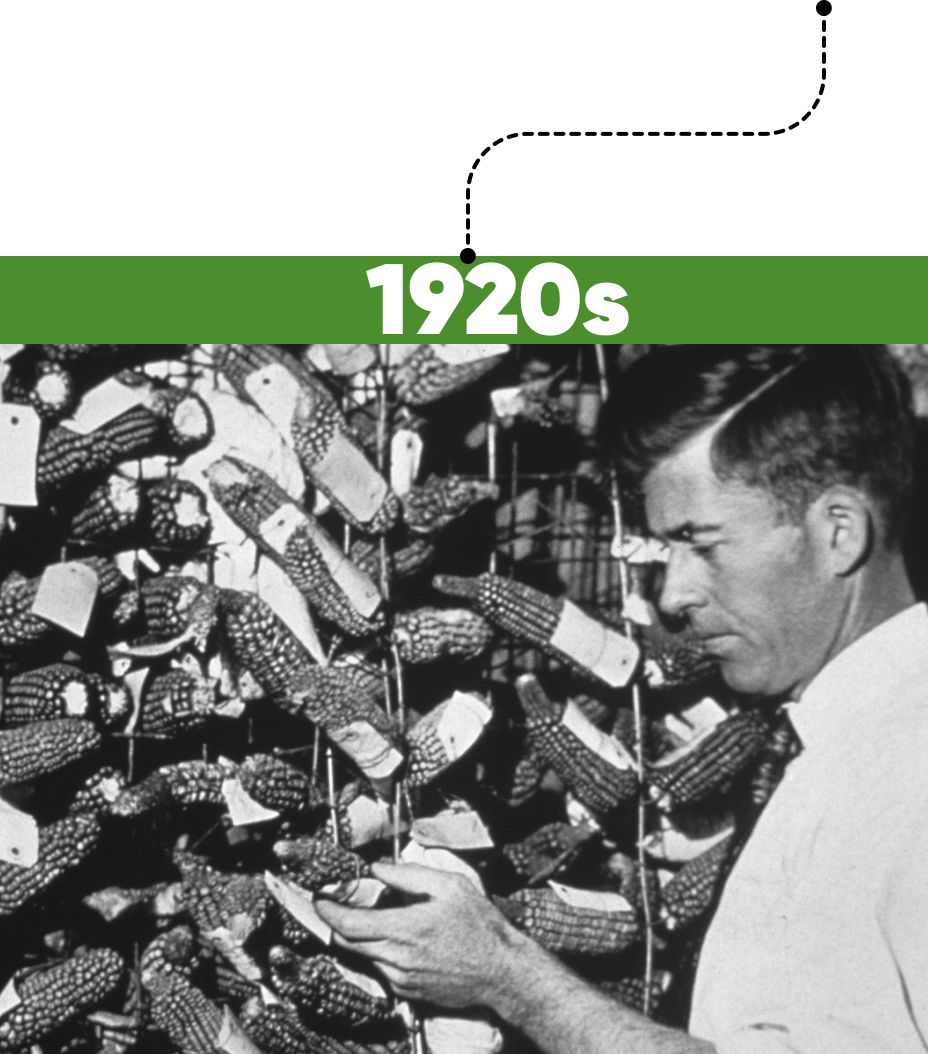
Henry A. Wallace develops a high-yielding hybrid he called “Copper Cross.”
Copper Cross was a breakthrough that helped farmers increase productivity and paved the way for the hybrid seed market.
It wasn’t just a new seed—it was the start of a new era in farming.
Taking Home Gold
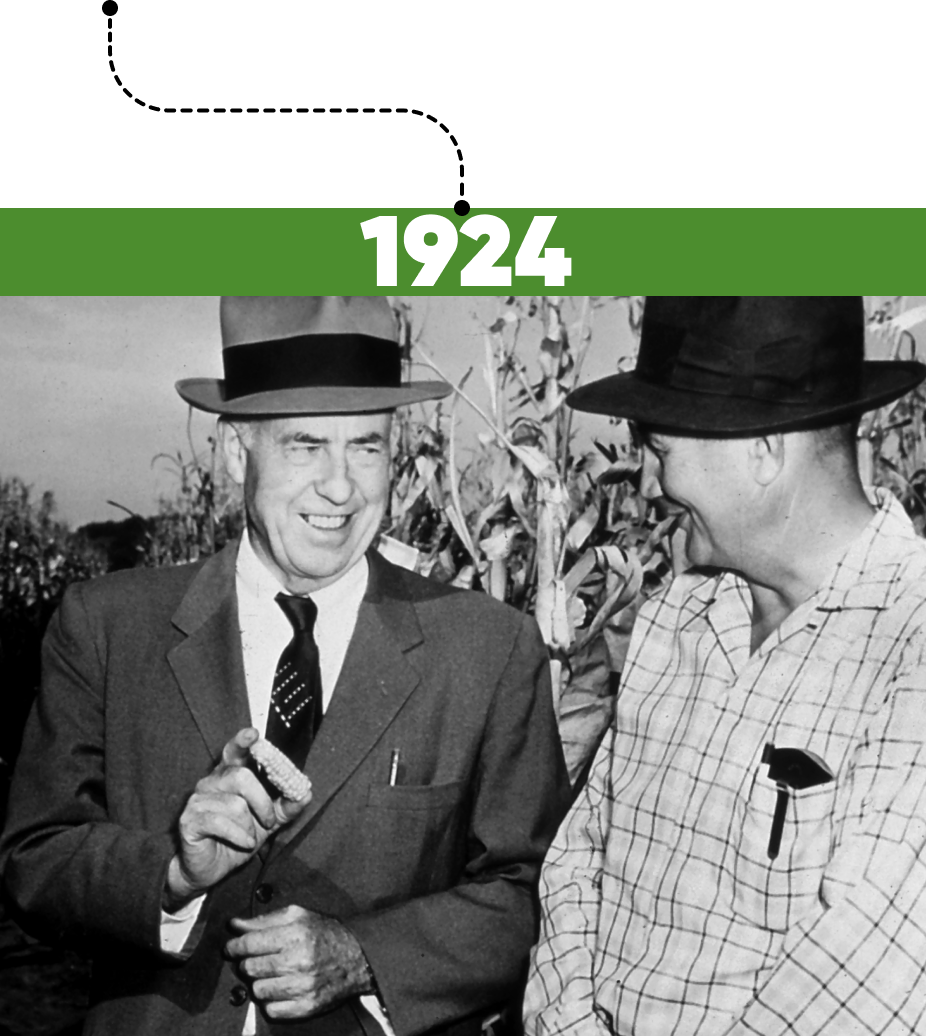
Copper Cross becomes the first hybrid to win the gold medal in the Iowa Corn Yield Contest conducted by Iowa State.


One For The Record Books
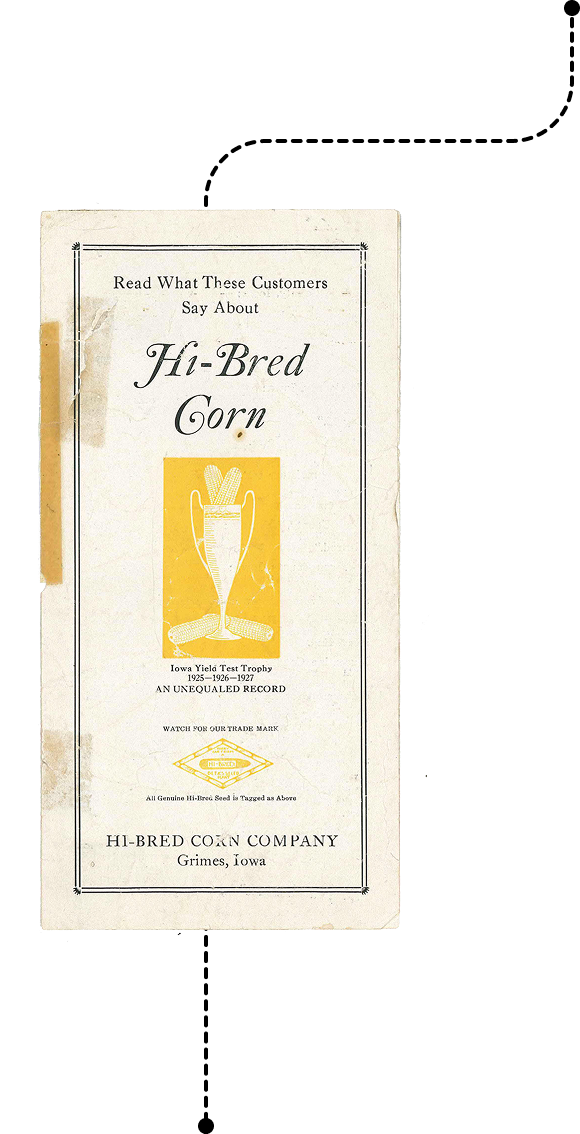
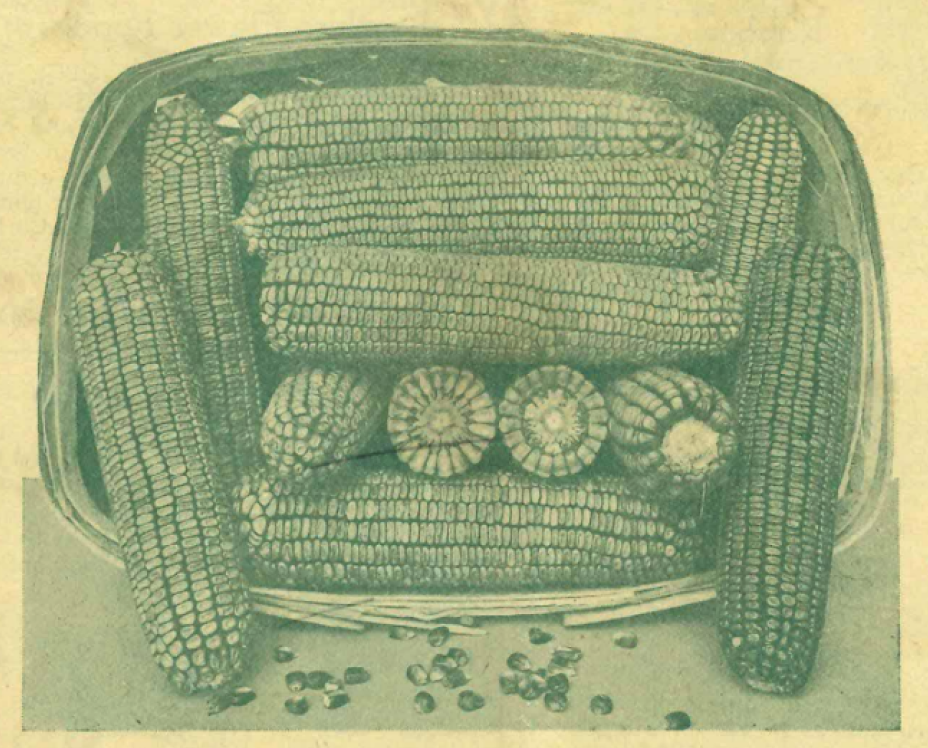
Henry A. Wallace believed the best corn wasn’t always the prettiest — it was the most productive. That bold idea reshaped how corn was judged and helped spark a shift from beauty to bushels. One-hundred years later, we’re still proud to champion yield contests.

No one played a greater role in the commercialization and farmer adoption of hybrid corn than Henry A. Wallace, founder of what would become Pioneer.
As a boy, Wallace was inspired by family friend George Washington Carver, who sparked his interest in science and agriculture—especially corn. By high school, Wallace was experimenting with hybridization, aiming to develop a corn variety with higher grain yield.
At 16, he field-tested prize-winning show corn against less attractive ears. His results challenged conventional thinking by proving there was no link between appearance and yield. Wallace graduated from Iowa State College in 1910, where he became deeply interested in the emerging science of genetics. He was among the first in the world to recognize the vast potential of hybrid corn.
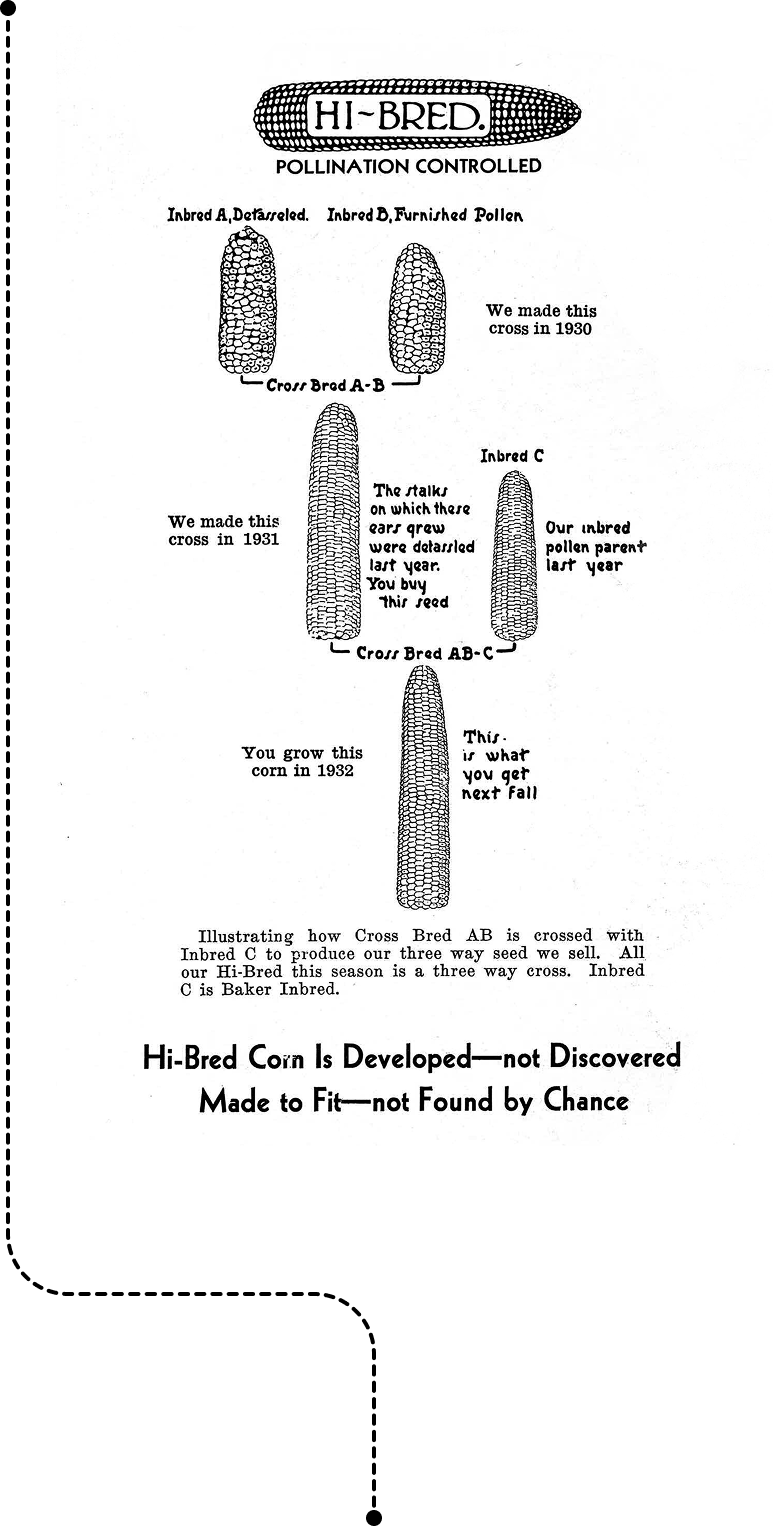
After graduation, Wallace began working on corn-breeding experiments and started breeding hybrid corn in the 1920s after visiting Edward East and Donald Jones at the Connecticut Agricultural Experiment Station. He began developing hybrid corn, teaching himself statistics to better analyze his results. The outcome: Copper Cross, the first-ever commercial hybrid corn in the Midwest U.S.
INNOVATION ELSEWHERE: 1928
Scottish physician and microbiologist Alexander Fleming discovers penicillin at a London hospital.
INNOVATION ELSEWHERE: 1930s
American inventor Philo Farnsworth successfully transmits the first electronic television signals.
Pioneer Hi-Bred 307: The One That Survived The Dust Bowl
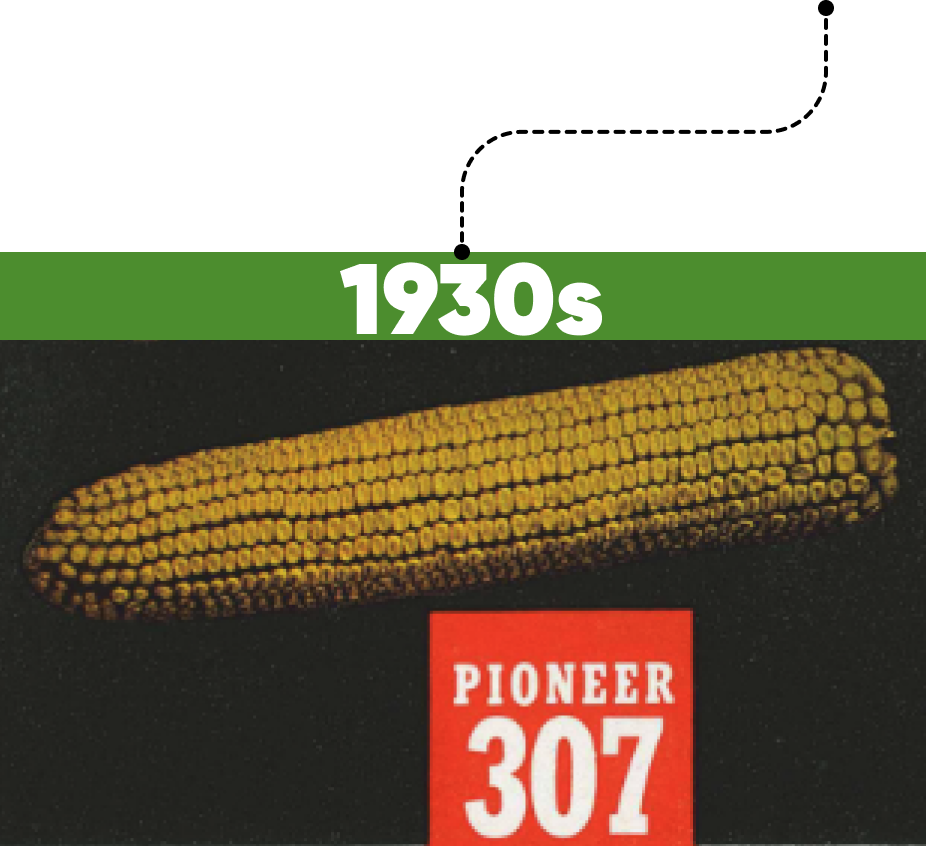
Introduced in the 1930s, Pioneer Hi-Bred 307 quickly gained popularity for its exceptional yield potential, adaptability, and drought tolerance — especially on sandy soils like those on the Johnston, Iowa farm where it was developed. Its rise coincided with one of the most punishing agricultural disasters in American history: the Dust Bowl.
As drought and dust storms devastated the Midwest, 307 stood out. In 1936, when nearly 30% of Iowa’s corn acres failed, 307 thrived—thanks to its deep roots and strong stalks—delivering a lifeline to farmers facing widespread crop loss.
Its performance under extreme conditions didn’t just earn trust — it changed minds. 307 proved that hybrid corn wasn’t just promising, it was essential. This undeniable performance sparked a rapid transformation.
Despite corn prices dropping by 75% over the decade, hybrid adoption skyrocketed across the Iowa farmland—from 6% in 1935 to 50% by 1938, and nearly 100% by 1942.
With over half a million bagged units sold, it remained in the lineup until 1963 — becoming one of the longest-running hybrids in our 100-year history.
INNOVATION ELSEWHERE: 1930
British pilot Frank Whittle patents the jet engine, revolutionizing modern aviation.
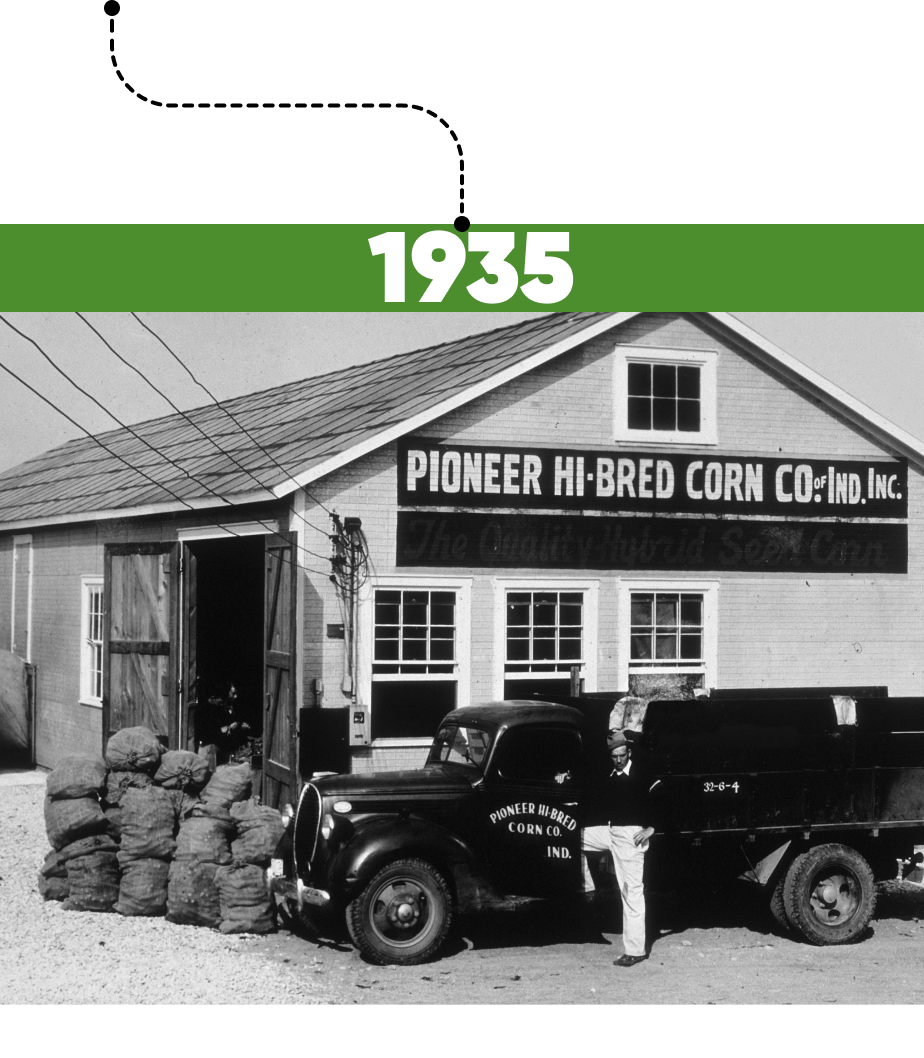
New Name. Same Dedication.
The company changes its name to Pioneer Hi-Bred Corn Company to differentiate from the numerous hybrid corn companies emerging.
Around the same time, it began expanding operations into Illinois, Indiana, and the eastern Corn Belt, laying the groundwork for a broader regional presence and future growth.


Ag Stands Together
During WWII, everyone had a role to play — including Pioneer. As food demand surged to support the war effort, Pioneer met the moment by developing high-yielding corn hybrids that helped secure a steady food supply during global shortages.
While men served overseas, women stepped into critical roles across farms and agricultural businesses, keeping production strong at home.
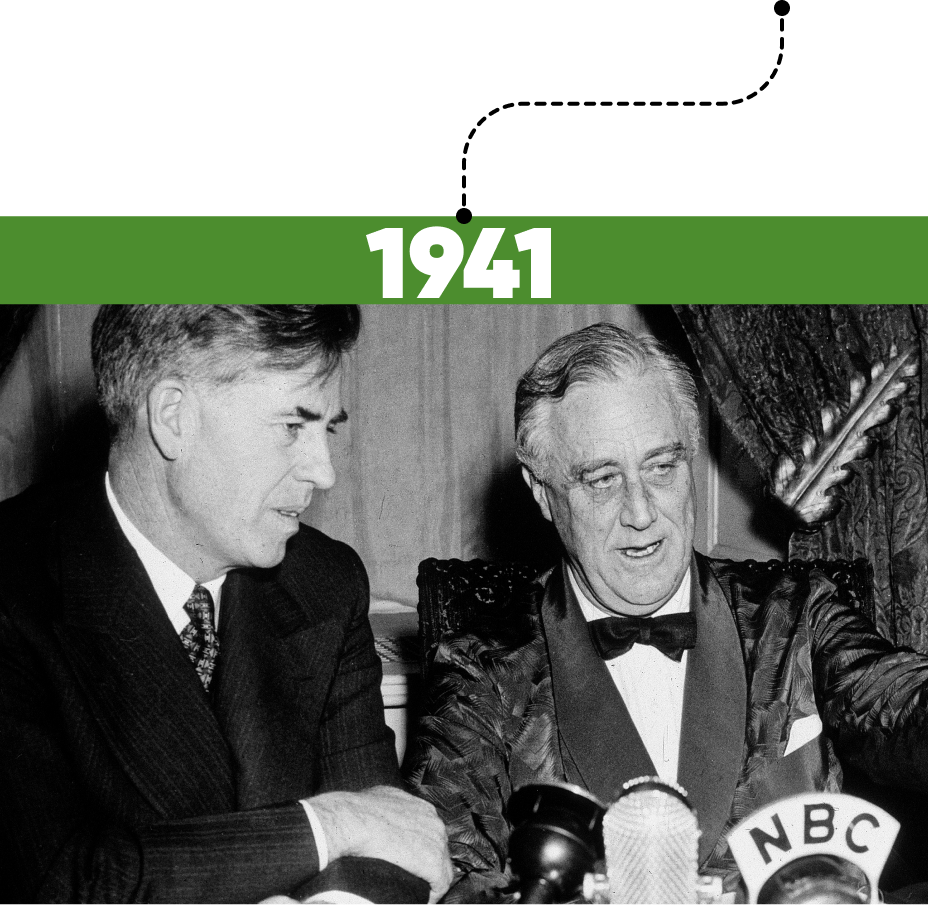
U.S. Vice President
Henry A. Wallace is elected U.S. Vice President under President Franklin Delano Roosevelt.
1946 - 1985
The Golden Age of Crop Science
As the space race took off, so did farm yields — soaring to new heights thanks to innovations like farm mechanization and nitrogen fertilizers. Pioneer pushed progress even further and explored new frontiers, expanding our crop offerings to soybeans and beyond.
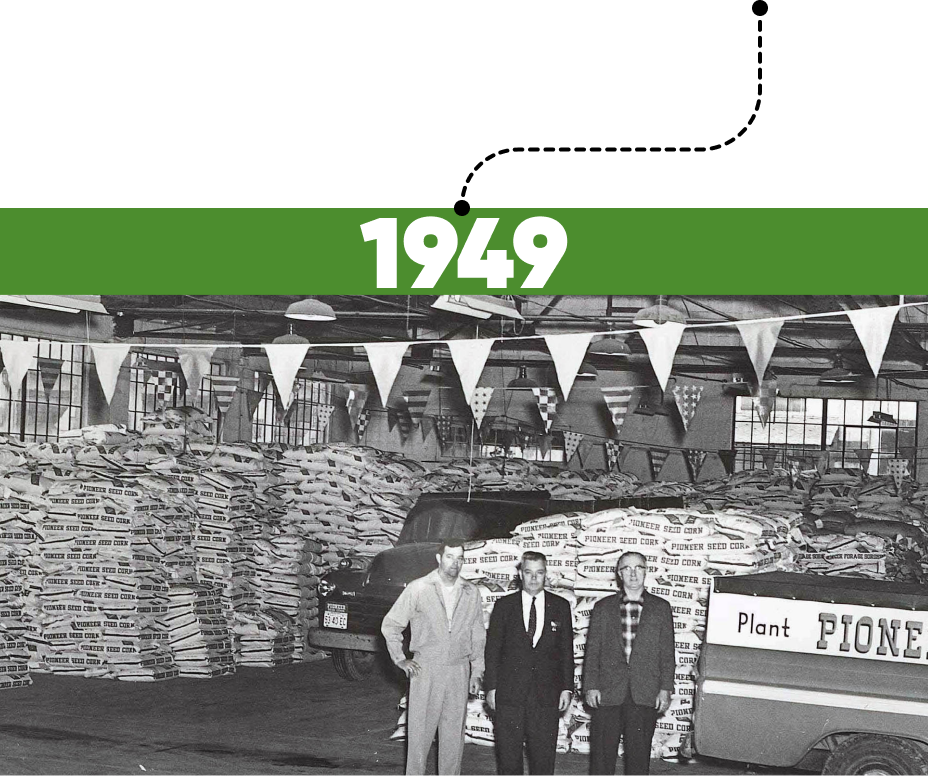
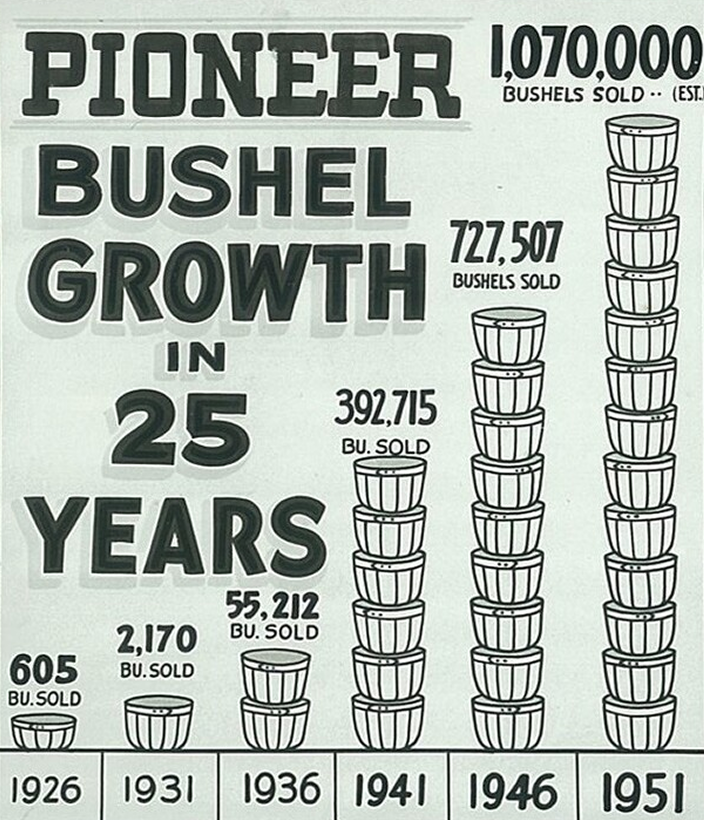
One Million Milestone
Annual sales of Pioneer seed corn in North America pass the million-unit mark.
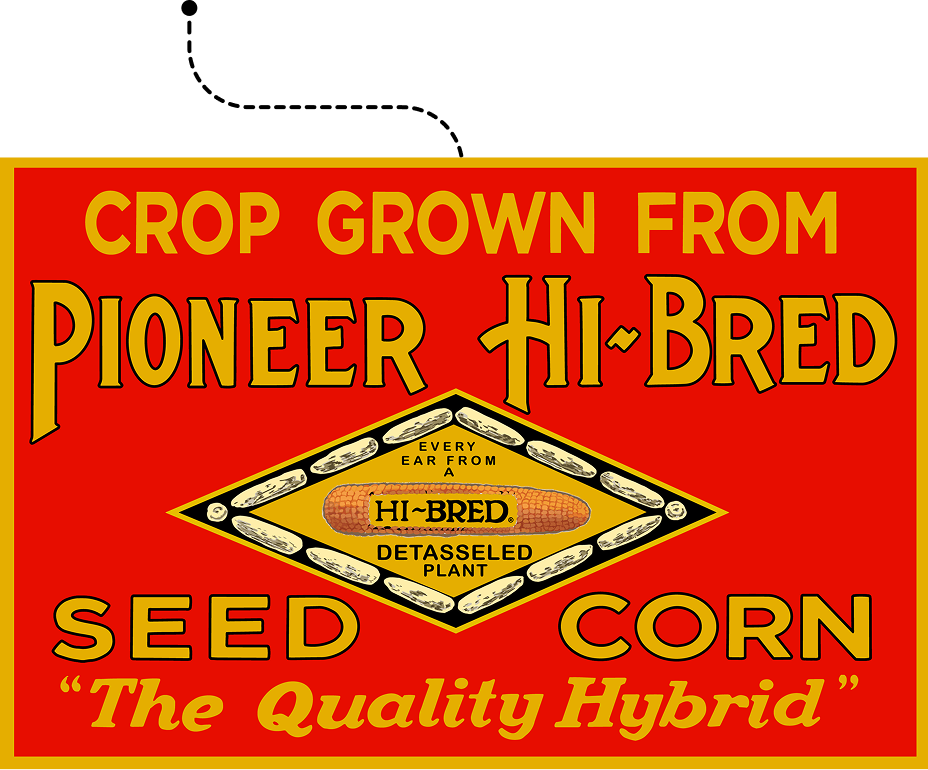
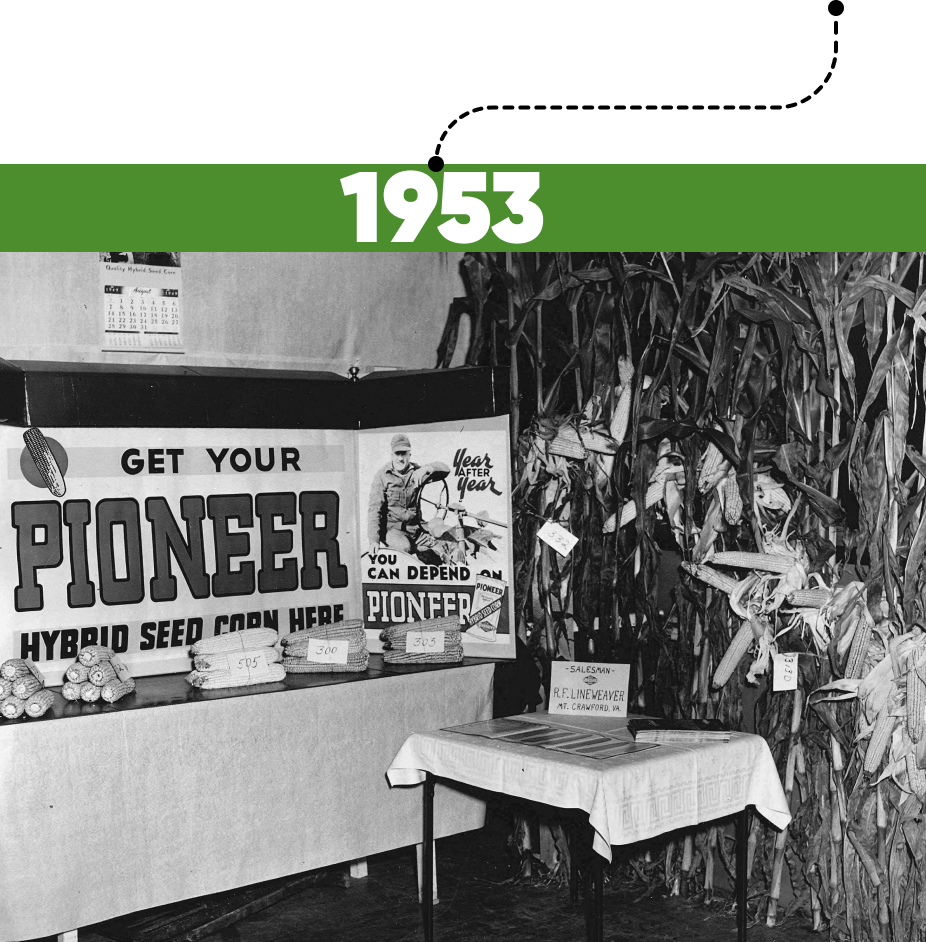
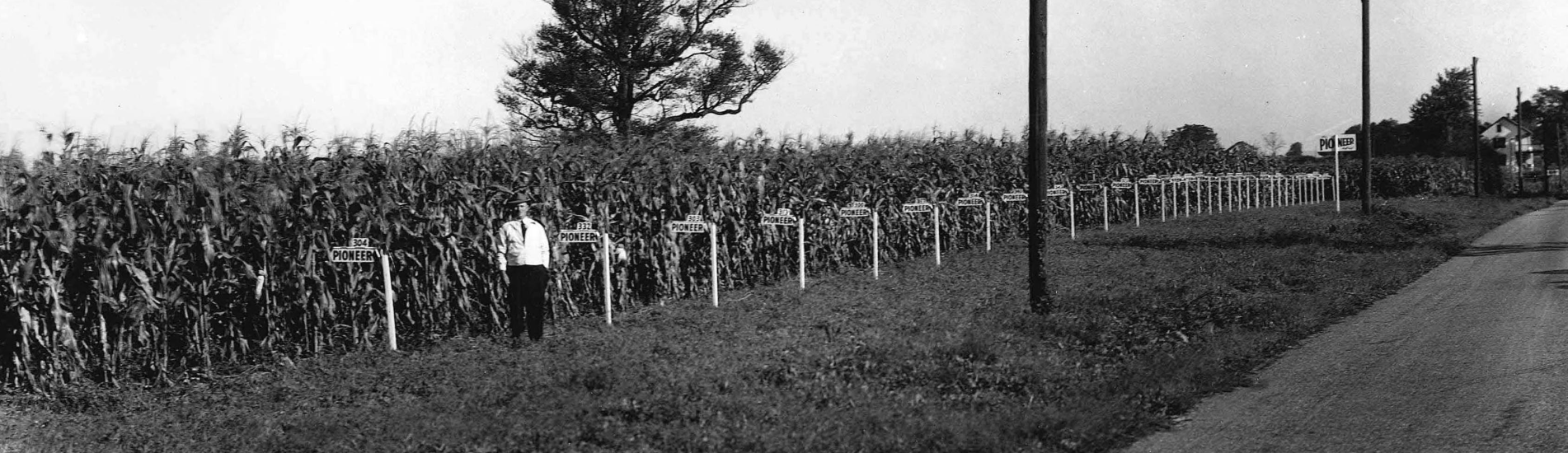
Pioneer Hi-Bred 354: The One That Raised The Bar
Pioneer Hi-Bred 354 was a standout hybrid that helped shape modern agriculture.
Known for its strong performance and adaptability, it gave farmers a dependable choice for maximizing yields.
As one of Pioneer’s key hybrids, 354 reinforced the company’s commitment to innovation, proving that better seed meant better results in the field.

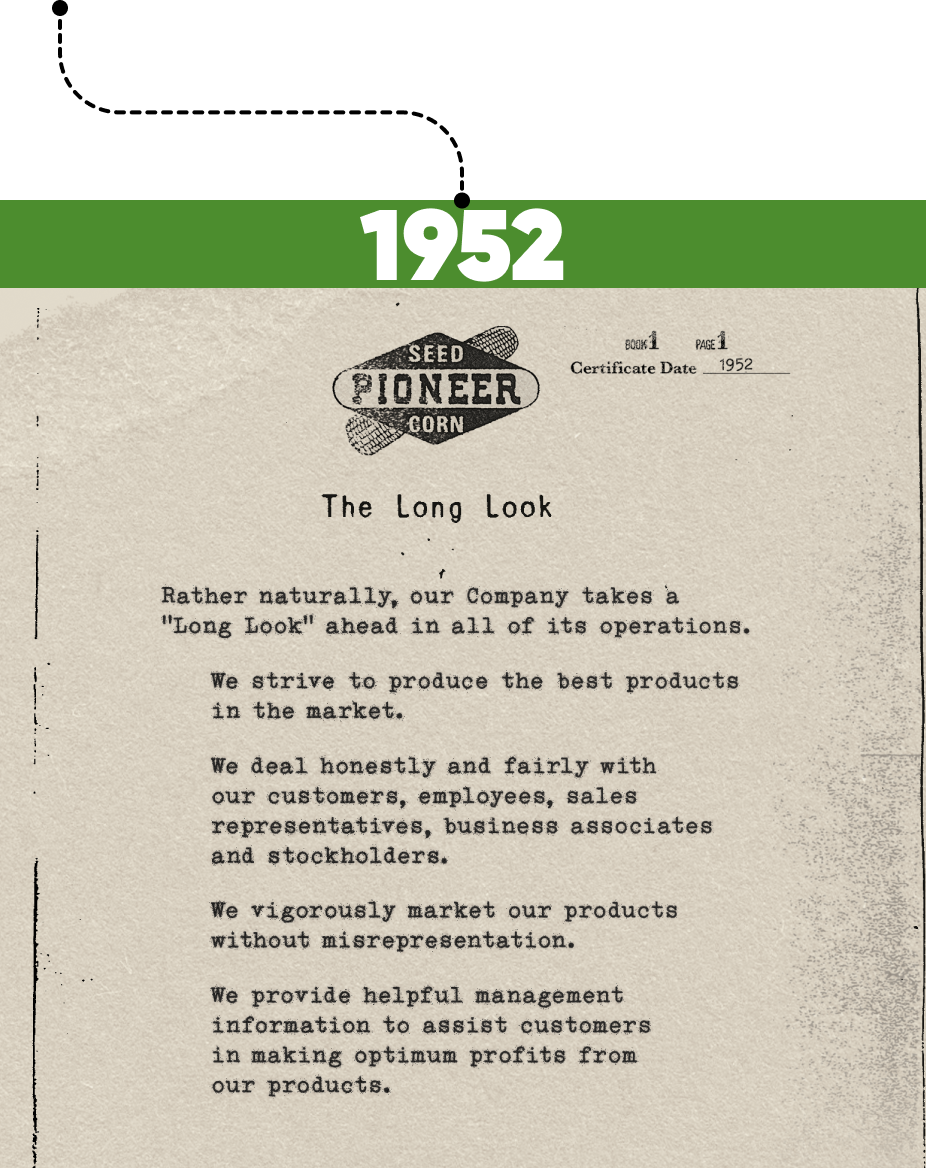
The "Long Look"
The Pioneer Long Look business philosophy was created to highlight our history and key innovations, focusing on its role in commercializing hybrid corn.
More than a mission statement, The Long Look set the standard for how Pioneer does business — with a focus on performance, ethics, transparency, and long-term farmer success.
First published as a small booklet, its four powerful statements continue to guide Pioneer’s commitment to quality, integrity, and customer profitability.
Seven decades later, its principles still shape the company’s culture and customer relationships.
INNOVATION ELSEWHERE: 1953
In the broader scientific community, biologists James Watson and Francis Crick identify the structure of DNA.
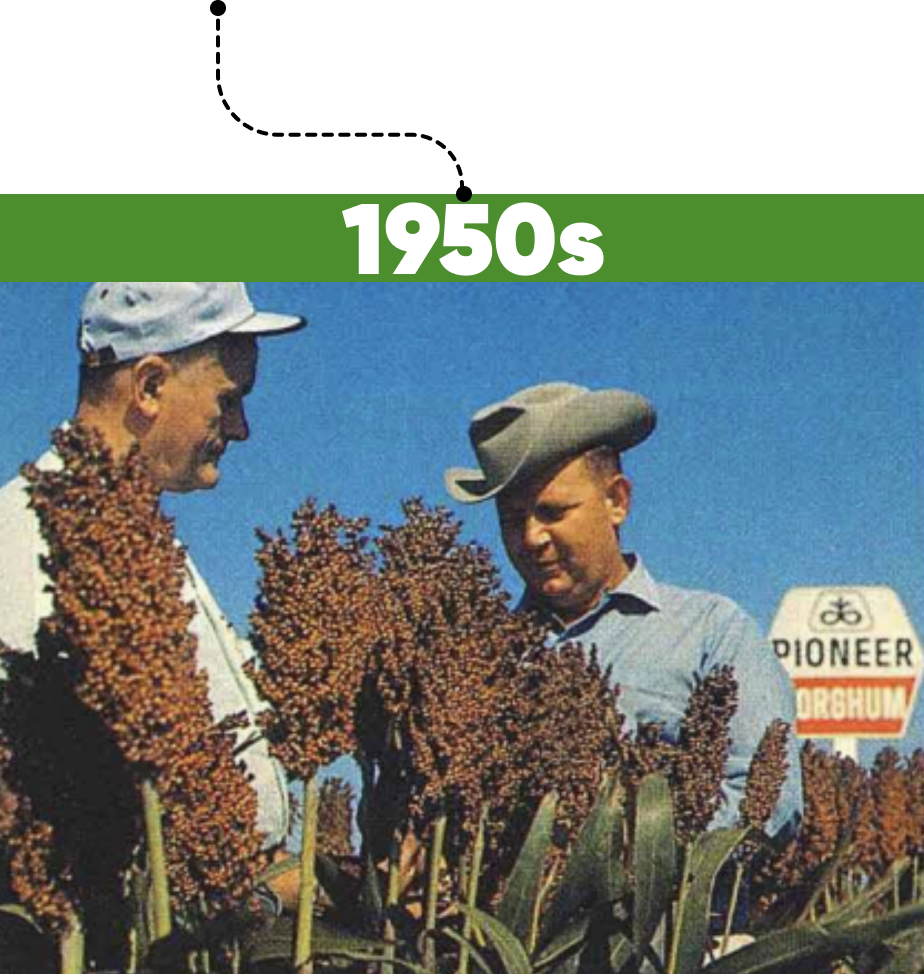
Pioneer enters the sorghum market.
Pioneer enters the sorghum market with research and hybrid breeding efforts, laying the foundation for decades of innovation in drought-tolerant grain.
INNOVATION ELSEWHERE: 1957
The space race begins with the Soviet Union’s launch of Sputnik 1, the first artificial satellite.
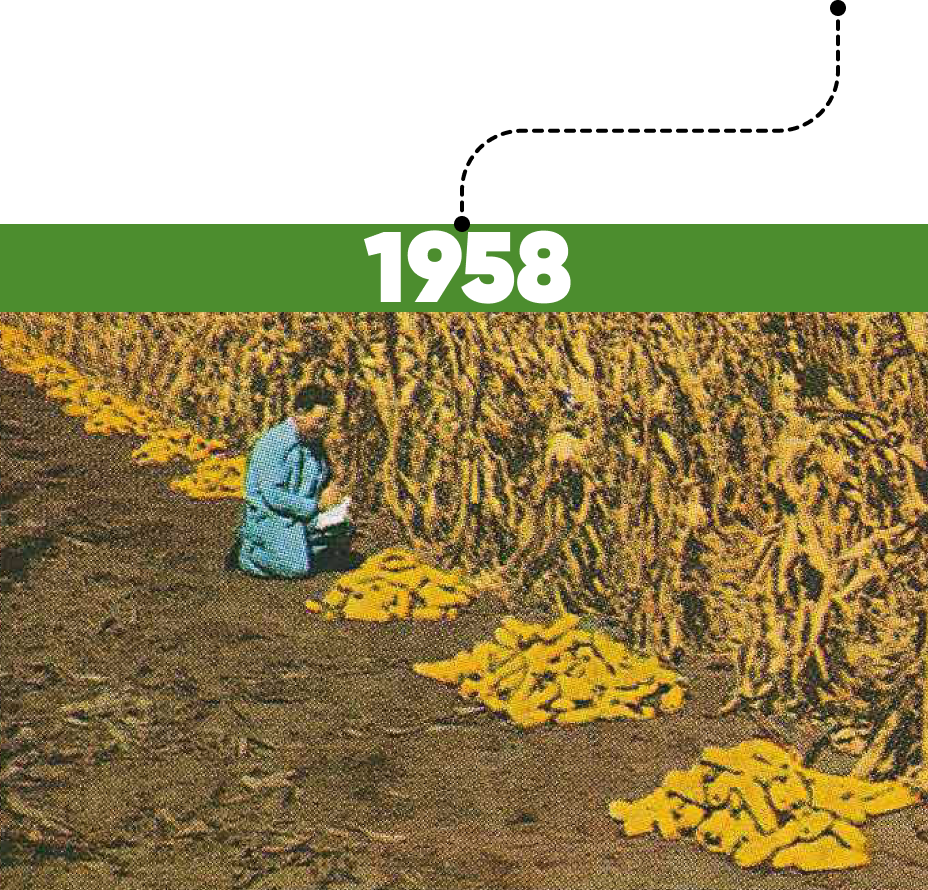
York Nebraska Research Center Opens
Pioneer opens York, Nebraska research center to enhance research efforts focused on improving drought tolerance in corn. It continues to be a cornerstone of our breeding efforts for the western half of the United States that routinely experiences limited water conditions.
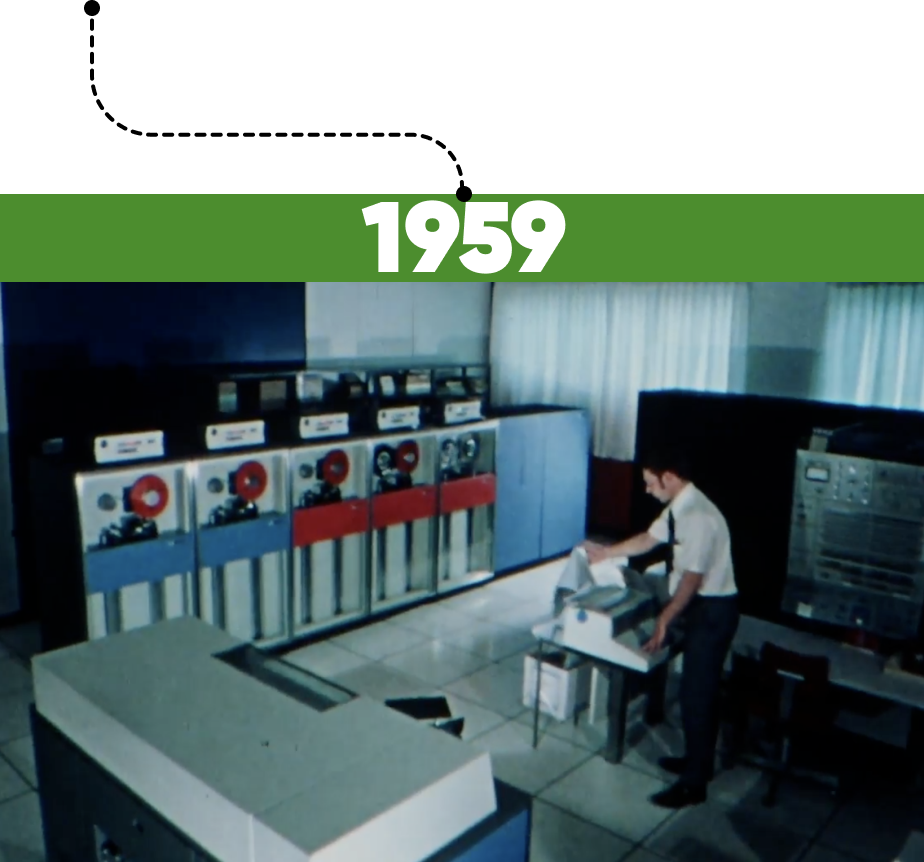
Into the Digital Age
When it comes to technology, we weren’t just early adopters — we were at the forefront. In the 1950s, we invested $20,000 with IBM to turbocharge breeding data analysis and brought home our first computer in 1961.
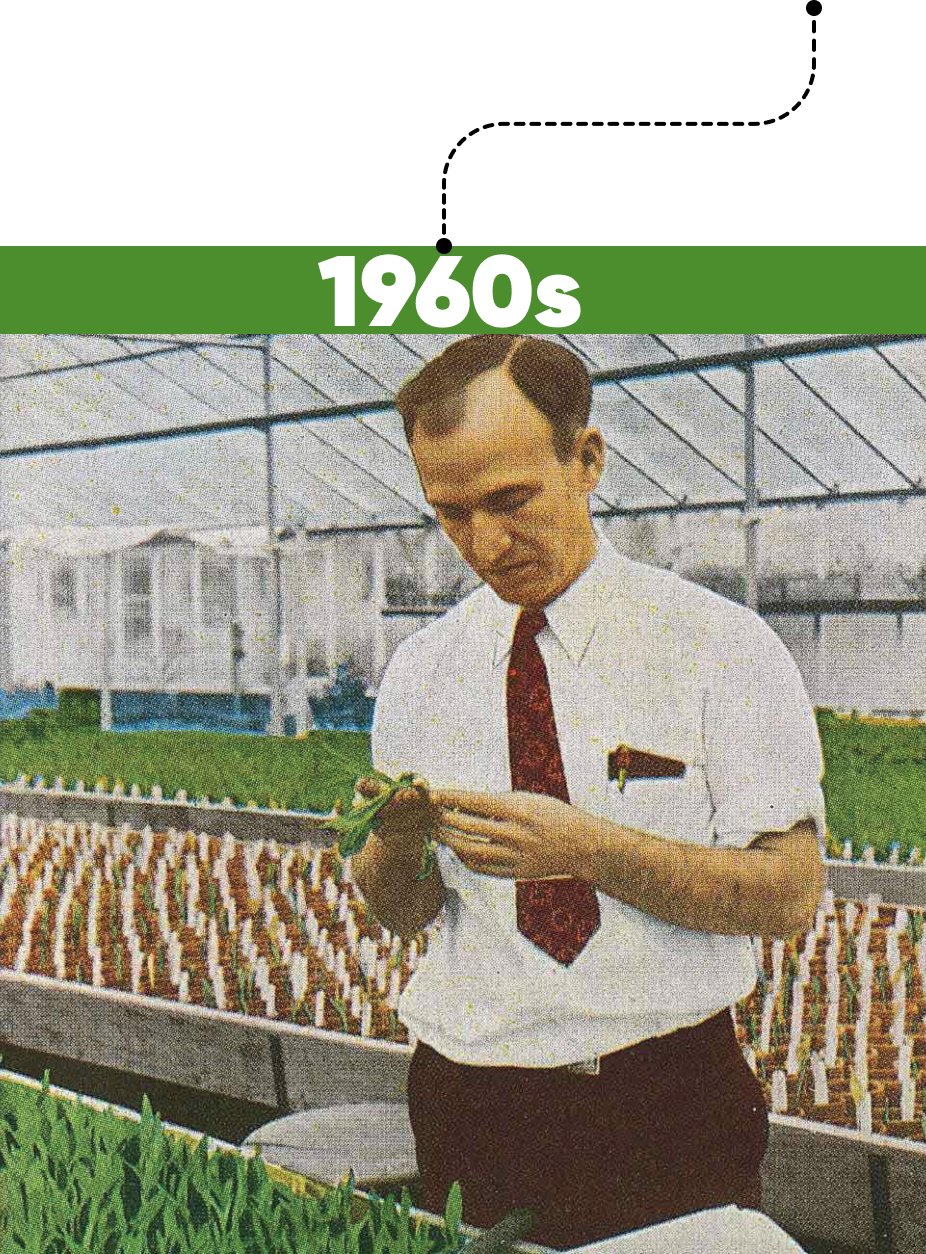
Pioneer establishes the first official winter nursery, enabling year-round seed production and accelerating genetic progress.
We set the industry standard for continuous, year-round breeding product development by establishing the first winter nursery in Argentina in the mid-1930s.
This innovation expanded in the 1950s with additional locations in Kingston, Jamaica and Homestead, Florida.
By the 1990s, winter seed production in South America became a standard part of Pioneer’s North American business model, reinforcing the company’s commitment to global agricultural leadership.
Planting the Seed for Modern Agronomy
This era marked a significant leap forward in the delivery of agronomy information, setting new standards for quality, sophistication, and coordination.
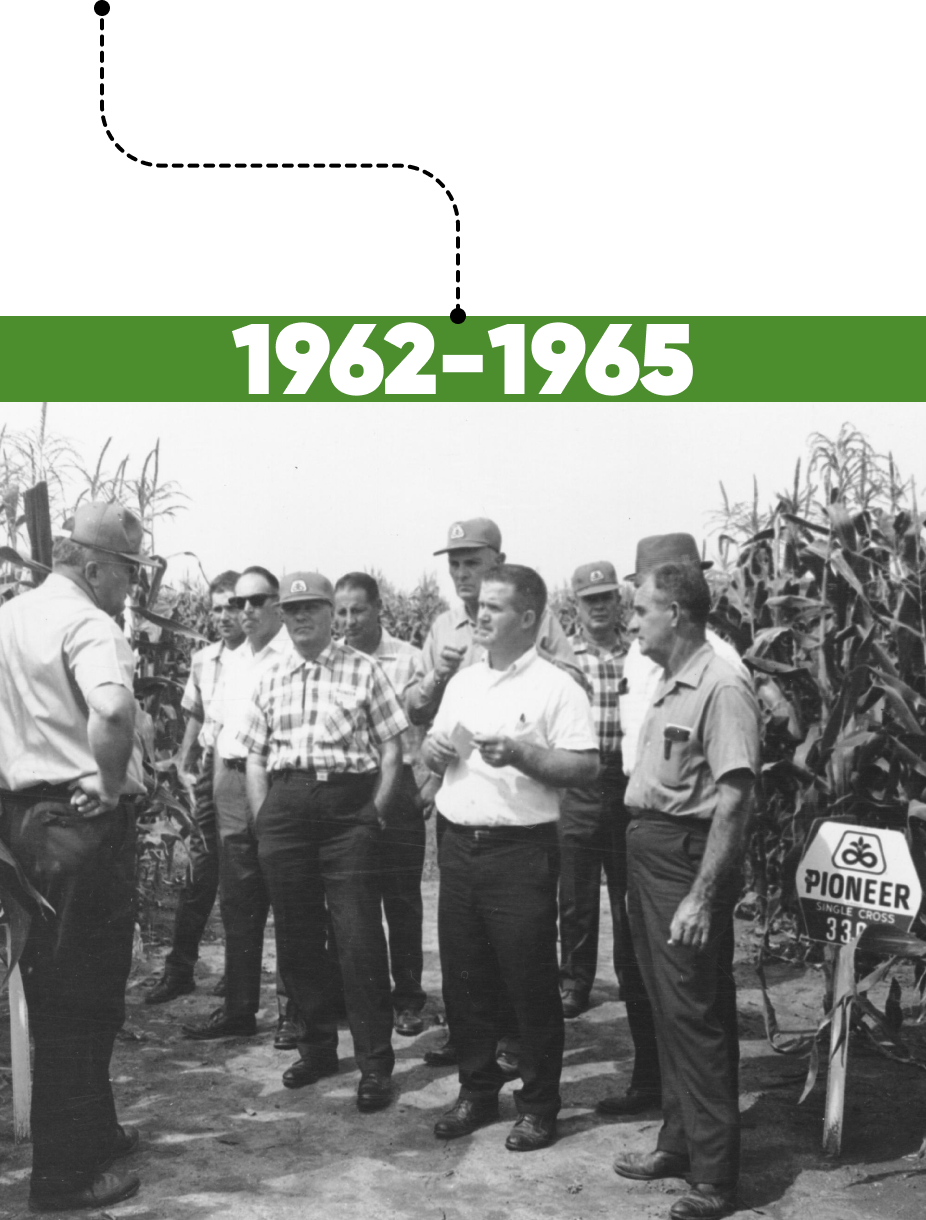
In 1962, Pioneer formed its Technical Services Department, followed by the addition of full-time field agronomists in 1965.
Early Pioneer agronomists focused on training salesmen, leading customer meetings in winter, and following up with customers during the spring.
These efforts helped establish Pioneer’s reputation for providing the highest level of agronomy support in the industry—a commitment that continues to this day.
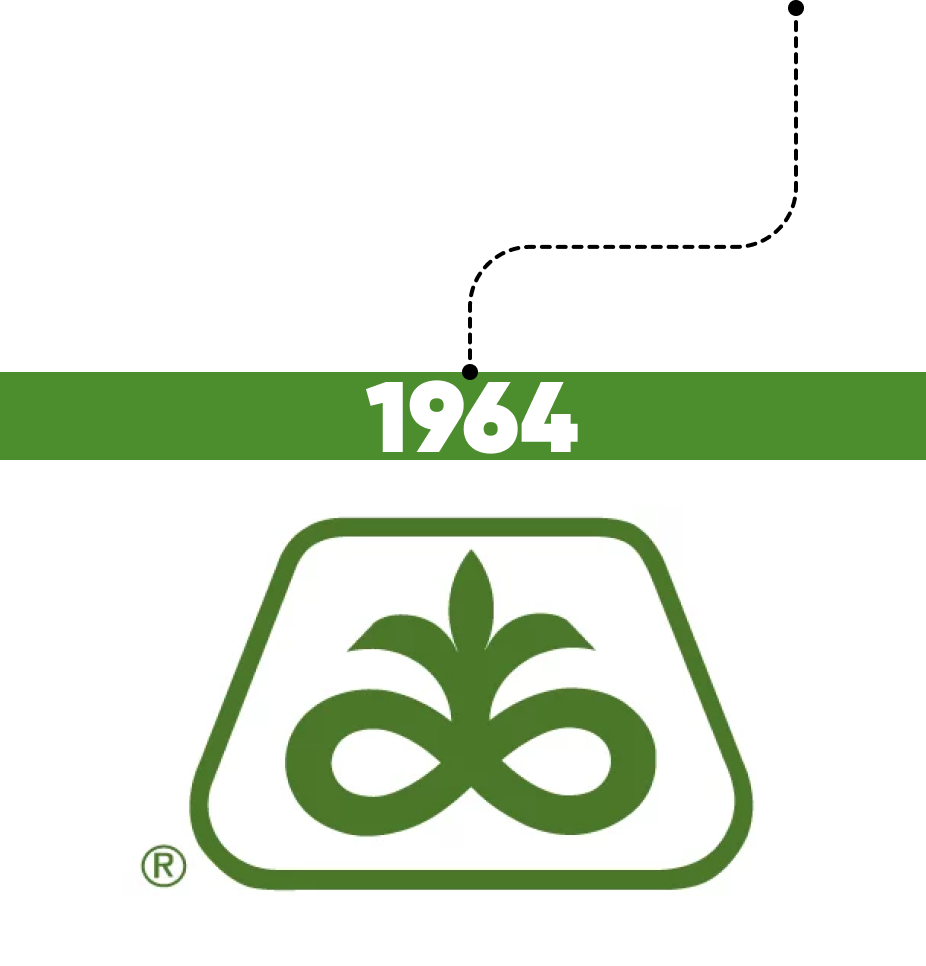
A New Symbol for Infinite Possibilities
Pioneer marks a new chapter in the brand identity with the introduction of the trapezoid symbol.
As Pioneer evolved through The Golden Age of Crop Science, so did our brand.
In 1964, the company introduced the iconic Trapezoid symbol — made up of an abstract plant and its surrounding device.
The upper portion, shaped like a flower and the symbol for infinity, represents the brand’s constant vigor and unending growth.
Together, the elements reflect Pioneer’s core promise: product improvement through continuous research.
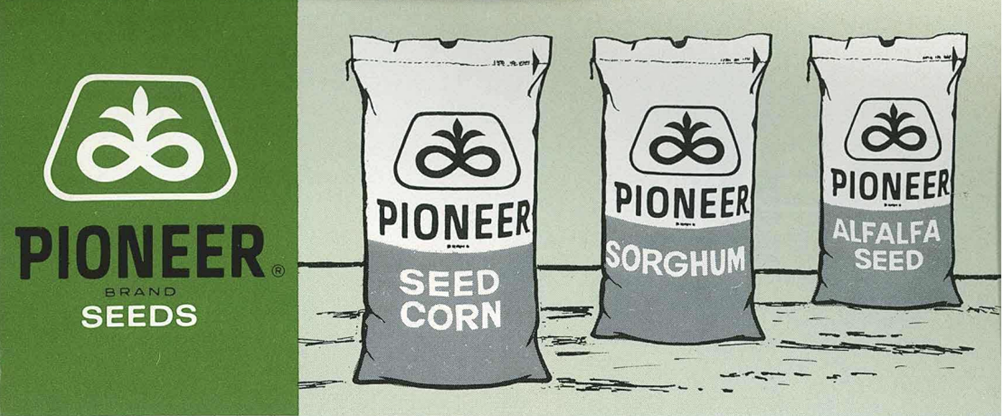
That same year, seed bags transitioned from cloth to the nowfamiliar gold and white paper design, proudly featuring the Pioneer name in green and the Trapezoid symbol — marking a new chapter in the brand’s identity.


Seed Bag Evolution
Pioneer introduced the iconic paper seed bag in the 1960s, but it had been decades in the making. In the 1940s, seed was sold in cloth bags. Then, paper was tested in the ’50s and initially rejected for being too rough and flimsy. One short-lived trial even used clear plastic — until seeds began sprouting inside! It took some trial and error, but the right bag finally took root.
Driving Ahead
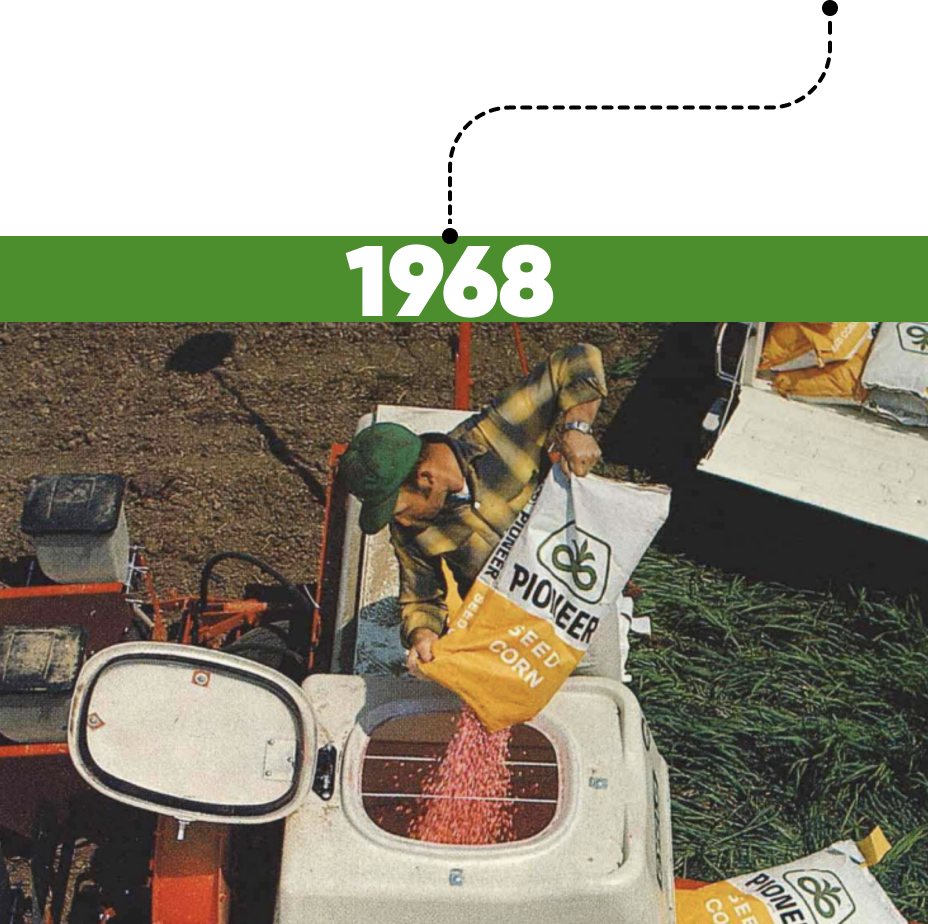
Pioneer develops the four-row cone research plot planter, revolutionizing the process by allowing a small crew to plant more plots in less time than previous methods.
Shortly after, combines were modified to rapidly weigh and sample corn during harvest, streamlining data collection.
INNOVATION ELSEWHERE: 1969
Apollo 11 astronauts Neil Armstrong and Buzz Aldrin make history by becoming the first humans to land on the moon.
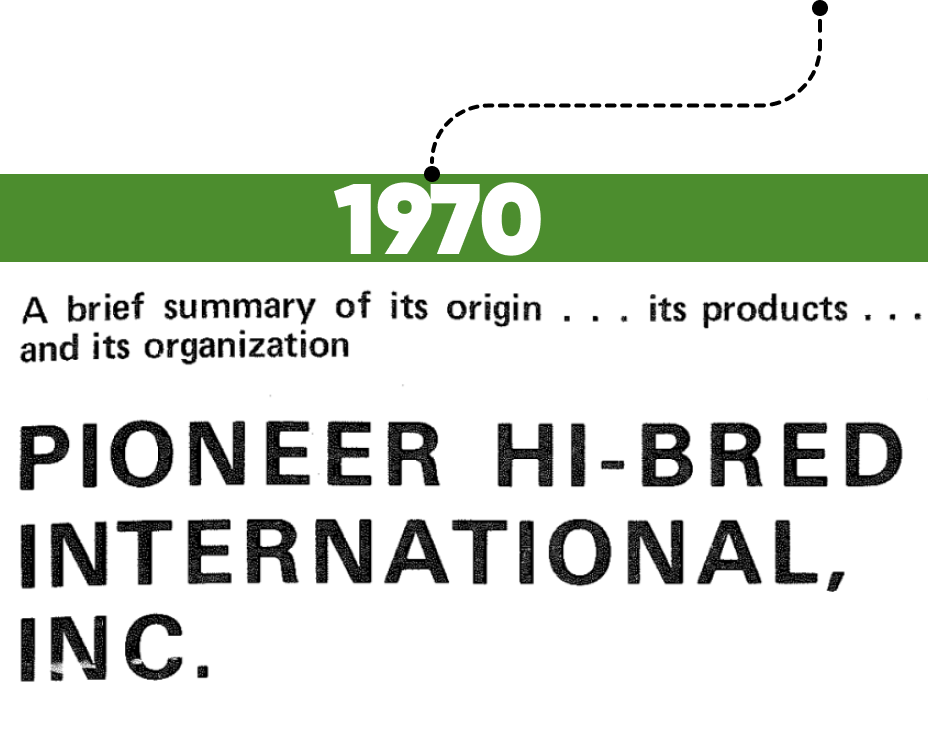
A New Name, A Global Vision
The company changes its name to Pioneer Hi-Bred International, Inc., and establishes a separate overseas subsidiary.
At the time, Pioneer had 79 scientists and technicians employed in research. There were 21 research stations for seed corn located in 13 states and five countries. Seed was produced under arrangements with 640 independent farmer growers and processed in 15 seed corn production plants located in Illinois, Indiana, Iowa, North Carolina, and Texas.
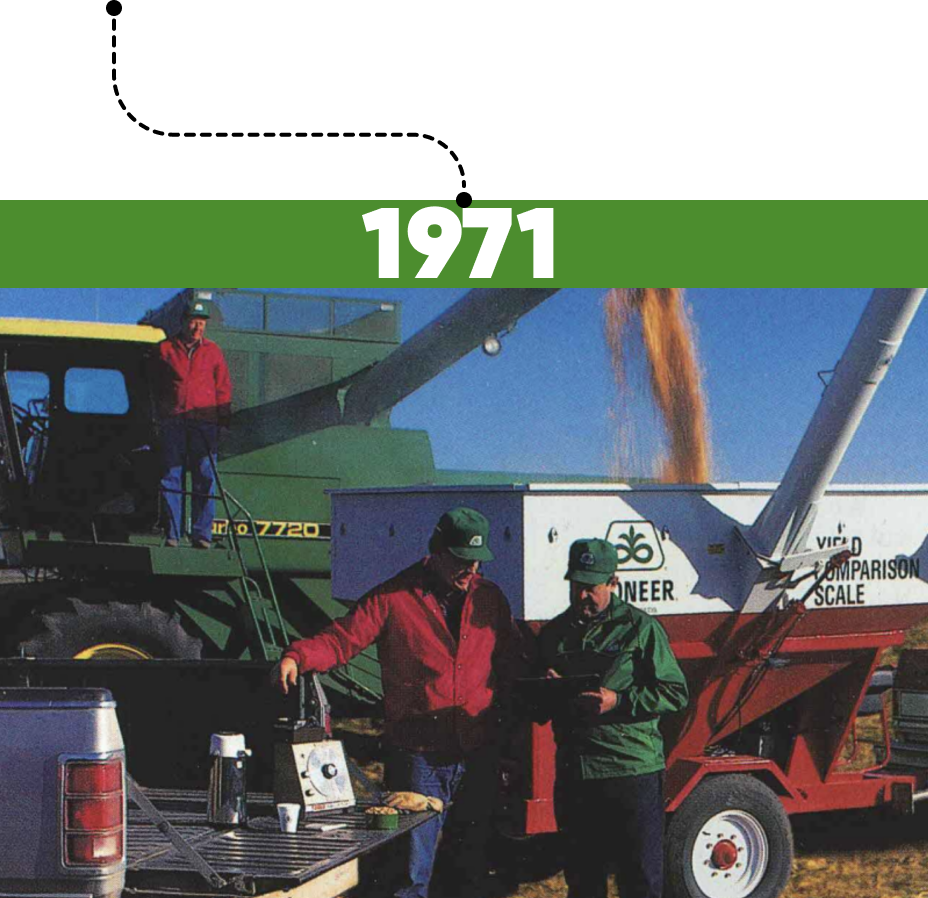
Pioneer® Brand Hybrid 3780: The One That Set A New Standard
Introduced in 1971, 3780 quickly earned a reputation among farmers for its superior performance and fast dry down.
Its popularity fueled rapid market share growth for Pioneer throughout the 1970s and into the 1980s. For over a decade, more than one million bags of 3780 were sold annually, making it the top-selling product in the Pioneer lineup until 1985.
In 1992, Farm Industry News named 3780 the most impactful corn hybrid of the previous 25 years, as determined by farmer polls—a landmark recognition of its lasting influence on modern farming operations.
A New Seed Takes Root
In a pivotal move to better serve growers and meet the rising demand for crop diversity, Pioneer officially adds soybeans to its lineup.
This milestone was the result of a strategic acquisition: the purchase of Peterson Seed Company, a trusted name in soybean breeding and production. With that acquisition, Pioneer didn’t just enter the soybean market—it did so with a strong foundation of genetics, breeding expertise, and regional insight.
It also proved our commitment to innovation not only in corn, but across every acre our customers plant. By combining our rigorous approach to research and development with Peterson’s deep soybean experience, Pioneer was able to quickly bring high-performing, agronomically strong soybean varieties to market.
That decision continues to pay dividends today. Pioneer soybeans have become a go-to option for farmers looking for yield, consistency, and localized performance — backed by the same trust that built our legacy in corn.
INNOVATION ELSEWHERE: 1971
Intel Corporations unveils the world’s first microprocessor — putting the power of a computer on a single chip.
INNOVATION ELSEWHERE: 1973
A Motorola engineer makes the first-ever mobile phone call — marking the birth of wireless communication.


Living And Learning And Planting Pioneer
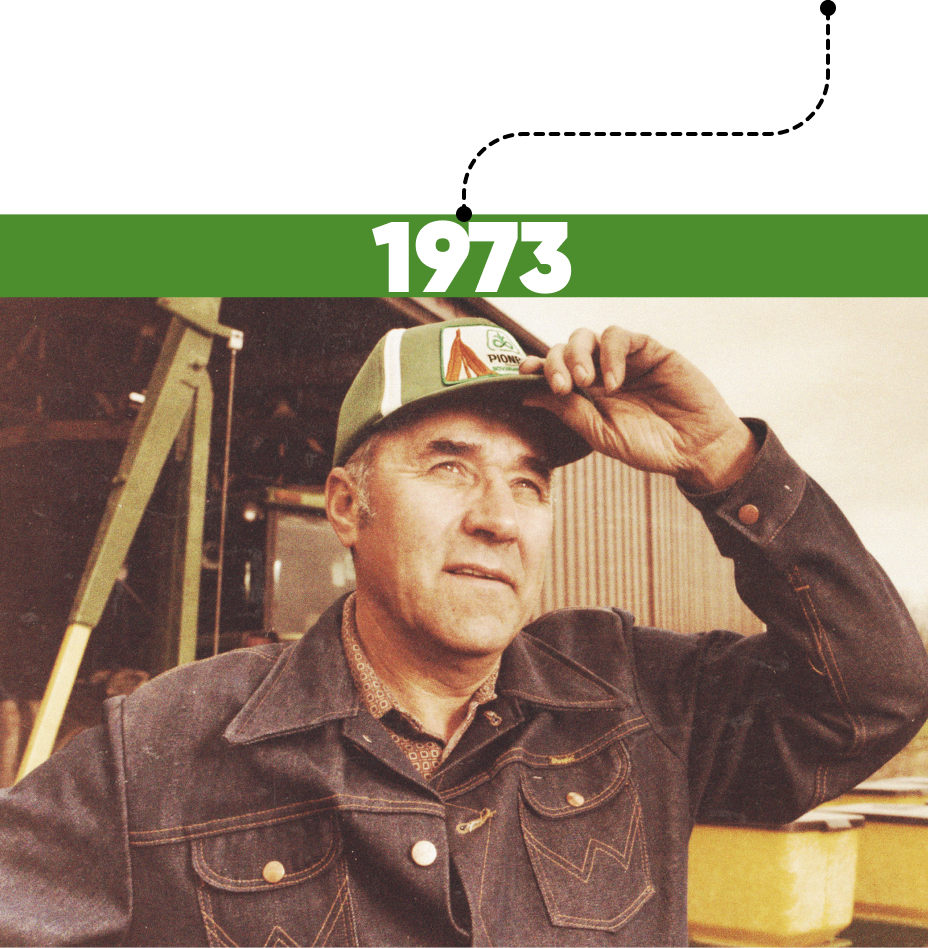
More than a tagline, “Living and learning and planting Pioneer” became a quiet anthem for generations of farmers. Introduced in the 1980s, it captured the rhythm of life on the farm.
What began as an ad line quickly grew into something deeper — a kind of shorthand for a shared way of thinking: stay curious, stay committed, and never stop growing. A simple phrase, rooted in purpose, that still rings true today.
INNOVATION ELSEWHERE: 1977
The personal computer era begins, as Apple, Commodore, and Tandy introduce machines that bring computing power to homes, classrooms, and small businesses.
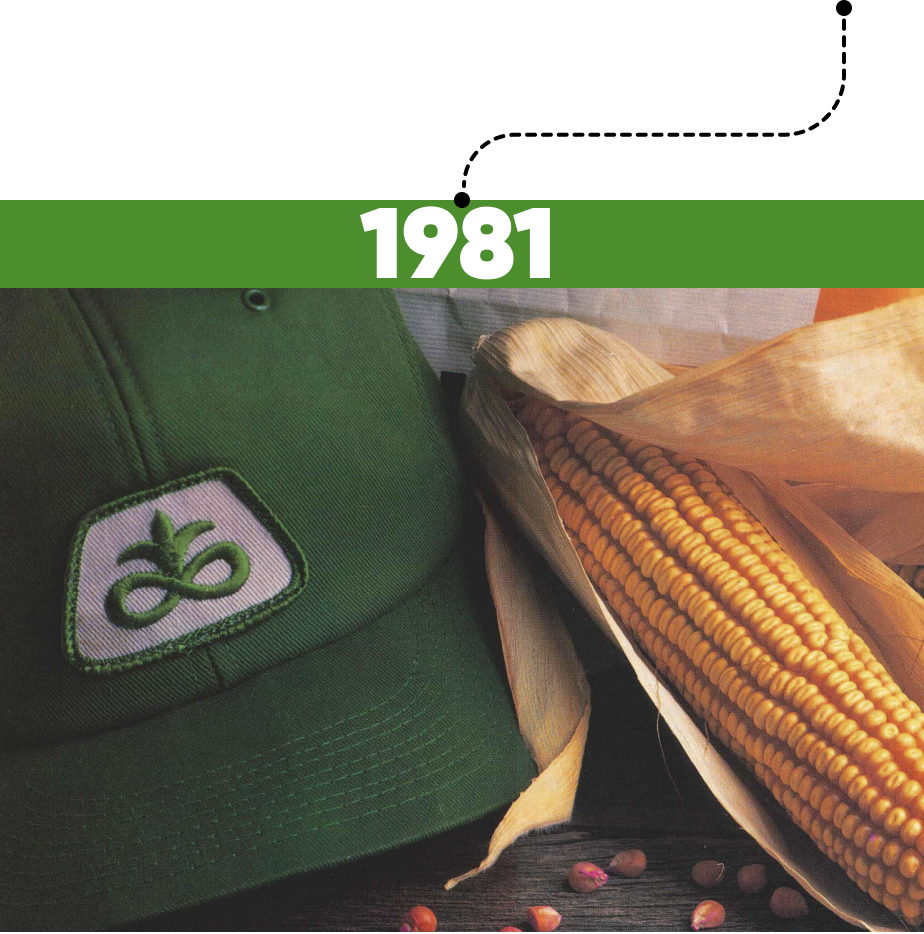
Pioneer Takes the Lead
Pioneer becomes the seed corn market leader in North America, solidifying our position as a trusted innovator and setting the stage for continued growth and success in the agricultural industry.
Delivering agronomy insights — literally.
“Walking Your Fields,” an agronomy newsletter is introduced and quickly became the go-to source of agronomic information for farmers across North America.
Today, it continues to provide timely agronomy insights via email. Several other newsletters and publications that Pioneer Agronomy uses today also have their origins in this foundational period.
1986 - 2010
The Biotech Boom
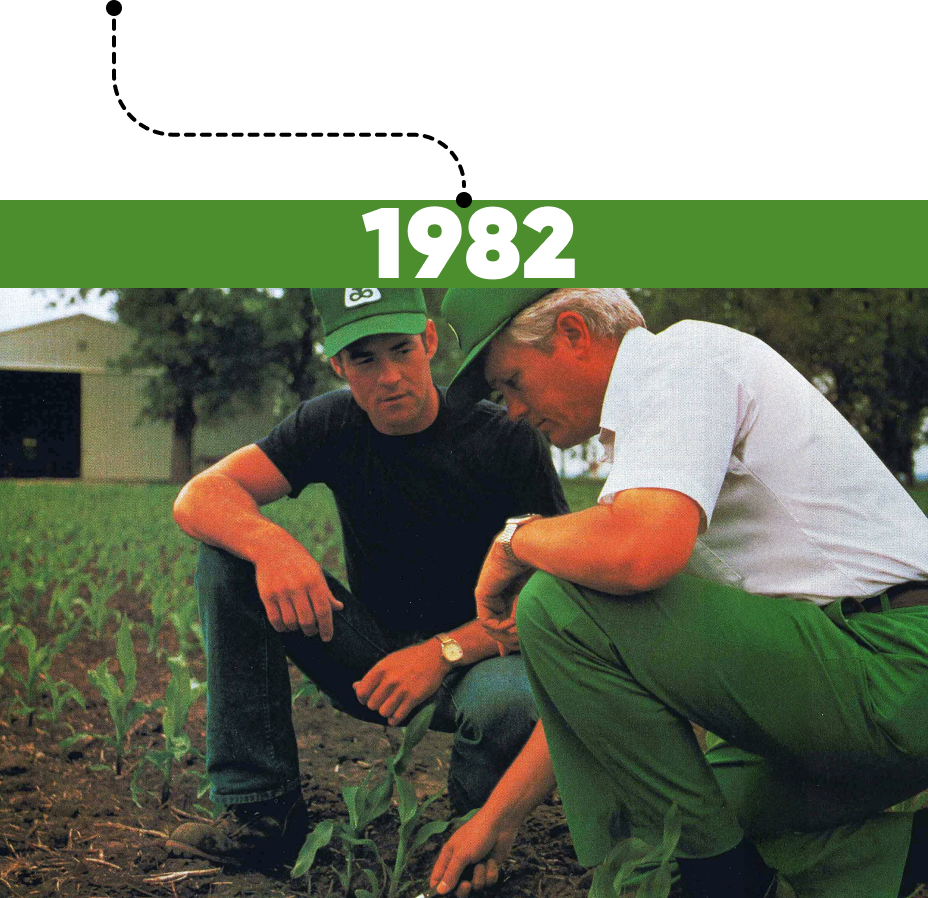
We ushered in the digital age with another yield explosion driven by our leadership in genomics. While our scientists used DNA fingerprinting to unlock corn’s full potential, technology like the internet and GPS brought real-time field mapping and automated machinery to farmers’ operations.
Pioneer® Brand 3394: The Popular One
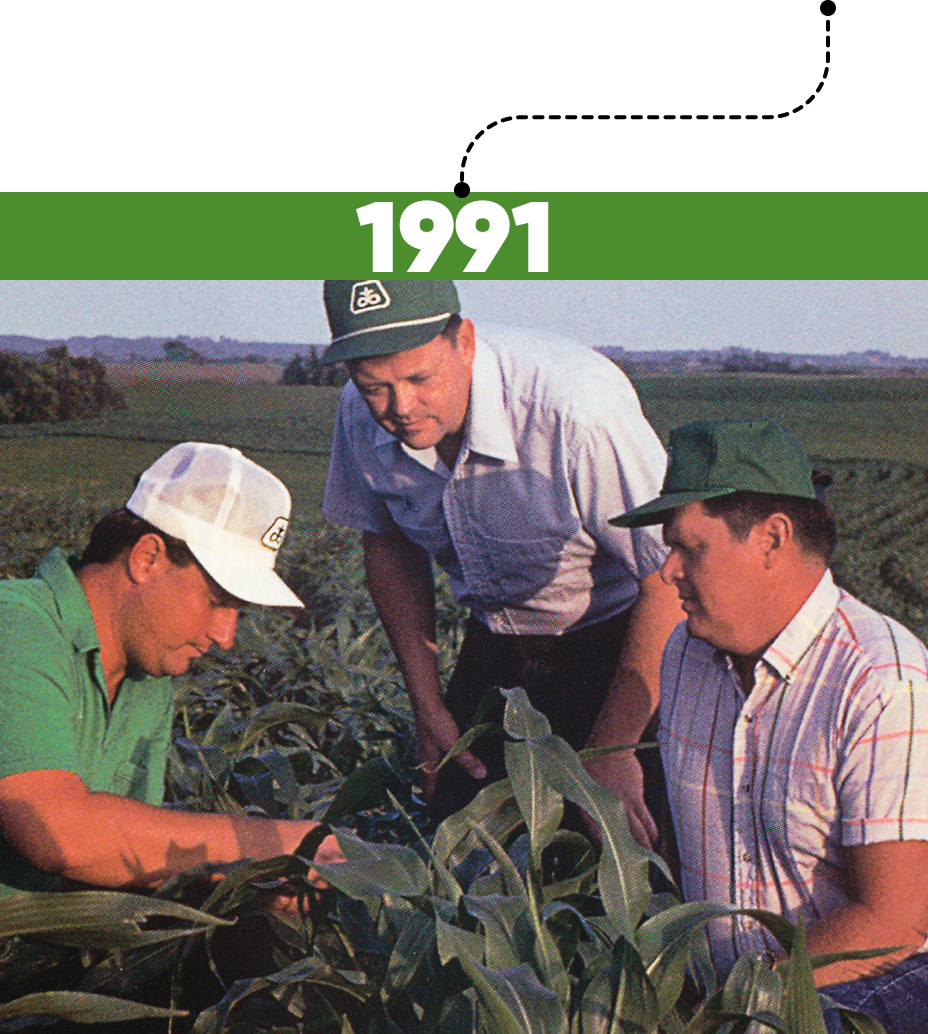
The launch of 3394 in 1991 marked a pivotal moment in Pioneer history.
Continued investment in breeding superior inbreds helped fuel rapid growth in market share. By the mid-1990s, 3394 didn’t just lead the pack — it outsold the entire hybrid lineups of every competitor. Its performance was so standout, it’s said that if 3394 had been its own seed company, it would have ranked second only to Pioneer itself.
#1 in Soybeans
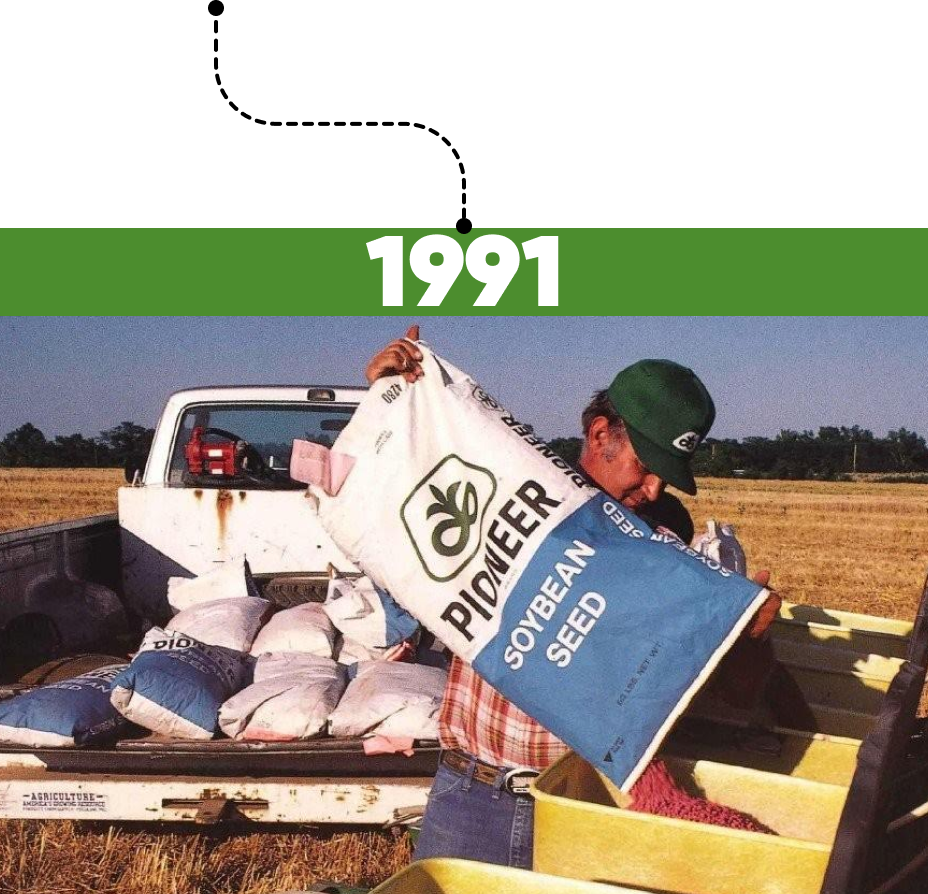
Pioneer rises to the top as the #1 soybean brand in North America, setting new standards for quality and reliability.
INNOVATION ELSEWHERE: 1991
The World Wide Web is launched, creating the infrastructure for the modern internet.

A New Investment
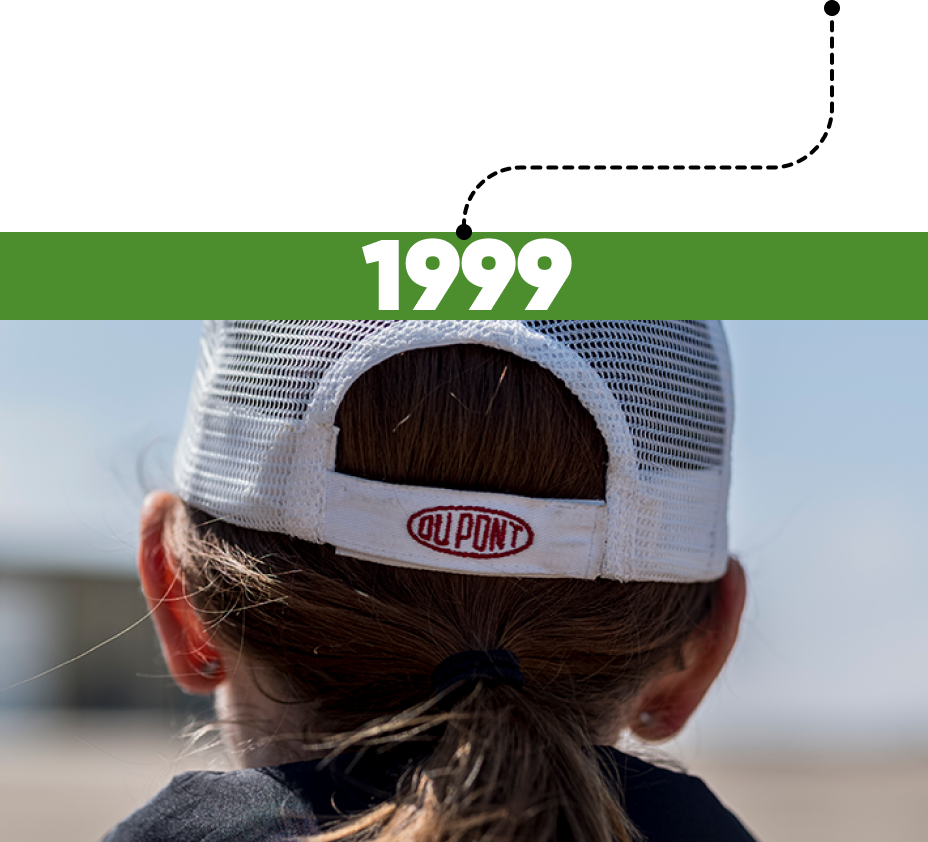
DuPont becomes 100 percent owner of Pioneer.
INNOVATION ELSEWHERE: 2001
The mapping of the human genome is complete.
INNOVATION ELSEWHERE: 2004
Facebook goes live.


From Hybrid Corn to the Innovation Curve
At Pioneer, innovation isn't just part of our legacy — it's in our name. Our first breakthrough didn't just transform agriculture; it helped define how the world understands innovation.
The way farmers embraced hybrid corn became the basis for the now-famous adoptive curve — a model still used to track how new ideas spread across industries.
Pioneer® Brand Hybrid 33W84: The One That Defined The Decade
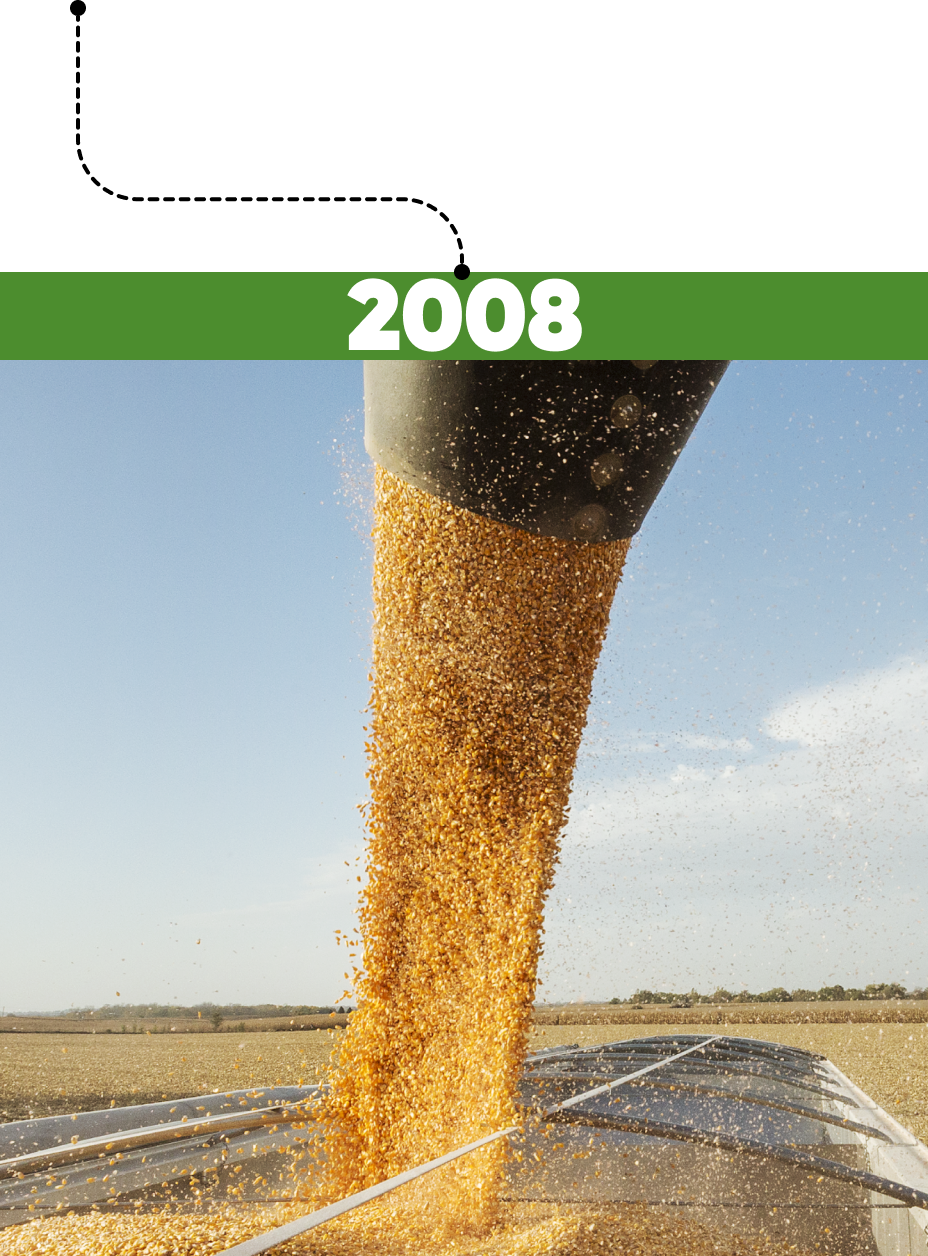
33W84 marked a milestone in corn biotechnology after a decade of trait advancements. As the leading triple-stack product in 2009–2010, it delivered comprehensive insect protection — above and below ground — through Herculex® XTRA technology, along with herbicide tolerance from LibertyLink® and Roundup Ready® 2 traits.
A 111 CRM hybrid, 33W84 offered exceptional plant health and agronomic versatility, performing especially well in moderate- to high-yielding environments, early planting windows, and corn-on-corn rotations. It was also designated a High Total Fermentable (HTF) ethanol hybrid, making it a standout for both productivity and biofuel performance.
INNOVATION ELSEWHERE: 2007
The first smartphone is introduced, putting computing power and internet access into everyone’s pocket.
INNOVATION ELSEWHERE: 2008
The first blockchain emerges, opening the door to new forms of currency, security, and digital recordkeeping.
Pioneer Launches Another First
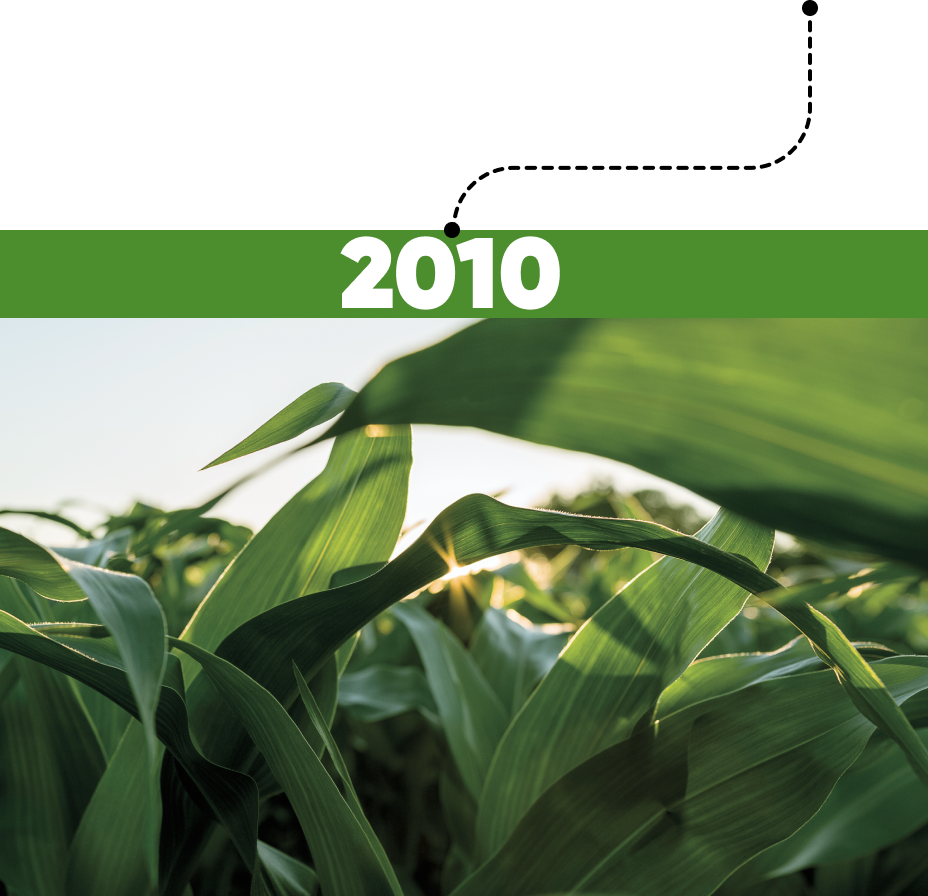
Pioneer proudly advances its biotech breakthrough with the introduction and approval of Optimum® AcreMax® 1 and Optimum® AcreMax® RW—the first integrated refuge management solutions setting a new standard in corn rootworm control.
INNOVATION ELSEWHERE: 2010
The digital shift to cloud computing and big data unlocks new levels of business efficiency.
Biotech Meets Consumers
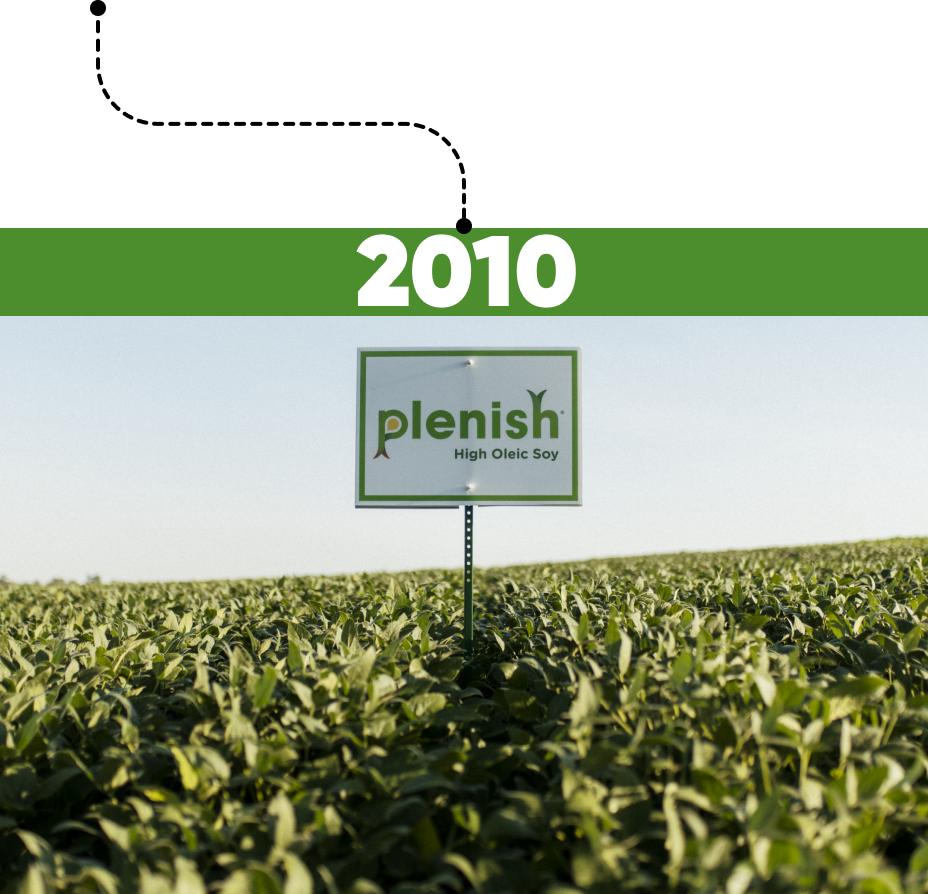
Pioneer launches Plenish® high oleic soybeans, bringing the health and performance benefits of biotechnology directly to consumers for the first time.
Pioneer® Brand P1151AM: The #1 Choice
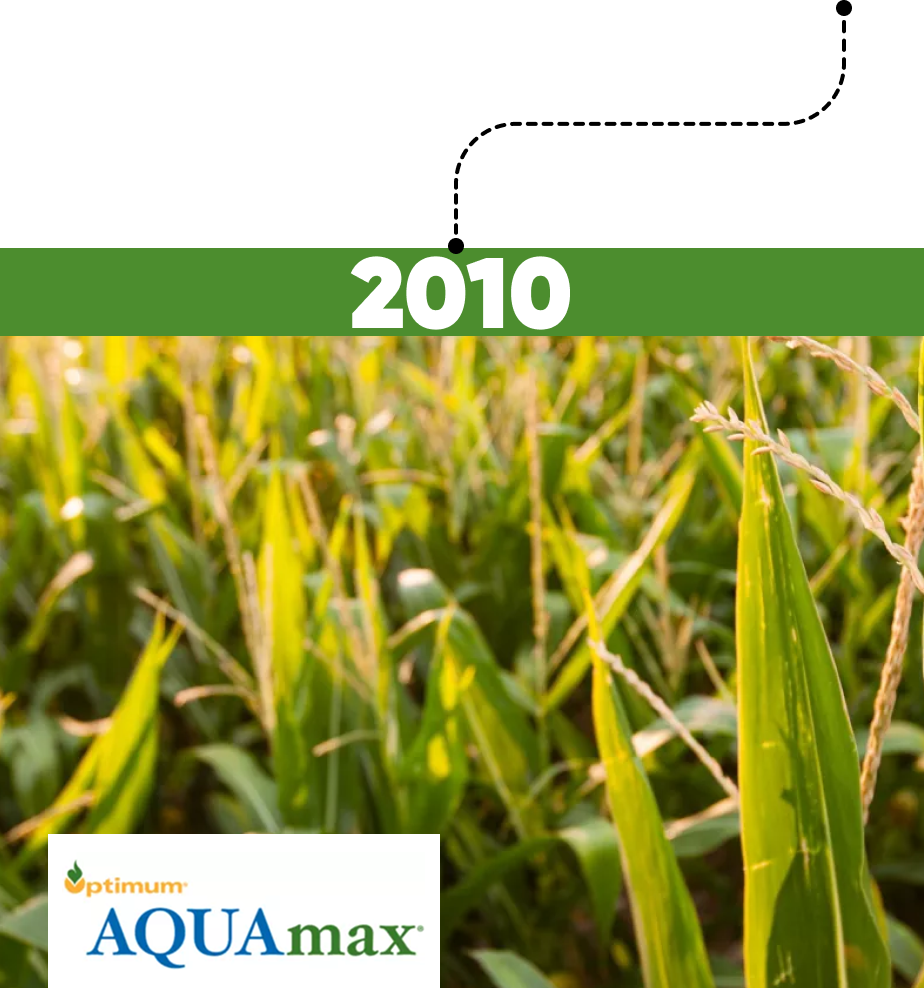
Pioneer introduces P1151AM, a 111 CRM Optimum® AQUAmax® technology corn hybrid, which quickly became a top performer.
Leading sales for Pioneer from 2013 to 2015 and staying in the top three until 2018, P1151AM offered unmatched yield potential across all yield levels, exceptional drought tolerance, and reliable late-season stalks.
With Optimum® AcreMax® for above-ground insect protection and a single-bag refuge solution, it became a go-to choice for farmers.
Over 3 million units were sold from 2013 to 2020.
2011 - Present
Advanced Breeding and Beyond
We’ve seen the introduction of advanced breeding tools that are driving efficiency and sustainability, including Vorceed® Enlist® corn, and Z-Series soybeans. And with the integration of cutting-edge technologies like AI, automation, and gene editing, Pioneer will continue to lead the way in innovations that help drive productivity and profitability.
INNOVATION ELSEWHERE: 2012
Ground-breaking research published on CRISPR gene editing technology, with the potential to enable faster, more precise changes to DNA.
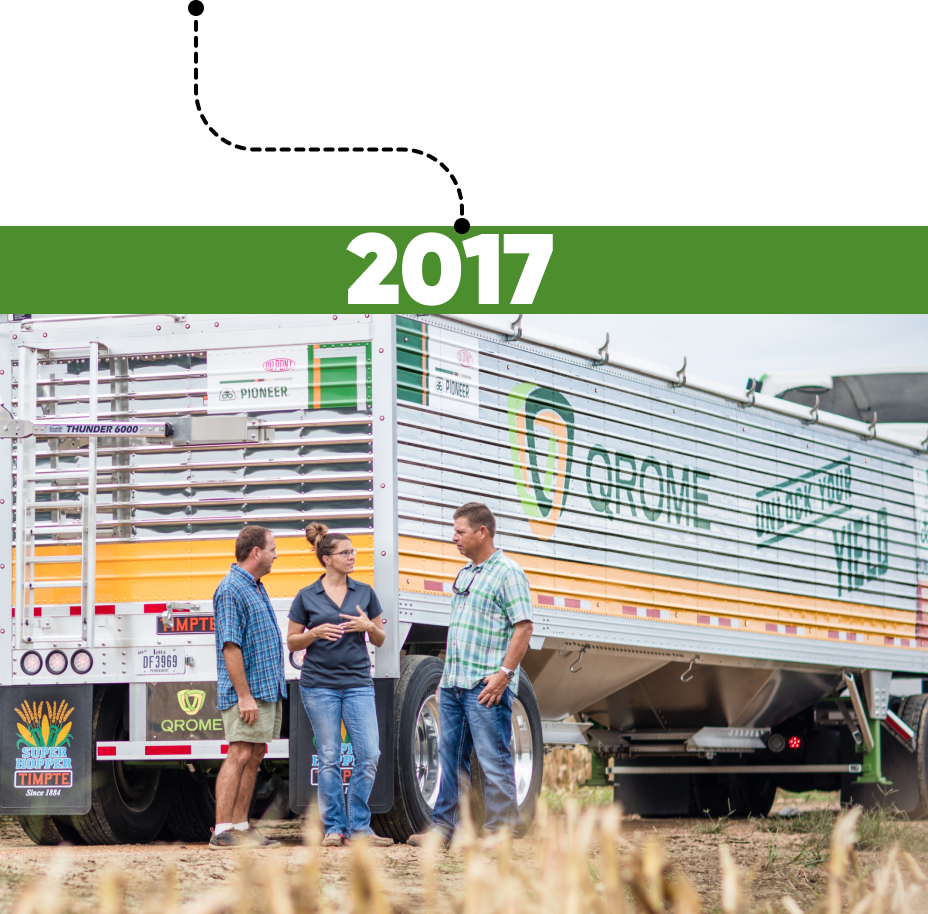
The Launch of Pioneer® Brand Qrome® Corn Products
These innovative hybrids combined advanced genetics and insect protection to offer farmers a new solution against corn rootworm. Qrome corn products included a limited launch in 2017 with full commercial launch in 2019.
The One You Know Today
Following the 2015 merger of Dow and DuPont to form DowDuPont, the company’s agriculture division is unveiled as Corteva Agriscience, which launched in 2019.
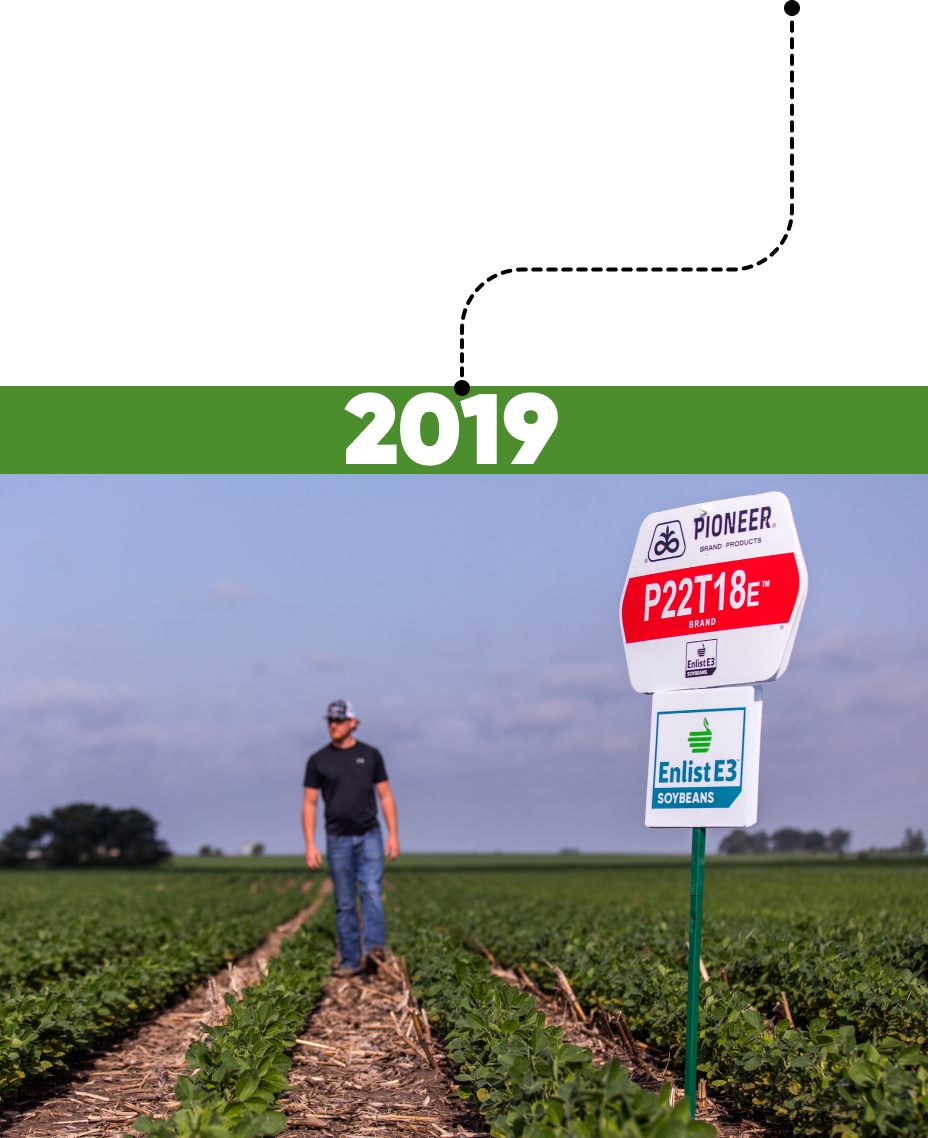
Soybean farmers gain an advantage.
Pioneer launches Enlist E3® soybeans, giving growers a complete solution for exceptional weed control.
INNOVATION ELSEWHERE: 2020
Artificial Intelligence (AI) revolutionized automation across industries.
Pioneer® Brand P13777PCE: The One With Triple Protection
Launched as a versatile 113 CRM corn hybrid, Pioneer® P13777PCE combines PowerCore® and Enlist® technologies to deliver robust above- and below-ground insect protection, flexible herbicide tolerance, and strong agronomic traits.
Known for its excellent stalk strength, drought tolerance, and high yield potential, P13777PCE quickly became a trusted choice for farmers seeking reliable performance across diverse growing conditions.
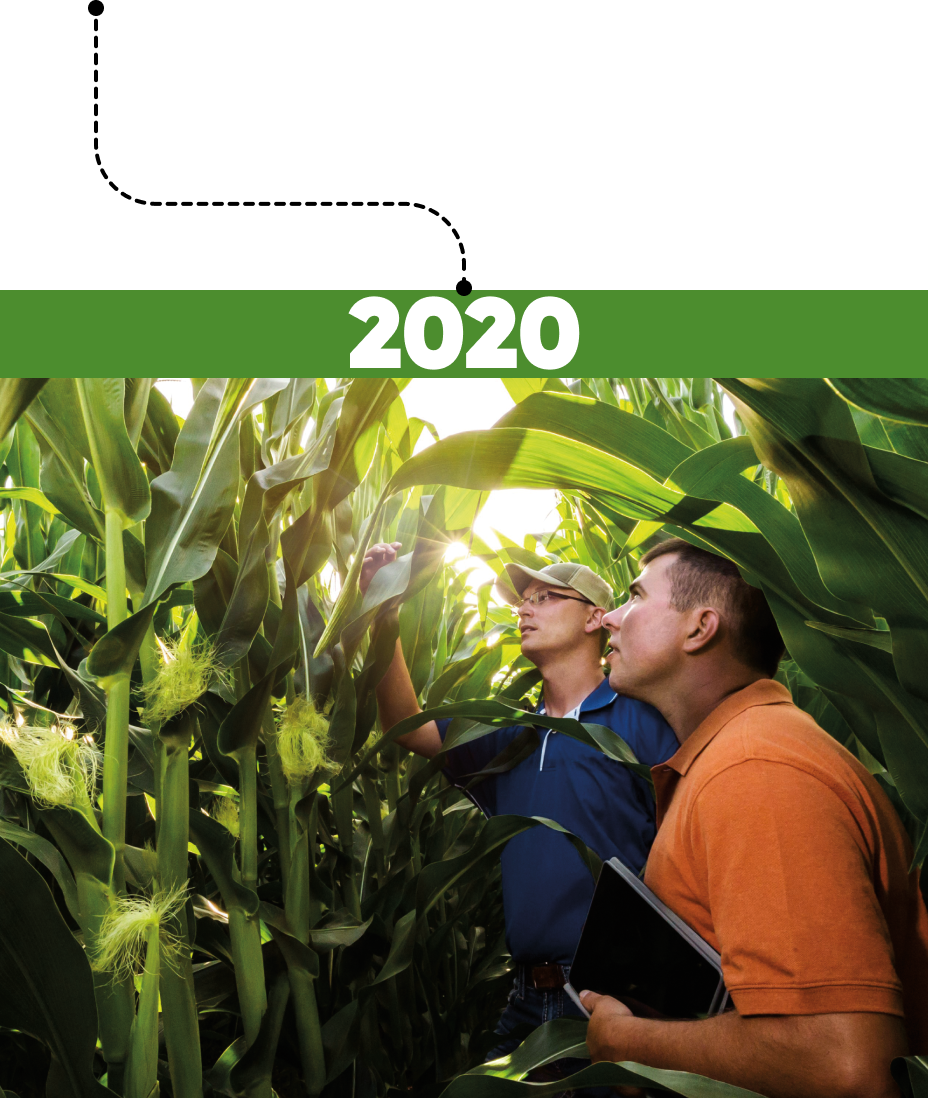
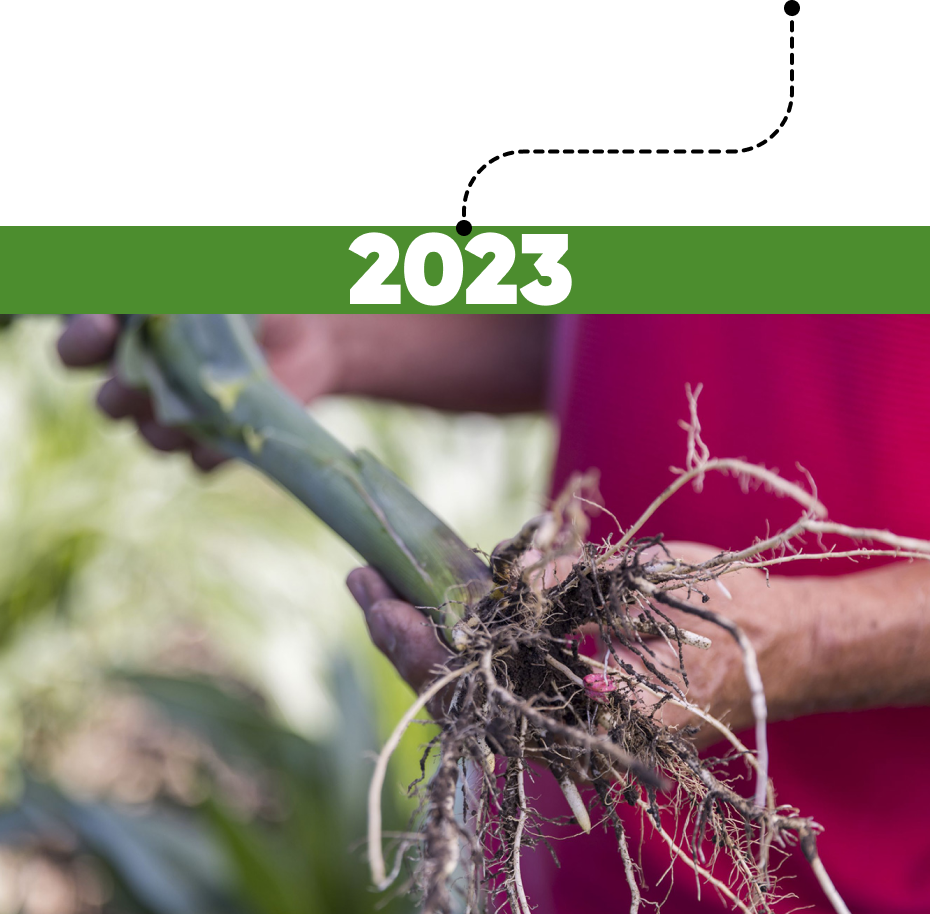
Next Gen Protection
Pioneer introduces Vorceed® Enlist® corn, delivering the next generation of corn rootworm technology.
INNOVATION ELSEWHERE: 2023
ChatGPT is released, changing how people access knowledge.
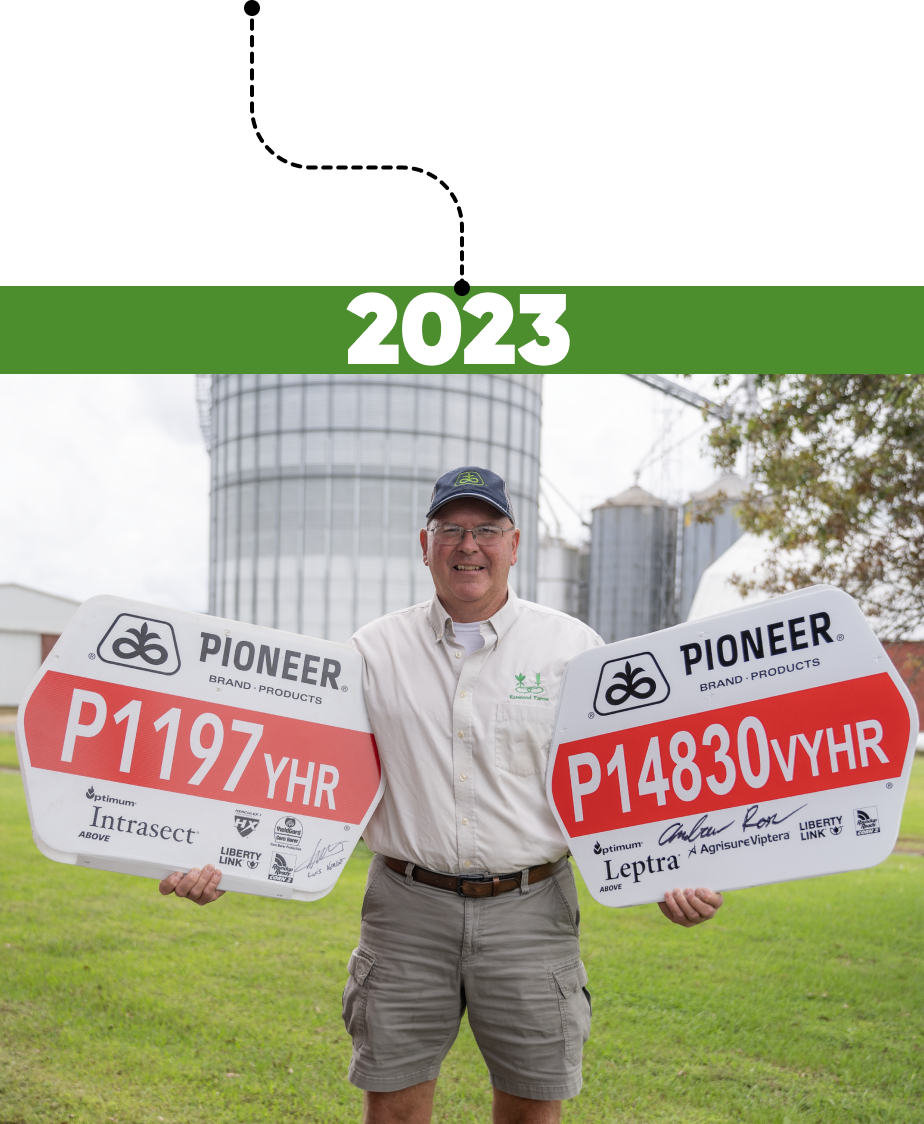
Record-breaking Corn Yield
David Hula of Charles City, Virginia, sets a new world record of 623.84 bushels per acre with Pioneer® brand P14830VYHR.
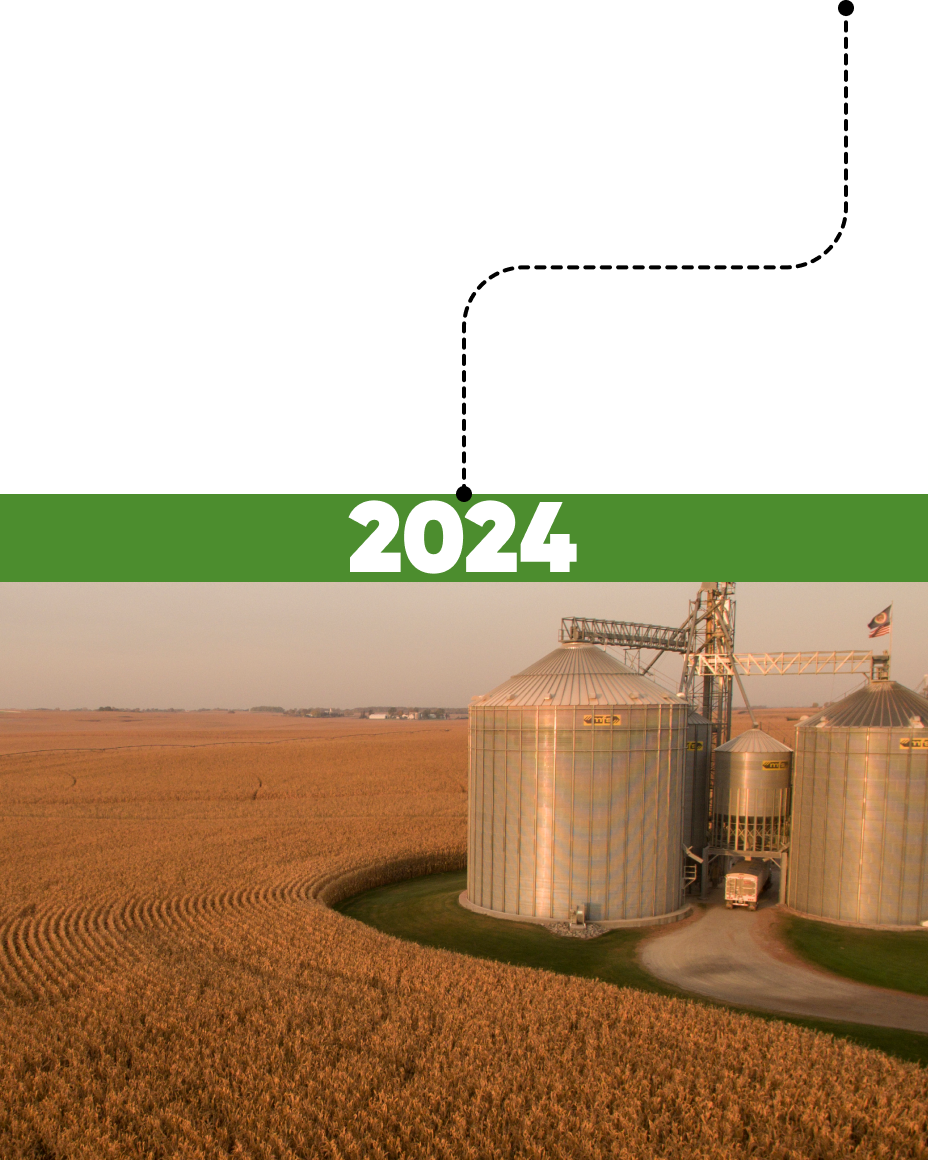
Pioneer brand P05737V: The One with Yield, Protection and Flexibility.
Pioneer P05737V, introduced in 2024, is a 105 CRM corn hybrid with strong yield potential and good drought tolerance.
As a Vorceed® Enlist® corn product it contains a single-bag integrated refuge solution with multiple modes of action for above- and below-ground insects as well as tolerance to four herbicide active ingredients (2,4-D choline, FOP, glyphosate, and glufosinate).
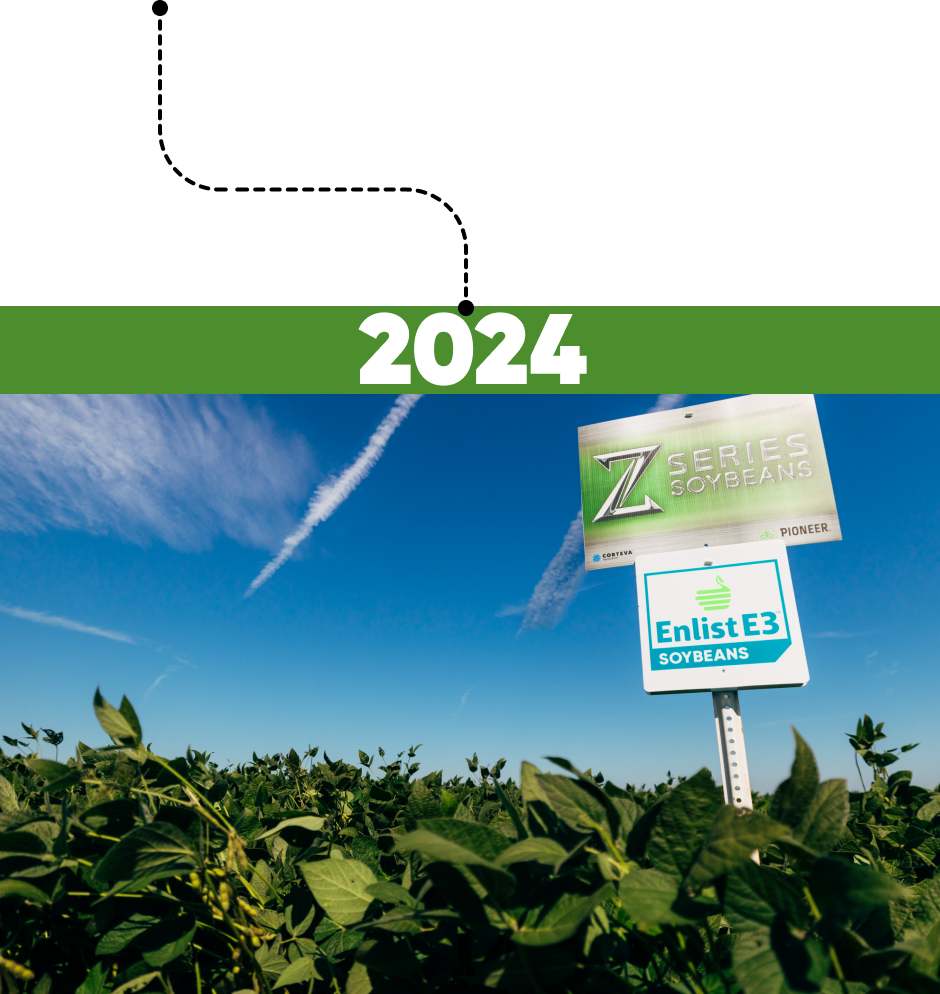
A New Era in Soybeans
Pioneer introduces new high-yield, high-performing Z-Series soybeans.
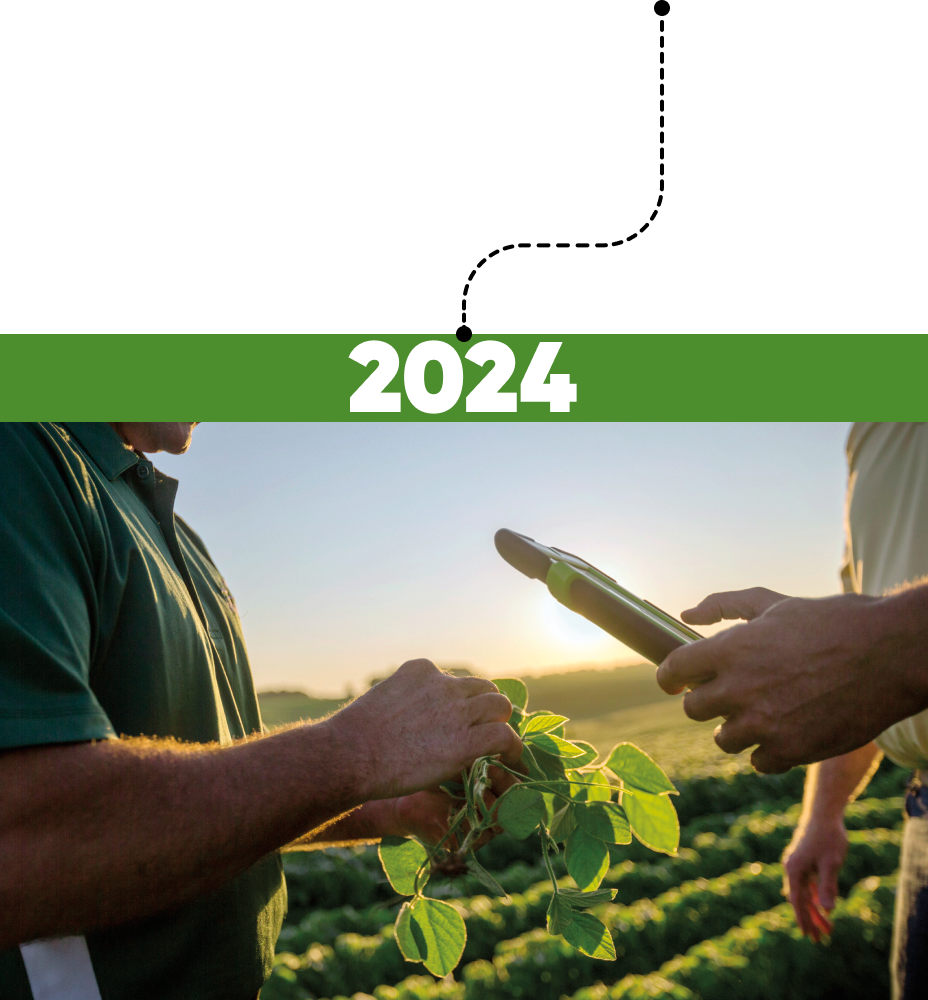
Record-breaking Soybean Yield
Alex Harrell of Leesburg, GA, shatters the world record for Pioneer introduces new high-yield, high-performing Z-Series soybeans. soybean yield with an astounding 218.3 bushels per acre — using Pioneer® brand Z-Series variety P49Z02E™.


One-to-one Since 1926
A lot has changed over the last 100 years. One thing that hasn’t? Our commitment to you. We’re proud to be the one to count on when every bushel counts. Thank you for trusting our people and our products in your fields.


The Ones to Come
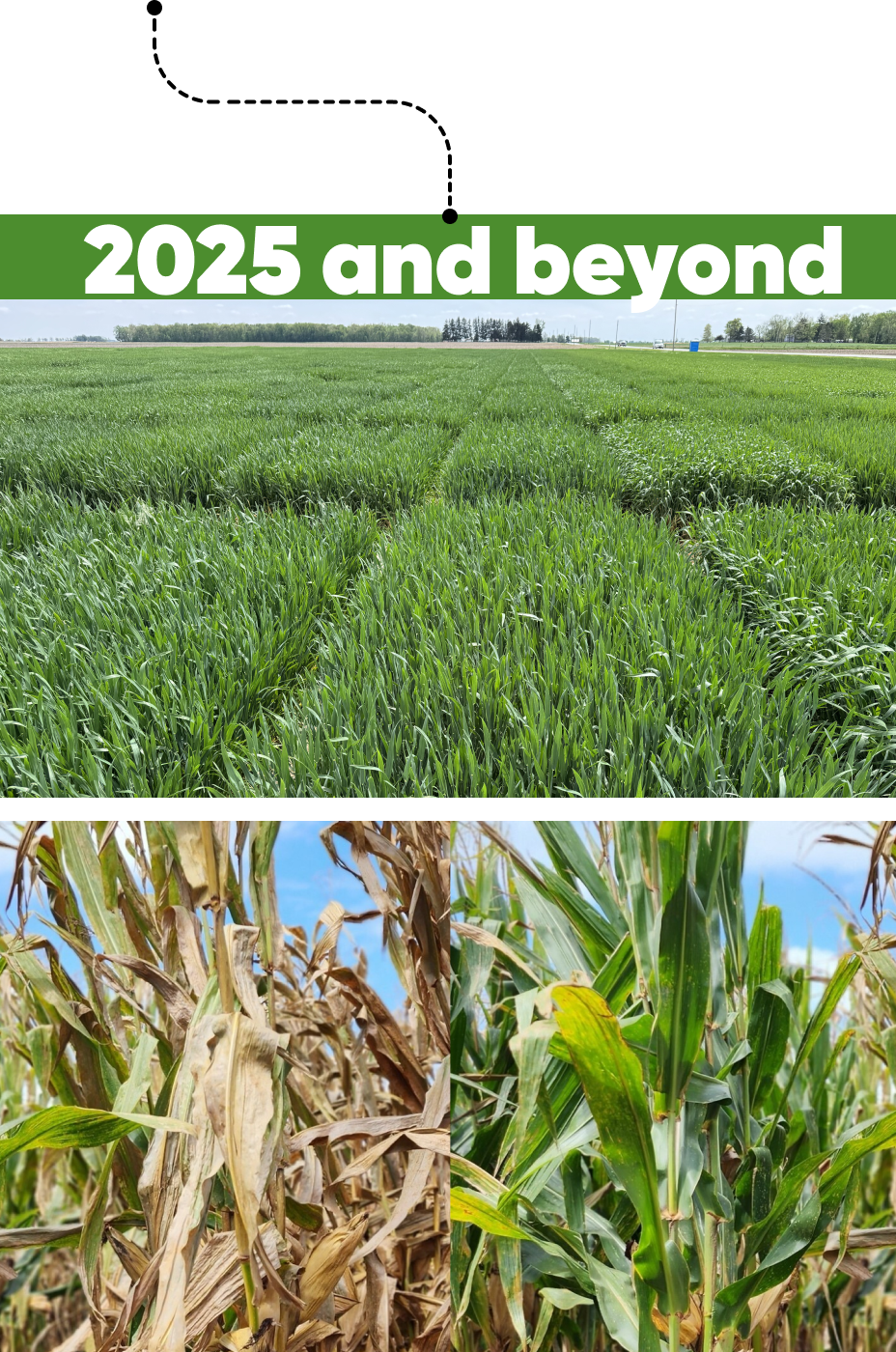
Our innovation pipeline is a cornerstone of our strategy to address global agricultural challenges, with a focus on innovation, sustainability and farmer profitability. Two exciting solutions are in the works:
Hybrid Wheat
This groundbreaking advancement in wheat cultivation leverages a proprietary non-GMO hybrid wheat technology, aiming to replicate the transformative impact of hybridization seen in crops like corn.
Multi-disease Resistant Corn
By using gene editing to combine and reposition disease resistant traits that already exist within the corn genome, scientists aim to bolster tolerance against diseases such as Northern leaf blight, Southern rust, gray leaf spot and One-to-one Since 1926 A lot has changed over the last 100 years. One thing that hasn’t? Our commitment to you. We’re proud to be the one to count on when every bushel counts. Thank you for trusting our people and our products in your fields. 2025 and beyond anthracnose stalk rot - while easing production stress.