
Country Selector
Please enter a valid location
Corn Leaf Aphids
Crop Focus
From Pioneer Agronomy Sciences
Key Points
- Corn leaf aphids (CLA) are present nearly everywhere corn is grown. They favor warm temperatures and drought stressed plants.
- Feeding occurs primarily in corn whorls and results in moisture and nutrient stress to the plant, which can reduce ear size and yield.
- Control options include insecticide treatment when natural enemies are low and moisture stress is present, and hybrid selection.
- Pest Facts
- Pest Symptoms / Injury ID
- Crop Impact
- Natural Enemies
- Pest ID
- Management Considerations
- Life Cycle
Pest Facts
- Latin name: Rhopalosiphum maidis
- Worldwide pest of corn and related grass crops; present nearly everywhere corn is grown
- Can cause yield loss by feeding and causing stress on the plant but also is an important vector of corn viral diseases such as maize dwarf mosaic in corn and barley yellow virus in wheat
- Usually female; males are very rare
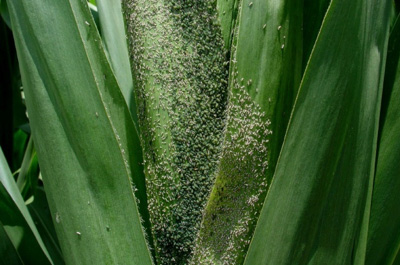
Corn Leaf Aphids
Pest Symptoms / Injury ID
- Feed primarily in corn whorls, removing moisture and nutrients
- Excess sap ingested is secreted as sticky honeydew which may attract ants
- Heavy infestations can turn leaves red or yellow from nutrient loss and stress, which may shrivel and die
- Colony may expand to tassel at emergence; tassel may be killed from extensive feeding
- Late season colonies move to the lower stalk and ear husk or other protected areas of the plant
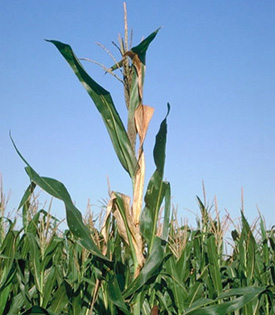
Upper leaves killed by aphids.
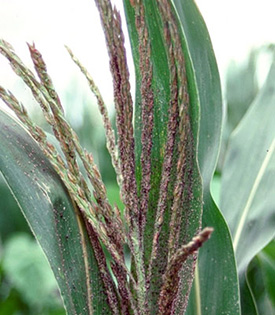
Heavily infested tassel.
Crop Impact
- Conditions that favor crop injury:
- Warm temperatures (>77ºF)
- Drought stressed plants
- Low populations of natural enemies
- Host range includes corn, barley, sorghum, winter wheat, and other cultivated and wild grasses
- The winter host of corn leaf aphid is winter barley, but winter rye and winter wheat are alternates
- Pollination is not affected unless nearly all tassels are covered with aphids
- Aphids interfere with photosynthesis and cause water and nutrient stress, reducing ear size and yield
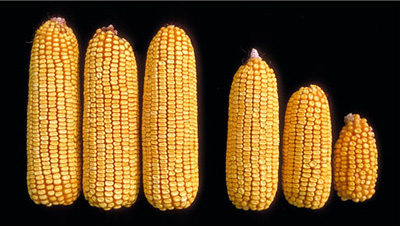
Corn ears from uninfested (left), and heavily infested (right) plants
Natural Enemies
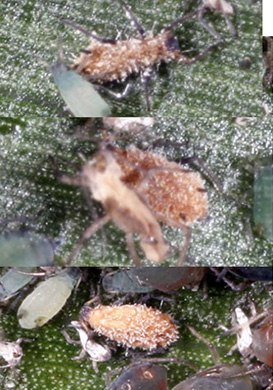
Lady Beetle
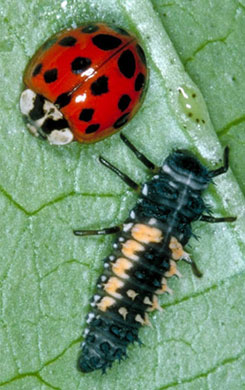
Adult / Larvae (Aphis Lion)
Lacewing
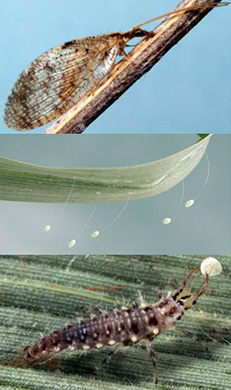
Green or Brown
Syrphid Fly
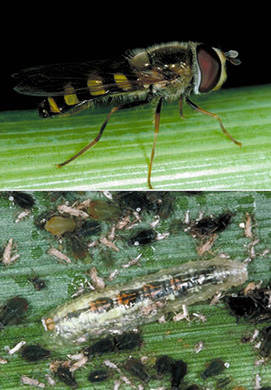
Entomoptera Fungus
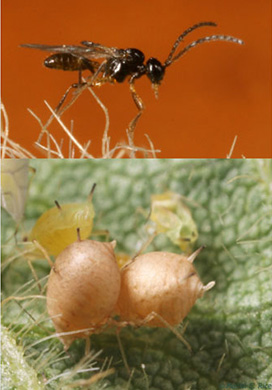
Parasitic Wasps
Predatory Bugs
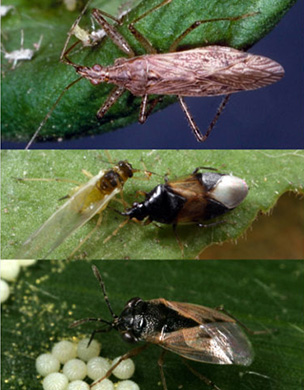
Damsel Bug / Minute Pirate Bug / Big Eyed Bug
Pest ID
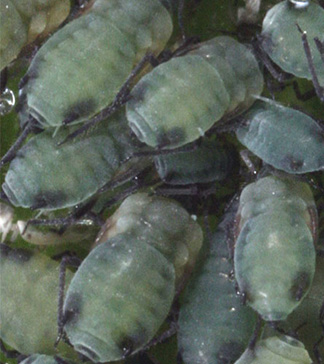
Key Characteristics
- Blue-green color, trimmed in black
- Black head with medium length black cornicles or “tailpipes”
- Short black antennae and black legs
Related / Confused Species
Green Bug
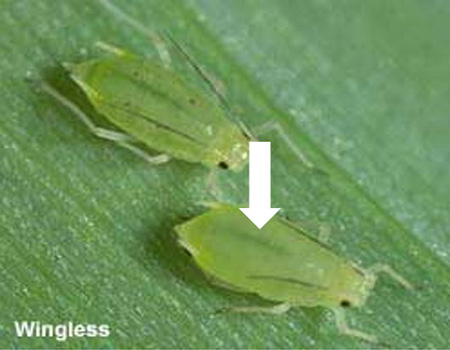
Light green with brighter stripe down the back, cornicles long with black tip, green legs and antennae.
Oat-bird Cherry Aphid
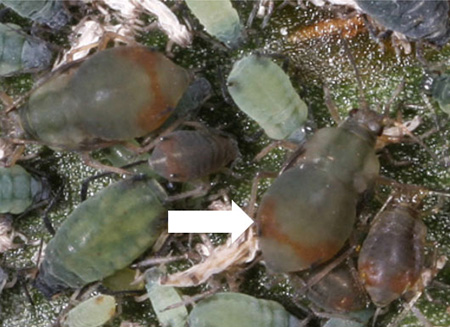
Dark green, medium length black tipped cornicles, reddish brown saddle at the base of the cornicles. Green or gray legs. More round than corn leaf aphids (CLA). Found in small colonies or mixed with CLA.
English Grain Aphid
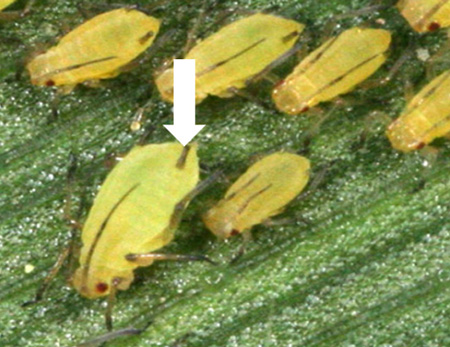
Bright green, very long dusty cornicles, long dusty gray antennae and green legs with black joints. Usually found in very small colonies of just a few individuals.
Management Considerations
IPM Practices
- When the crop is under moisture stress, populations may increase rapidly
- Aphid populations are highly susceptible to control from natural enemies. Scout fields which have had an early-season insecticide application as these fields may be particularly susceptible to aphid outbreaks
- Scout three and two weeks prior to tasseling. Consider treating if colonies of 30-100 CLA can be found in the whorl, especially if corn is under moisture stress and evidence of natural enemies is low
- Treating high numbers of aphids at tasseling is usually too late to recover costs or damages
- Hybrid selection – There are no truly resistant hybrids to CLA, nor is there any transgenic approach to their control at present. However, hybrids that exert their tassel better under stress may allow natural enemies access to the aphid and thus result in fewer highly infested plants
- Select pesticides that do not harm beneficials
Life Cycle
- Develop through gradual metamorphosis
- nymph, adult
- Four nymphal stages, resemble adults
- Reproduce without mating; give birth to live nymphs, males extremely rare
- Wingless forms most common
- Winged forms with black head and thorax are produced when colony becomes stressed or overcrowded
- Dense colonies formed on plants; shed skins are white and shriveled
- 40-50 generations per year
- Overwinters on winter cereals
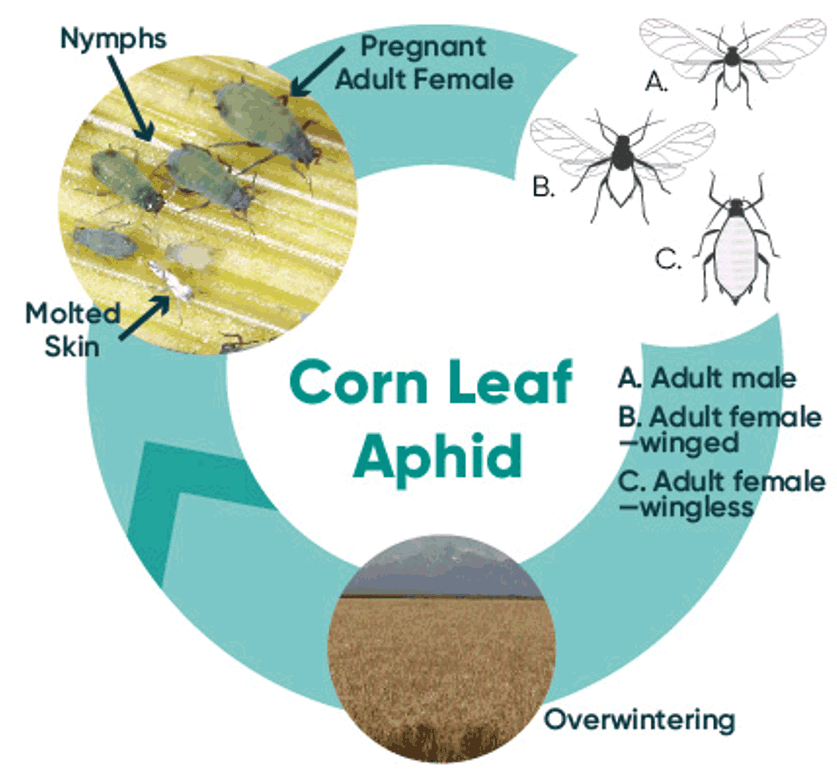
Corn leaf aphid life cycle - Click here or on the above image for a larger view.
The foregoing is provided for informational use only. Please contact your Pioneer sales professional for information and suggestions specific to your operation. Product performance is variable and depends on many factors such as moisture and heat stress, soil type, management practices and environmental stress as well as disease and pest pressures. Individual results may vary.
Pioneer® brand products are provided subject to the terms and conditions of purchase which are part of the labeling and purchase documents.