
Country Selector
Please enter a valid location
8/27/2020
Diplodia Stalk Rot of Corn
Crop Focus
Written by Mark Jeschke, Ph.D., Pioneer Agronomy Manager
Disease Facts
- Caused by Stenocarpella maydis fungus (formerly called Diplodia maydis). Corn is the only host of this pathogen.
- Survives on corn stalk residues; spores are spread by wind or splashing rain.
- Favored by warm, wet weather two to three weeks after pollination.
- Identification and Symptoms
- Diplodia Stalk Rot Disease Cycle
- Impact on Crop
- Management
Identification and Symptoms

Sections of corn stalk (above and below) showing diplodia stalk rot
symptoms. Note pycnidia on corn stalk node.

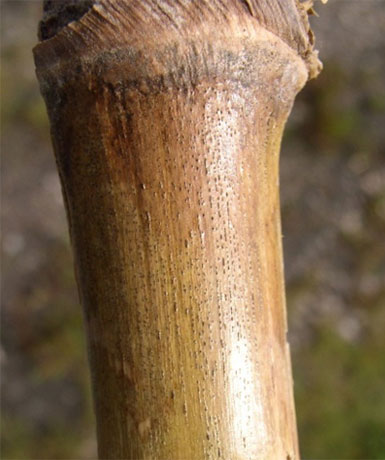
Figure 2. Comparison of tassels from three hybrids grown side by side. The middle tassel displays tassel wrap, with pollen being released within the upper leaves and only the tip of the tassel exposed. The tassels on either side show normal development and pollen shed.
- Diplodia stalk rot may first be evident when affected plants die suddenly during mid- to late-ear fill.
- Upon examination, dark brown lesions can be found extending in either direction from the node.
- Small black spots (pycnidia) may develop just beneath the stalk epidermis near the nodes. The black dots are not easily removed, which distinguishes Diplodia from Gibberella. (see images above)
- Diplodia results in rotted stalks that are disintegrated and discolored (brown), allowing the stalk to be crushed or easily broken. (see images below)
- Although the pith disintegrates, vascular bundles remain intact

Broken corn stalks due to Diplodia stalk rot infection (above and below).
The Diplodia fungus also causes kernel and ear rot in corn.

Diplodia Stalk Rot Disease Cycle

Impact on Crop
- Yield reduction
- Kernel weight (test weight) may be reduced due to premature plant death
- Potential harvest losses
- Plant Lodging
- Reduced grain quality if ears contact ground
- Reduced harvest speed
Management
- Genetic resistance – choose hybrids with high scores for stalk strength
- Crop rotation – at least one year out of corn
- Tillage to help break down crop residue
- Maintain balanced fertility
- Use moderate plant population if field has a history of stalk rot or lodging
- Reduce plant stress if possible
- Control stalk-boring insects to prevent wounds stalk rot organisms can enter.
2025 Agronomy Research Summary
Key insights from our most recent year of agronomy research,
from the team that wrote the book on agronomy.