
Country Selector
Please enter a valid location
Key Points
- European corn borer was once one of the most destructive pests of corn in North America; however, it’s impact has declined with the widespread adoption of Bt corn.
- The major damage caused by European corn borer is due to tunneling in stalks, ear shanks, and ears.
- Insecticides can be an effective tool for managing European corn borer in non-Bt corn; however, proper timing of applications is critical.
- Pest Status in North America
- European Corn Borer Life Cycle
- Damage to Corn
- Scouting and Management
Pest Status in North America
- European corn borer (Ostrinia nubilalis) is an insect pest of corn native to Europe and western Asia.
- Its first documented occurrence in North America was near Boston, Massachusetts in 1917.
- By the 1920’s, European corn borer had become an important pest of corn in the U.S. and today it can be found throughout corn production areas east of the Rocky Mountains.
- The impact of European corn borer as a pest has declined with the widespread adoption of Bt corn over the past 20 years.
- However, populations are still present, and outbreaks can still occur and cause significant yield losses in unprotected corn.
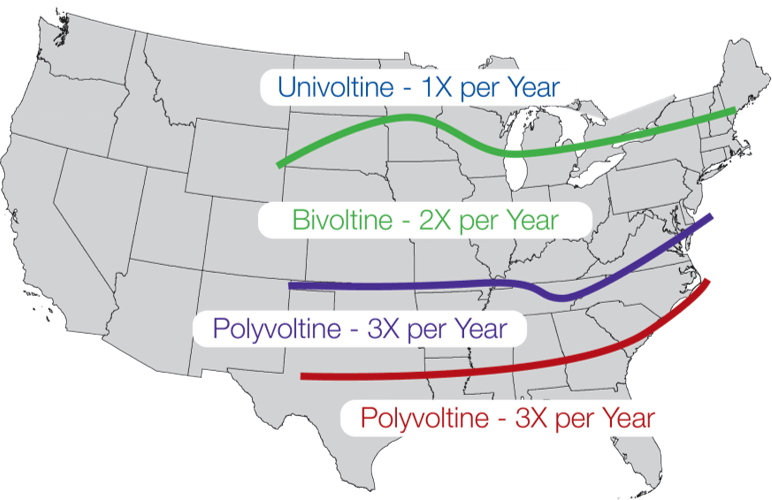
Figure 1. European corn borer generations per year.
European Corn Borer Life Cycle
- European corn borer can produce one generation per year (univoltine) or multiple generations (bivoltine or polyvoltine) depending on the length of the growing season (Figure 1).
- The majority of corn acres in North America lie within the region affected by two generations of European corn borer.
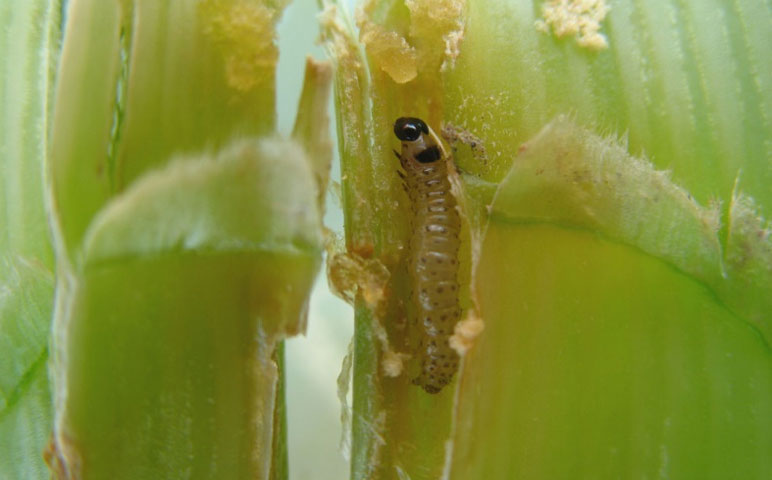
Figure 2. First generation European corn borer tunneled in a corn leaf.
- Northern regions of the Corn Belt may be affected by both univoltine and bivoltine populations; the proportions of which can vary from season to season based on growing conditions.
- European corn borers overwinter in corn stalk residue as full-grown larvae in suspended development (diapause).
- Larvae pupate and emerge as adult moths, usually in late May or early June in the central Corn Belt.
- Adults fly to grassy areas to mate and then to selected corn fields to lay their eggs.
First Generation
- First instar larvae will feed on young, developing leaf tissue without eating all the way through the leaf, resulting in injury patterns referred to as “window paning.”
- As larvae develop, their feeding will penetrate completely through the leaf, leaving a random “shot hole” feeding pattern.
- Third instar larvae will begin feeding in the whorl before boring into the stalk. Larvae will go through the fourth and fifth instars inside the stalk, completing their growth about three weeks after hatching.
- Bivoltine larvae will pupate inside the stalk during July and early August.
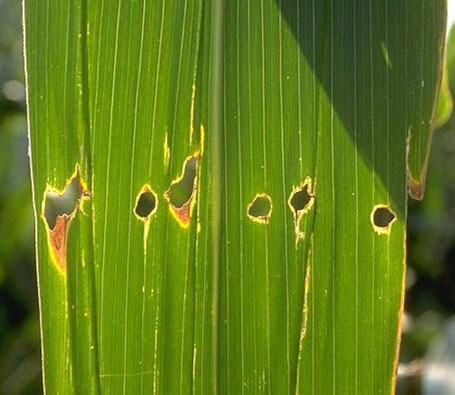
Figure 3. "Shot hole" feeding pattern caused by European corn borer.
Second Generation
- Second generation adult emergence and egg laying begins during late July and continues through the end of August.
- Newly-hatched second generation larvae generally feed on the leaf axil close to the stalk and on pollen that has collected in the leaf axil.
- Second generation larvae do not begin feeding on the stalk of the corn plant until the fourth instar, due to the hardness of the maturing stalks.
- Second generation larvae feed on the tassel and ear shanks which can result in ear drop.
- In the fall, fifth instar larvae will enter diapause and overwinter inside the stalks.
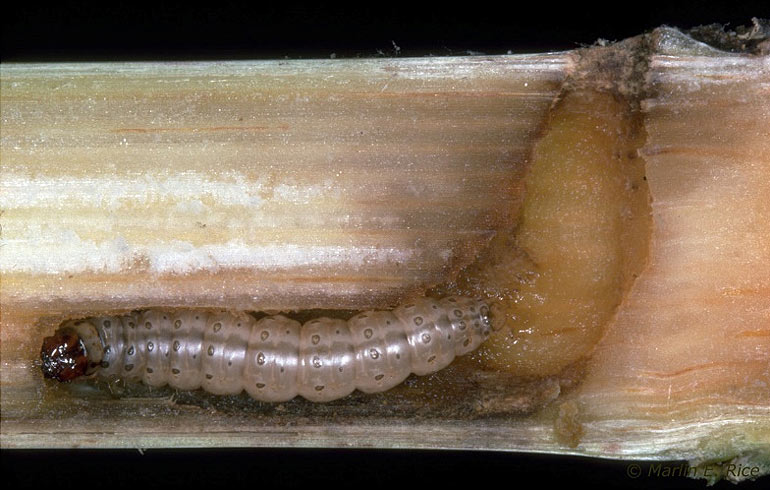
Figure 4. A late-stage corn borer tunneling inside a cornstalk.
Damage to Corn
- The major damage caused by European corn borer is due to tunneling in stalks, ear shanks, and ears.
- Tunneling disrupts water and nutrient transport in the plant and increases risk of stalk lodging and ear drop.
- Damage may allow higher levels of stalk rots and ear molds.
- The magnitude of the yield reduction due to corn borer tunneling depends primarily on the growth stage of the corn plant when attacked, the growing environment, and hybrid tolerance or resistance.
Scouting and Management
Scouting to determine infestation levels and timing of larvae activity is critical for effective management of European corn borer in non-Bt corn.
With normal temperatures, the ideal “window” of treatment will only be about 4 to 6 days and, once larvae are in the stalk, insecticide treatments will be ineffective.
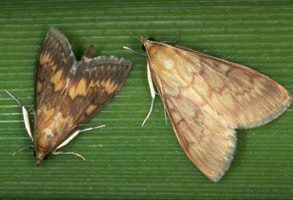
Trapping of European corn borer moths during mating activity can be a helpful tool to guide field scouting. Black light and pheromone traps can both be used to monitor moth activity.
European Corn Borer Identification
- European corn borer larvae can be distinguished from other corn caterpillars by their dark brown or black head and lack of distinctive spots or stripes.
- Mature larvae are about ¾ to 1 inch (19 to 25 mm) long, dull white to grayish in color, and have small brown halo-shaped spots running the length of the body.
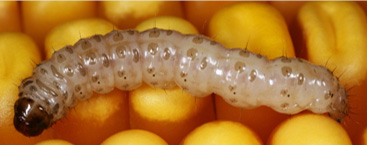
European Corn Borer
Young larvae are dull white; older larvae have darker halo-shaped spots. Dark brown or black head.
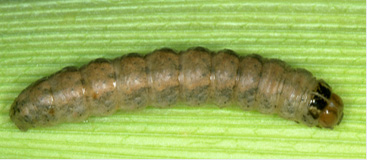
Western Bean Cutworm
Head is solid orange. Two dark brown stripes behind the head.
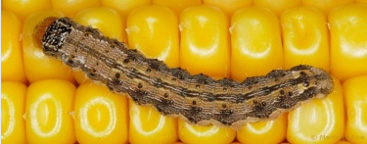
Corn Earworm
Larval color is highly variable. Alternating dark and light stripes running the length of the body.
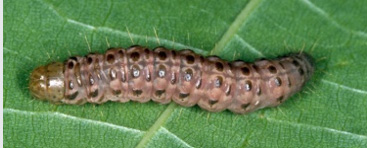
Sod Webworm
Usually found in leaves. Accompanied by slight webbing.
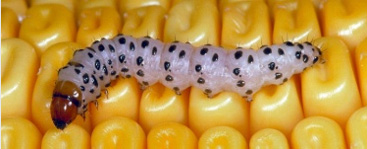
Southwestern Corn Borer
Southern areas of U.S. only. Dark spots on white body or pure white in late fall.
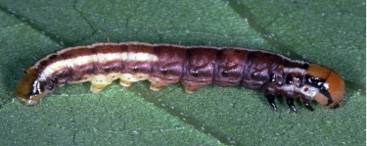
Lesser Corn Stalk Borer
Purple bands. Found sporadically, rarely a significant pest of corn.
- Begin scouting fields for signs of shot holes in the leaves about 200 heat units after corn reaches 18 inches (46 cm) in height.
- Moths and egg laying may be concentrated along field edges, and grass waterways, so sampling along these edges will not provide an accurate estimate of the field population.
- Egg mass counts are the preferred method of scouting for second generation European corn borer. Begin scouting for egg masses in corn when corn borer moths are being collected in light or pheromone traps.
- Properly timed insecticide applications can provide effective control of first generation European corn borer. Managing the second generation is more difficult; an insecticide treatment will likely provide around 65% control.
- Bt corn has been and continues to be a very effective management tool providing protection against European corn borer.
European Corn Borer: Managing the Larvae Stage
For corn growers who are growing products without a BT trait, late spring/early summer is prime time to begin managing the first generation of European Corn Borer. In this video, Pioneer Field Agronomist Brian Bush walks you through his recommendations on managing this pest early in the season while they are still in the larvae stage before they can do damage to the corn’s mid-rib. Brian believes dealing with the larvae at this time is one of the best ways to manage their spread and maximize your yield potential.
European Corn Borer: Managing the Larvae Stage
For corn growers who are growing products without a BT trait, late spring/early summer is prime time to begin managing the first generation of European Corn Borer. In this video, Pioneer Field Agronomist Brian Bush walks you through his recommendations on managing this pest early in the season while they are still in the larvae stage before they can do damage to the corn’s mid-rib. Brian believes dealing with the larvae at this time is one of the best ways to manage their spread and maximize your yield potential.
The foregoing is provided for informational use only. Please contact your Pioneer sales professional for information and suggestions specific to your operation. Product performance is variable and depends on many factors such as moisture and heat stress, soil type, management practices and environmental stress as well as disease and pest pressures. Individual results may vary. Pioneer® brand products are provided subject to the terms and conditions of purchase which are part of the labeling and purchase documents.