
Country Selector
Please enter a valid location
Has Corn Response to Root Lodging Changed Over Time?
Written by Alex Lindsey and Peter Thomison, Horticulture and Crop Science, Ohio State University, and Paul Carter, Corteva Agriscience
Key Findings
- The earlier that root lodging occurs, the greater the ability of corn plants to recover from it.
- Root lodging has the most impact on yield when it occurs right at flowering.
- Corn yield losses due to root lodging were greater in this study than in a similar study in the 1980s, which may be due to higher seeding rates with modern hybrids.
- Background and Objectives
- Study Description
- Results
- Conclusion
- Reference
Background and Objectives
- When assessing the effects of root lodging in corn following severe wind and rain events, results from a research study conducted in the 1980s has long served as the main reference for estimating impact on yield (Carter and Hudelson, 1988).
- A new, 3-yr field study was conducted to evaluate effects of root lodging on corn development and grain yield using contemporary hybrids and seeding rates.
- This study also explored underlying physiological factors causing yield decreases due to root lodging.
Study Description
- Simulated wind lodging experiments were conducted from 2018-2020 at the Western Agricultural Research Station in South Charleston, OH.
- A split plot randomized complete block design with three replications was utilized each year, with corn hybrid as the whole plot factor and lodging treatment as the subplot factor.
Hybrid/Brand1:
- P1283AM™ (AM, LL, RR2), 112 CRM, root strength* = 4
- P1298AM™ (AM, LL, RR2), 112 CRM, root strength = 8
- P1311AM™ (AM, LL, RR2), 112 CRM, root strength = 6
Root Lodging Timings (corn growth stage):
- Control (no lodging)
- V10
- V13-V14
- VT-R1
- R3
- Each plot was 25 ft long x 8 rows wide with a 30-inch row spacing and planted at 36,000 seeds/acre.
- All plants in the simulated wind lodging treatments were pushed over by hand perpendicular to row direction immediately after irrigation or heavy precipitation events.
* Root strength ratings on a 1-9 scale: 9 = Outstanding; 1 = Poor
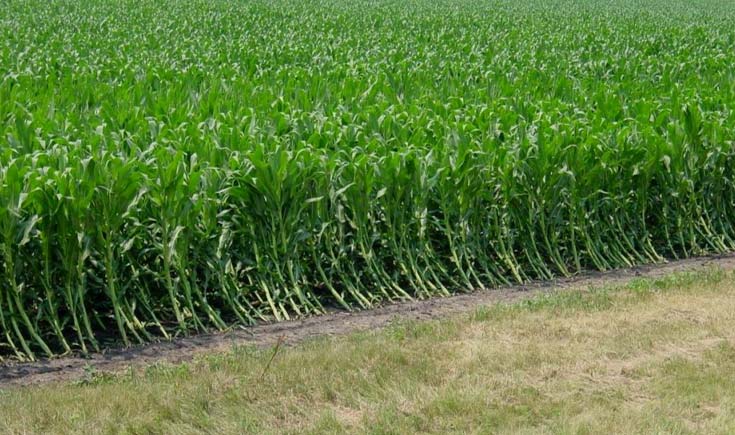
The ability of corn plants to recover from root lodging caused by severe wind depends on the growth stage of the corn when the lodging occurred.
Table 1. Planting, lodging, and harvest dates for each year of the study.
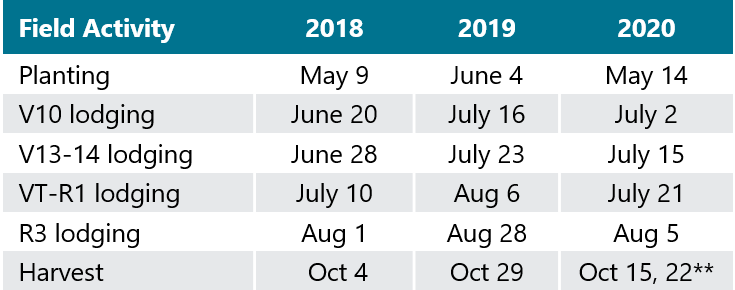
**Two replications harvested first date; third replication harvested second date.
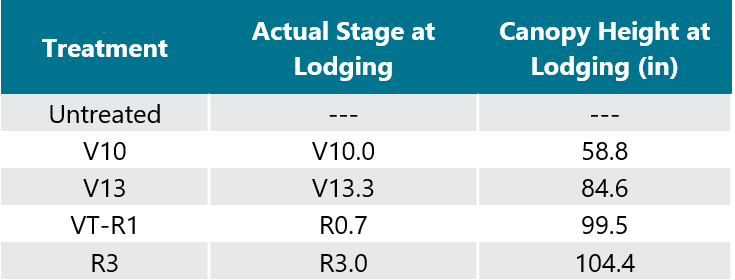
Table 2. Growth stage and canopy height and stage at the time of lodging treatments.
Results
Growth and Development
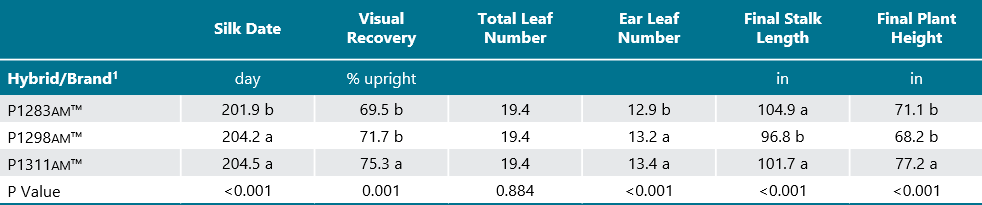
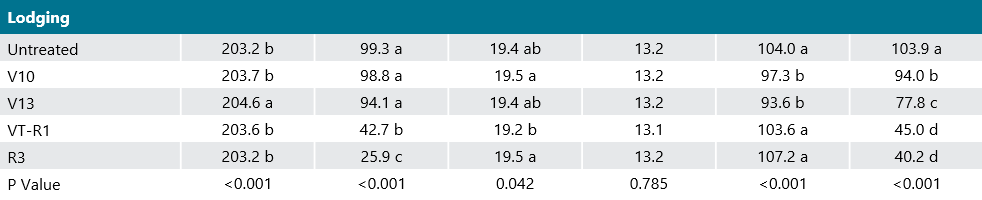
- Recovery from lodging, expressed as the percentage of stalks in the upper third of the crop canopy exhibiting upright growth, was highly dependent on crop growth stage (Table 3).
- Plants that lodged during vegetative growth (V10 and V13) recovered much more than plants that lodged after tasseling (VT-R1 and R3).
Table 3. Silk date, percent recovery, and plant characteristics rated at R4 for each hybrid and lodging treatment.
Review a larger version.
- Although both the V10 and V13 lodged plants had a high rate of recovery to vertical in the upper canopy, they differed greatly in the degree of displacement resulting from lodging.
- Planted lodged at V10 were displaced an average of 6 inches off the row, while plants lodged a V13 were displaced an average of 24 inches (data not shown), which could have a large effect on harvestability.
- Pioneer® P1311AM™ brand corn exhibited a greater rate of recovery than the other two hybrids (Table 3).
- Silk date was largely unaffected by lodging except for the V13 lodging treatment, which had slightly delayed silking.
- Lodging had little to no effect on total leaf number and ear position.
- Final stalk length was shorter for V10 and V13 lodged plants, suggesting internode elongation was reduced in response to the lodging treatments during vegetative growth.
- Final plant height from the soil surface to the uppermost leaf collar decreased with each successive lodging timing, with the VT-R1 and R3 timings reduced by more than half.
Table 4. Grain yield, moisture and percent vivipary.
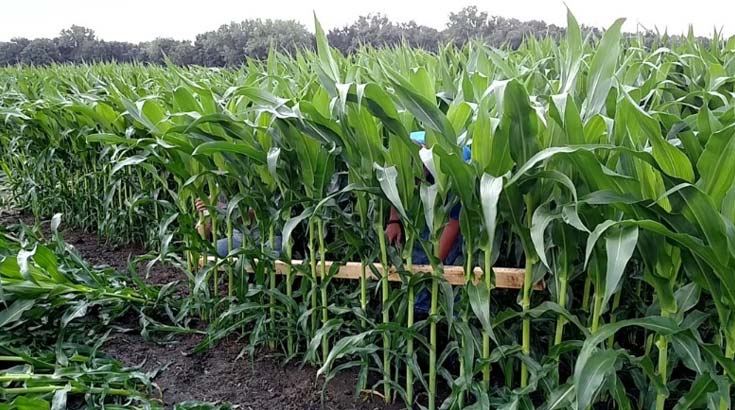
Applying simulated wind lodging treatment at the V10 growth stage.
Corn Yield
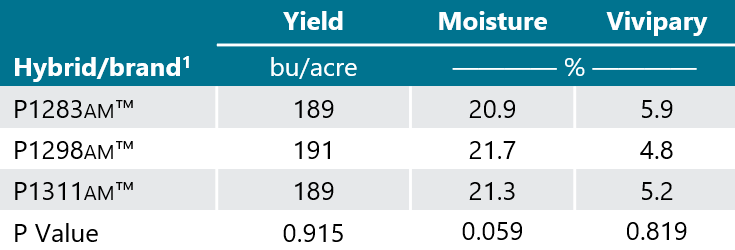
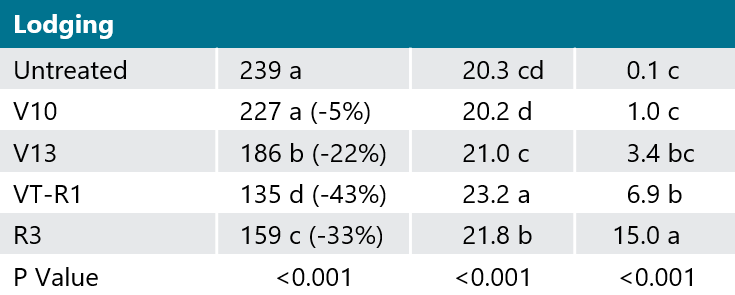
- Yield losses were similar for each lodging treatment regardless of hybrid (Table 4) and were greatest with lodging at VT-R1 (43% reduction) and R3 (33% loss). A 22% reduction in yield was seen with lodging at V13 and only 5% at V10.
- Yield did not significantly differ among hybrids.
- Grain moisture at harvest in the VT-R1 and R3 treatments (23.2% and 21.8%, respectively) was greater than the other treatments (Table 5).
- The percentage of ears exhibiting vivipary (sprouting of kernels on the ear) was greatest in the R3 and VT-R1 treatments (Table 4). Ears in these treatments were often in close proximity to the ground, which could have contributed to the elevated moisture levels.
Contributors to Yield Loss
- Yield losses at each lodging timing likely stem from multiple factors.
- The percentage of barren plants increased with lodging at V13 and VT-R1, but barren plants were few when lodged at R3 due to the plants being at the milk stage at lodging (Table 5).
- The total number of kernels produced per plant decreased with later stage lodging, although the magnitude of change from the untreated was 2- to 3-fold less than for total yield.


- Ear abnormalities of zippering and jumbled kernels were greatest with VT-R1 lodging, suggesting issues with pollination and kernel set contributed to the yield reduction.
- Substantial reductions in kernel weight were observed in the R3 lodged plants, suggesting this was a major contributor to reduced yield.
Comparisons to Previous Research
- Compared to the results from the Carter and Hudelson (1988) study, yield loss at V10 was similar in this study (5%) compared to the past work (3-4% loss) (Figure 1).
- Losses at V13-14 were greater in this study (22%) compared to the past study (10%), and losses at VT-R1 were much greater in the current study (43%) compared to the past work (14-24%).
- Some of these differences may be due to different hybrids and higher seeding rates used in the current study.
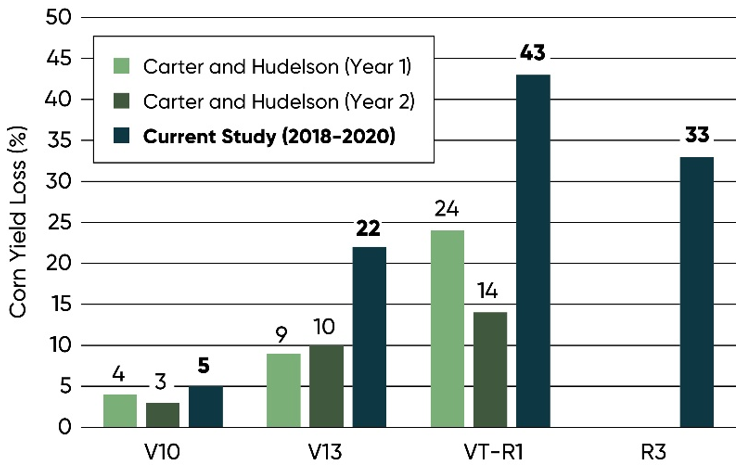
Figure 1. Yield loss associated with different lodging timings in the current study and as reported by Carter and Hudelson (1988).
Conclusion
- Yield loss resulting from lodging was greatest at VT-R1, stemming from reduced kernel number, poor pollination, and increased barren plants.
- High yield loss at R3 was mostly attributed to reduced kernel weight, and partially to reduced kernel number.
- Ears close to the ground at VT-R1 and R3 increased incidence of vivipary which could also impact grain marketability.
- Potential yield losses during machine harvest of the plants with limited recovery after root lodging at VT-R1 and R3 could also be greater than the hand-harvested yields in this experiment.
Reference
Carter, P.R. and K.D. Hudelson. 1988. Influence of simulated wind lodging on corn growth and grain yield. J. Production Agriculture. 1:295-299.
Research conducted by Dr. Peter Thomison and Dr. Alex Lindsey, Ohio State University, as a part of the Pioneer Crop Management Research Awards (CMRA) Program. This program provides funds for agronomic and precision farming studies by university and USDA cooperators throughout North America. The awards extend for up to four years and address crop management information needs of Pioneer agronomists, sales professionals and customers.
The foregoing is provided for informational use only. Please contact your Pioneer sales professional for information and suggestions specific to your operation. 2018-2020 data are based on average of all comparisons made in one location through October 22, 2020. Multi-year and multi-location is a better predictor of future performance. Do not use these or any other data from a limited number of trials as a significant factor in product selection. Product responses are variable and subject to a variety of environmental, disease, and pest pressures. Individual results may vary. Pioneer® brand products are provided subject to the terms and conditions of purchase which are part of the labeling and purchase documents.
1All Pioneer products are hybrids unless designated with AM1, AM, AML, AMT, AMRW, AMX, AMXT, and Q in which case they are brands. AM - Optimum® AcreMax® Insect Protection system with YGCB, HX1, LL, RR2. Contains a single-bag integrated refuge solution for above-ground insects. In EPA-designated cotton growing counties, a 20% separate corn borer refuge must be planted with Optimum AcreMax products.



HX1 - Contains the Herculex® I Insect Protection gene which provides protection against European corn borer, southwestern corn borer, black cutworm, fall armyworm, lesser corn stalk borer, southern corn stalk borer, and sugarcane borer; and suppresses corn earworm. LL - Contains the LibertyLink® gene for resistance to Liberty® herbicide. RR2 - Contains the Roundup Ready® Corn 2 trait that provides crop safety for over-the-top applications of labeled glyphosate herbicides when applied according to label directions. ALWAYS READ AND FOLLOW PESTICIDE LABEL DIRECTIONS. Roundup Ready® crops contain genes that confer tolerance to glyphosate, the active ingredient in Roundup® brand agricultural herbicides. Roundup® brand agricultural herbicides will kill crops that are not tolerant to glyphosate. Liberty®, LibertyLink® and the Water Droplet Design are registered trademarks of BASF. Roundup Ready® is a registered trademark used under license from Monsanto Company.