
Country Selector
Please enter a valid location
Row Spacing in Soybean Production

Crop Insights
Written by Mark Jeschke, Ph.D., Pioneer Agronomy Manager

- Key Points
- Soybean Row Spacing
- Evolution of Row Spacing Practices
- Soybean Row Spacing Research
- Current Practices
- Weed Control Considerations
- References
Key Points
- Row spacings utilized by soybean growers have shifted considerably over the past 30 years and remain very geographically diverse today.
- While 15- and 30-inch row spacings now comprise the majority of U.S. soybean acres, other configurations have persisted or gained popularity in some geographies.
- A Pioneer review of soybean row spacing studies found that yields were similar between drilled and 15-inch row soybeans and that both averaged around a 4 bu/A advantage over 30-inch row soybeans.
- A comprehensive analysis of soybean row spacing research conducted across 67 locations in 15 states showed a significant yield advantage with narrow rows, but the magnitude of this advantage varied by geography.
- The yield advantage of narrow rows was strongly associated with factors such as late planting, early maturity varieties and high temperatures that shorten the amount of time between emergence and the beginning of pod set.
- Earlier canopy closure with narrow row spacing in soybeans can significantly reduce weed density, biomass and seed production, which can provide a significant advantage against late-emerging, herbicide-resistant weeds like waterhemp.
Soybean Row Spacing
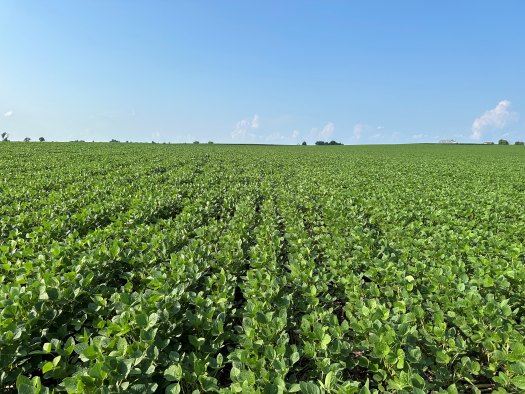
Row spacing is one of the management practices most often considered by growers as potentially important for maximizing soybean yields and profits and, consequently, has been the subject of numerous research studies over the past few decades. On average, studies have found a yield advantage with row spacings narrower than 30 inches; however, results have often varied among trial locations. Row spacings utilized by soybean growers have shifted considerably over the past 30 years and remain very geographically diverse today, with narrow rows comprising a far greater proportion of soybean acres in some states than in others. This Crop Insights reviews research results, current row spacing trends and factors beyond just yield potential that may influence row spacing preferences of soybean growers.
Evolution of Row Spacing Practices
Maximizing yield potential has not always been the primary driver of row spacing practices in soybeans. During the 1960s and 1970s, when soybeans started gaining widespread adoption as a rotational crop with corn, they were typically planted using the same planter that was used to plant corn, which meant a row spacing of 30 inches or wider. In the early 1980s, narrow row soybeans (defined by the USDA as < 18 inches) comprised less than 10% of soybean acres in most states (Battaglia, 1986).
A widespread shift toward narrower row spacings took place during the late 1980s and 1990s. Narrow rows at this time generally meant planting with a drill in row spacings of 10 inches or less. There were two main drivers for this shift in planting practices. The first was research showing the potential for increased light interception and greater yields with narrower rows. The second was improved weed suppression with earlier canopy closure in narrow row soybeans, which was important given the limited herbicide options for post-emergence weed control in soybeans at the time. Soil conservation benefits and improved technology of no-till drills also contributed to this transition. Adoption of drilled narrow-row soybeans occurred throughout the U.S., but not to an equal degree. Narrow rows were widely adopted in Illinois, Indiana, Missouri and Ohio; however, row spacings of 30 inches or wider remained popular in Iowa, Minnesota and Nebraska (Figure 1).
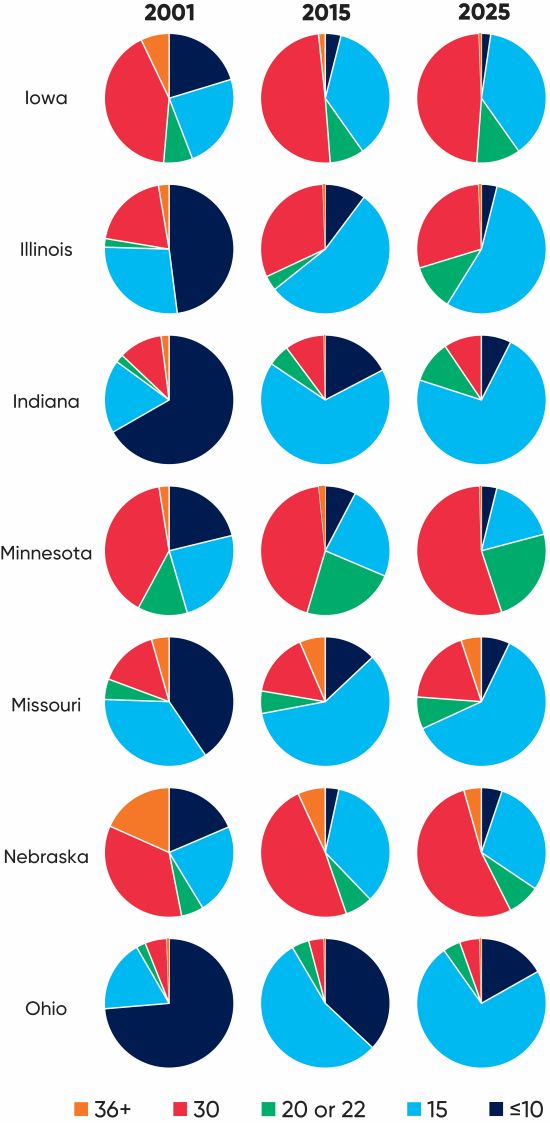
Figure 1. Soybean row spacings (in inches) in the largest soybean-producing states as a percent of total acres over three time periods: 1997-2001, 2011-2015 and 2021-2025 (USDA-NASS, 2001, 2015 and 2026).
By the late 1990s, 15-inch rows also began to gain in popularity as split-row planters became more available. This option combined the benefits of narrow rows with the greater seed placement accuracy of a planter compared to a drill. Better seed placement meant that a lower seeding rate could be used compared to seeding rates used with drills – which commonly exceeded 200,000 seeds per acre. Adoption of 15-inch row soybeans was more rapid on larger farms where it was more feasible to justify the additional cost of a split-row planter or to have a planter dedicated specifically to soybeans (Jeschke and Lutt, 2016).
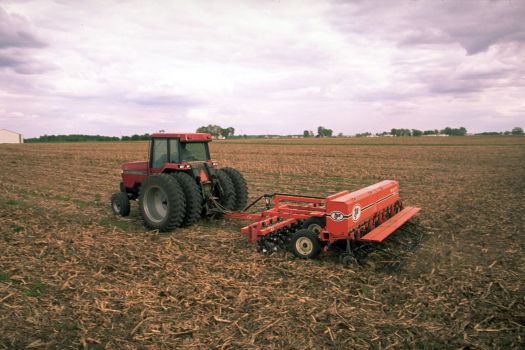
During the 1960s and 1970s, soybeans were generally planted in 30-inch or wider rows; however, a widespread shift toward drilled narrow row soybeans occurred during the late 1980s and 1990s.
Adoption of 15-inch rows continued throughout the 2000s and 2010s, replacing drilled soybeans as the narrow-row configuration of choice (Figure 1). However, adoption of 15- inch rows did not generally displace 30-inch rows. In states such as Iowa, Minnesota and Nebraska — where wider rows never dropped below 40% of soybean acreage — the percent of acres in 30-inch or wider rows remained stable or increased between 2001 and 2025. This has led to the somewhat surprising current scenario for soybean production, in which row spacing practices vary widely across states (Figure 2).
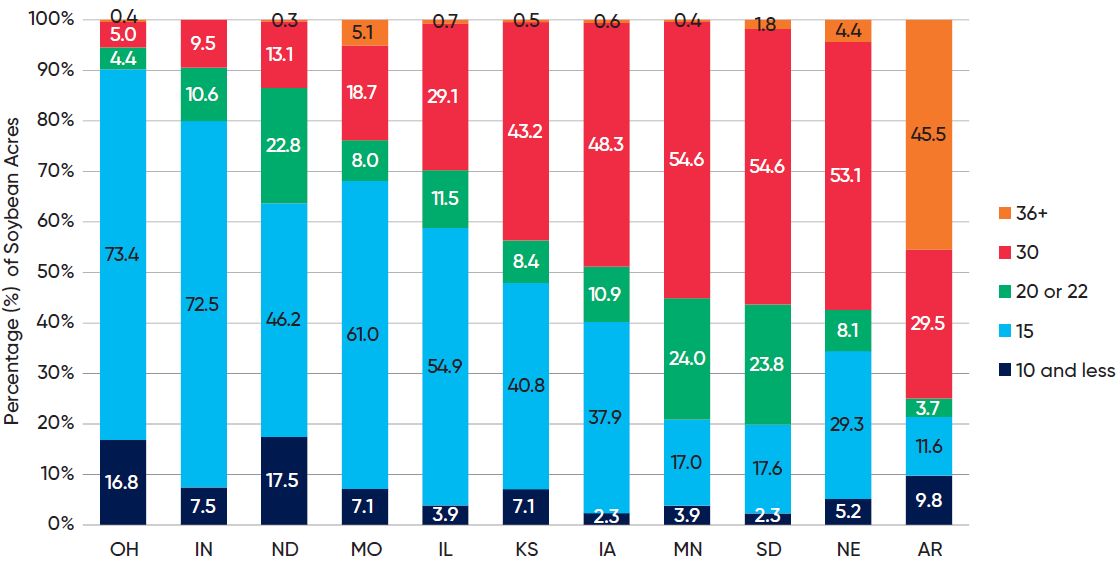
Figure 2. Soybean row spacings (in inches) in the largest soybean-producing states as a percent of total acres, 2021-2025. Source: USDA-NASS Crop Production 2025 Summary (USDA-NASS, 2026).
This stands in sharp contrast to corn, which has seen a convergence on 30 inches as the standard row spacing across the vast majority of corn acreage in the U.S.
| Soybean row spacing practices vary widely across the U.S., in sharp contrast to corn, which has seen a convergence on 30 inches as the standard row spacing. |
A couple of factors have likely contributed to the persistence of 30-inch row soybeans in some areas, the first and most obvious being that growers have simply not seen enough of a yield benefit to justify switching to a narrower row spacing.
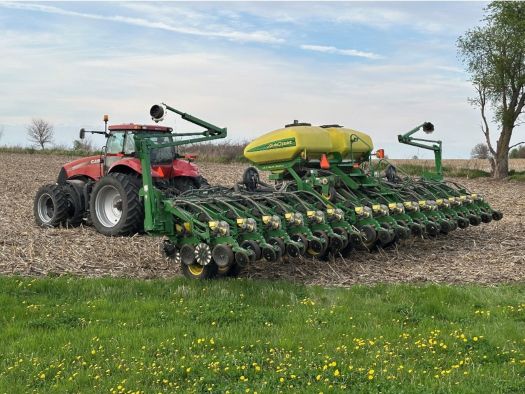
15-inch row spacing has largely replaced drilled soybeans as the narrow-row configuration of choice; however, it has not generally displaced 30-inch and wider row spacings in areas where they remain popular.
One would expect that, if a consistent yield benefit could be attained, grower practices would inevitably follow. The availability of effective post-emergence weed control options has likely contributed as well. Greater weed suppression was one of the driving factors for adoption of drilled soybeans in the 1980s, but the introduction of better soybean herbicides in the early and mid-1990s — and especially the introduction of glyphosate-tolerant varieties in 1996 — made weed control in soybeans less of a pressing concern in the 2000s and 2010s.
While 15- and 30-inch row spacings now comprise the majority of U.S. soybean acres, other planting configurations have persisted or gained popularity in some geographies. Drilled soybeans have not gone away, still accounting for over 15% of soybean acres in Ohio and North Dakota and over 5% of acres in a handful of other states (Figure 3).
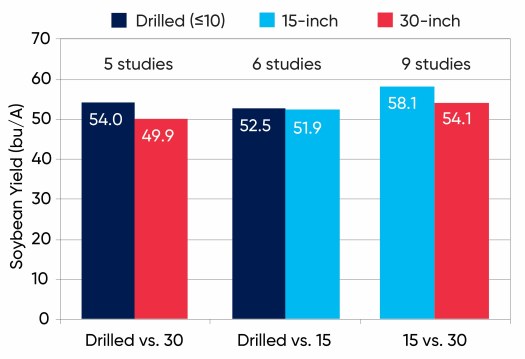
Figure 3. Average yield results from ten soybean row spacing studies that included comparisons of drilled (≤10-inch) rows, 15-inch rows and/or 30-inch rows. (Pedersen and Lauer, 2003; Bertram and Pedersen, 2004; Kratchovil et al., 2004; Janovicek et al., 2006; De Bruin and Pedersen, 2008; Hanna et al., 2008; Cox and Cherney, 2011; Swoboda, et al., 2011; Fawcett et al., 2015; Thompson et al., 2015).
Wider row spacings have persisted in the Mid-South in raised-bed furrow-irrigated production systems. And 20- and 22-inch rows (which are typically grouped together in survey data) comprise a significant proportion of soybean acreage in several states. 22-inch rows are mostly confined to sugar beet production areas in Minnesota and North Dakota, while 20-inch rows have seen wider adoption by growers across many states that want to capture the benefits of narrow rows in soybean while using the same row configuration in corn.
Soybean Row Spacing Research
Numerous research studies comparing soybean row spacings have been conducted over the years. Research during the 1980s and 1990s primarily focused on comparisons between drilled narrow rows vs. 30-inch rows and generally showed a significant yield advantage for drilled narrow rows. A review of these studies by Purdue University researchers in 2003 showed an average 6.2 bu/A yield advantage for drilled soybeans (Lambert and Lowenberg-DeBoer, 2003).
As 15-inch row soybeans gained popularity, research studies began to include it in comparison to drilled and 30-inch rows, or just 30-inch rows. A 2016 Pioneer review of soybean row spacing studies conducted in the late 1990s and 2000s found that yields were similar between drilled and 15-inch row soybeans and that both averaged around a 4 bu/A advantage over 30-inch row soybeans (Figure 3; Jeschke and Lutt, 2016). More recent research has focused primarily on 30-inch and 15-inch rows, as drilled soybeans have become less common.
Analysis of University Research
A comprehensive analysis of soybean row spacing research comparing 15- and 30-inch rows was published in 2019 (Andrade et al., 2019). This analysis included 129 site-year experiments conducted across 67 locations in 15 states between 1999 and 2018. In addition to research trial results, this analysis also included grower yield and production data from over 7,000 soybean fields across 10 North Central states to explore whether yield outcomes in producer fields corresponded with research findings.
| Research has shown that the yield advantage of narrow-row soybeans can vary by geography. |
Results of the research trial analysis showed a significant yield advantage with narrow rows, but the magnitude of this advantage varied by geography. Research trials were grouped into three regions (north, central and south) based on location and soybean variety maturity groups. Narrow rows had the greatest yield advantage in the south region (+8.0 bu/A), followed by the north region (3.6 bu/A). In the central region, which accounts for over 60% of total U.S. soybean production, the average narrow row yield advantage was only 1.5 bu/A (Figure 4).
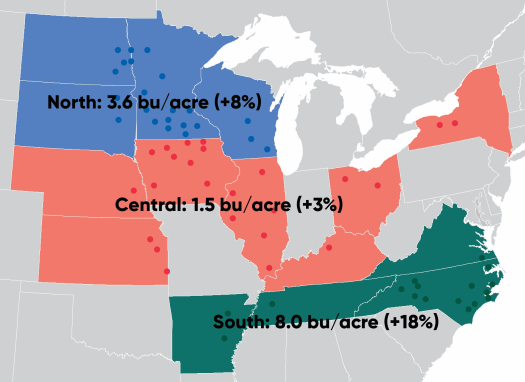
Figure 4. Yield advantage of narrow row soybeans by region among university research trials included in the meta-analysis conducted by Andrade et al. (2019).
The magnitude of narrow row yield advantage was influenced by weather and management practices. In the north and south regions, the yield advantage of narrow rows was strongly associated with the length of time between emergence and the beginning of pod set (VE-R3) – the shorter the length of this time period, the greater the yield advantage with narrow rows. Weather and management factors that reduced the amount of time to pod set included higher temperatures during vegetative growth, later planting and shorter maturity soybean varieties.
| Narrow rows are advantageous in scenarios in which earlier canopy closure increases the ability of the crop to capture solar radiation during the critical period for yield determination. |
Research has shown that soybean yield depends on solar radiation capture during the critical period for yield determination, which in soybeans is R3-R6 (beginning pod to full seed (Monzon et al., 2021). To maximize solar radiation capture during this period, soybeans need to achieve full canopy closure by R3. This is more difficult to do when factors such as delayed planting shorten the amount of time available to soybeans to add vegetative growth and leaf area. Narrow rows are advantageous in scenarios in which earlier canopy closure increases the ability of the crop to capture solar radiation during the critical period for yield determination (Andrade et al., 2002).
| Increased disease pressure may offset some of the yield benefits of narrow-row soybeans. |
In the central region, where the average yield advantage of narrow rows was only 1.5 bu/A, there were no significant effects of weather or management variables. The study authors speculated that favorable growth conditions in this region enabled soybeans to achieve canopy closure by R3 irrespective of row spacing. They also noted that greater disease pressure in narrow-row soybeans — particularly white mold (Sclerotinia sclerotiorum) — may have offset some of the yield benefit of narrow rows.
Grower Yield Outcomes
Analysis of grower yield data from states in the north and central regions did not show any consistent yield advantage to narrow rows. This was not overly surprising for the central region, where the yield advantage for narrow rows in research trials was only 1.5 bu/A; however, it did conflict with results from northern research trials. The study authors speculated that other management factors may have lessened the yield benefit of narrow rows in grower fields. One such factor could have been wheel track damage from foliar fungicide and/or insecticide applications, which generally would not be a factor in smaller research trials. Research has shown that a 1-5% yield penalty can result from sprayer wheel track damage during reproductive growth stages (Table 1).
Table 1. Soybean yield loss due to sprayer wheel damage in 7.5- inch and 15-inch row spacings with four different boom widths (Holshouser and Taylor, 2008).
| Row Spacing | Boom Width (ft) | |||
|---|---|---|---|---|
| 40 | 60 | 90 | 120 | |
| –––––– % yield loss ––––––– | ||||
| 7.5 inch | 3.8 | 2.8 | 1.9 | 1.4 |
| 15 inch | 4.5 | 3.5 | 2.3 | 1.7 |
Current Practices
Row spacing practices in soybeans have changed considerably over the years and remain geographically diverse today. Regional differences are partly the result of rotational crops and other local cropping system factors, such as with 22-inch rows in Minnesota and North Dakota and wide rows in the South. Legacy effects are also likely a factor – drilled soybeans had greater adoption during the 1980s and 1990s in regions where drills were more widely available on farms due to their use in other crops, and then 15-inch rows largely replace drilled soybeans in these areas. However, in states west of the Mississippi that never had that initial widespread shift away from wide row soybeans, 30-inch rows remain the majority today. USDA data show that soybean row spacing practices have been relatively stable over the past decade, with no major shifts into or out of narrow rows (Figure 1).
| USDA data show that soybean row spacing practices have been relatively stable over the past decade, with no major shifts into or out of narrow rows. |
Could growers currently planting soybeans in 30-inch and wider row spacings realize a yield benefit from switching to narrow rows? The case for switching appears to be the most compelling in the Southern U.S. Andrade et al. (2019) showed an 8 bu/A average yield advantage for narrow rows across research trials conducted in Arkansas, Tennessee, Virginia and North Carolina. A recent study in Mississippi found similar results, with narrow rows (20-inch spacing in this case) providing an 8% yield advantage over 40- inch rows (Smith et al., 2019).
Growers in northern states may also see a benefit, particularly in Minnesota and South Dakota, where 30-inch rows are currently used on the majority of soybean acres. However, grower yield results in Andrade et al. (2019) suggest that yield benefits observed in research studies may not be fully realized on the farm. One reason for the lack of observed on-farm yield benefits may be the prevalence of higher pH soils in this region. Iron deficiency chlorosis can be an issue on poorly drained calcareous soils with pH above 7.5. Higher seeding rates and wider row spacings are management practices that can be employed to mitigate iron deficiency chlorosis. Soybean roots excrete acids as they grow, which increases the availability of iron in the surrounding soil. When soybean plants are packed closer together in the row, it increases the amount of acid in the root zone (Essick and Ries, 2020).
The case for switching based on yield potential is less compelling in the Central Corn Belt, where neither research trials nor grower yields indicated a strong benefit for doing so. A recent Iowa State University study found no consistent effect of row spacing on soybean yield over seven years of field trials in Iowa (Seraglio et al., 2025). However, the potential yield benefit of narrow rows will depend on local growing conditions and management practices.
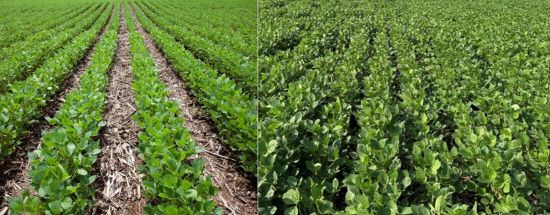
Soybeans planted in 30-inch rows (left) and 15-inch rows (right). Canopy closure before R3 is key to maximizing soybean yield – if a narrower row spacing allows the crop to capture more solar radiation during the critical period for yield determination, it is more likely to pay off in greater yield.
Canopy closure before R3 is key – if a narrower row spacing allows the crop to capture more solar radiation during the critical period for yield determination, it is more likely to pay off in greater yield. Conversely, if growth and management conditions allow soybeans to consistently reach canopy closure by R3 in 30-inch rows, changing to a narrower row spacing is unlikely to increase yield potential.
Weed Control Considerations
There are other factors to consider regarding soybean row spacing than just yield potential though. One of the factors that drove the initial adoption of narrow row soybeans in the 1980s and 1990s was the better weed suppression that resulted from earlier canopy closure. The availability of effective post-emergence soybean herbicide options effectively removed weed management from the row spacing equation for many years; however, the proliferation of glyphosate-resistant weeds – particularly waterhemp – has made it an important consideration once again.
| One of the factors that drove the initial adoption of narrow row soybeans in the 1980s and 1990s was better weed suppression that resulted from earlier canopy closure. |
The effectiveness of narrow row spacings in soybeans for reducing weed growth is well-documented. A meta-analysis of weed management studies conducted over nearly 60 years found that narrow row spacing in soybeans reduced weed density by 42% and weed biomass by 71% on average compared to 30-inch row soybeans (Singh et al., 2023). Weed control in soybeans has been made more challenging in recent years due to the proliferation of glyphosate-resistant populations of several weed species, none more so than waterhemp.
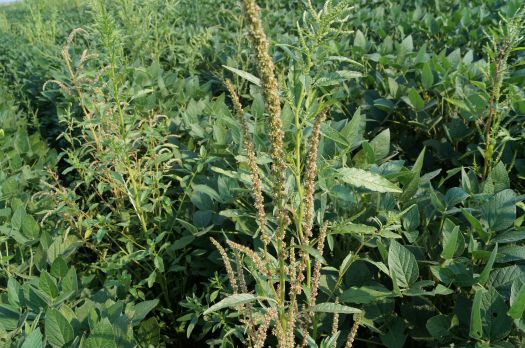
Waterhemp’s extended emergence window and rapid growth rate can allow late-emerging plants to take advantage of the later canopy closure in 30-inch row soybeans.
Waterhemp (Amaranthus tuberculatus) is a particularly difficult weed to manage in crop production because of its extended emergence window, rapid growth rate, phenotypic plasticity, prolific seed production and exceptional ability to evolve resistance to multiple classes of herbicides. Glyphosate-resistant waterhemp is already widespread, and resistant populations have been documented for herbicides such as 2,4-D, dicamba and glufosinate that have been relied upon for post-emergence weed control in soybeans in recent years (Heap, 2026).
Field studies have shown that narrow row spacing in soybeans can significantly reduce waterhemp density and seed production. A recent Iowa State University study found a significant reduction in waterhemp density, aboveground biomass and seed production in 15-inch rows compared to 30-inch rows (Yadav et al., 2023). Waterhemp biomass at soybean harvest was reduced by 17-31% and seed production was reduced by 36-61% in 15-inch rows. When narrow row spacing in soybeans was utilized in conjunction with a cover crop and highly effective waterhemp control in the rotational corn crop, waterhemp biomass and seed production were both reduced by over 80%. Given the difficulty in managing waterhemp and lack of any new herbicide options likely to provide a lasting solution in the foreseeable future, soybean growers need to exploit every possible advantage in reducing waterhemp populations.
| Soybeans planted in 15-inch rows typically achieve canopy closure around 15 days earlier than those in 30-inch rows. |
While waterhemp is probably the formidable and widespread weed management challenge in soybeans, it is not the only one. Other weed species such as giant ragweed (Ambrosia trifida) and Palmer amaranth (Amaranthus palmeri) can create similar challenges, and populations resistant to common post-emergence herbicides will continue to proliferate. Soybeans planted in 15-inch rows typically achieve canopy closure around 15 days earlier than those in 30-inch rows, which can provide a significant advantage against late-emerging weeds (Licht, 2018).
References
- Andrade, F.H., P. Calviño, A. Cirilo, and P. Barbieri. 2002. Yield responses to narrow rows depend on increased radiation interception. Agron. J. 94:975-980.
- Andrade, J.F., J.I.R. Edreiraa, S. Mourtzinis, S.P. Conley, I.A. Ciampitti, J.E. Dunphy, J.M. Gaska, K. Glewen, D.L. Holshouser, H.J. Kandel, P. Kyveryga, C.D. Lee, M.A. Licht, L.E. Lindsey, M.A. McClure, S. Naeve, E.D. Nafziger, J.M. Orlowski, J. Ross, M.J. Staton, L. Thompson, J.E. Specht, and P. Grassini. 2019. Assessing the influence of row spacing on soybean yield using experimental and producer survey data. Field Crops Research 230:98-106.
- Battaglia, R.J. 1986. The effect of row width on data and models used in the Soybean Objective Yield Survey. USDA NASS Statistical Research Division. NASS Staff Report Number YRB-86-03.
- Bertram, M.G., and P. Pedersen. 2004. Adjusting management practices using glyphosate-resistant soybean cultivars. Agron. J. 96:462-468.
- Cox, W.J., and J.H. Cherney. 2011. Growth and yield responses of soybean to row spacing and seeding rate. Agron. J. 103:123-128.
- De Bruin, J.L., and P. Pedersen. 2008. Effect of row spacing and seeding rate on soybean yield. Agron. J. 100:704-710.
- Essick, M., and L. Ries. 2020. Spotting and preventing iron deficiency chlorosis in soybeans. Pioneer Crop Insights Vol. 30 No. 9. Corteva Agriscience. Johnston, IA
- Fawcett, Jim; Sievers, Josh; Rossiter, Lyle; and Rogers, Jim, On-Farm Soybean Row Spacing Trials. 2015. Iowa State Research Farm Progress Reports. Paper 2131.
- Hanna, S.O., S.P. Conley, G.E. Shaner, J.B. Santini. 2008. Fungicide application timing and row spacing effect on soybean canopy penetration and grain yield. Agron. J. 100:1488-1492.
- Heap, I. 2026. The International Herbicide-Resistant Weed Database. Online. Thursday, April 2, 2026. www.weedscience.org.
- Holshouser, D.L., and R.D. Taylor. 2008. Wheel traffic to narrow-row reproductive-stage soybean lowers yield. Online. Crop Management. doi:10.1094/CM-2008-0317-02-RS.
- Janovicek, K.J., W. Deen, and T.J. Vyn. 2006. Soybean response to zone tillage, twin-row planting, and row spacing. Agron. J. 98:800-807.
- Jeschke, M., and N. Lutt. 2016. Row width in soybean production. Pioneer Crop Insights Vol. 26 No. 12. Corteva Agriscience. Johnston, IA.
- Kratchovil, R.J., J.T. Pearce, and M.R. Harrison, Jr. 2004. Row-spacing and seeding rate effects on glyphosate-resistant soybean for Mid-Atlantic production systems. Agron. J. 96:1029-1038.
- Lambert, D.M., and J. Lowenberg-DeBoer. 2003. Economic analysis of row spacing for corn and soybean. Agron. J. 95:564-573.
- Licht, M. 2018. Consider 15-inch Row Spacing in Soybean. ICM News. Iowa State University Extension and Outreach.
- Monzon, P., N.C. La Menza, A. Cerrudo, M. Canepa, J.I.R. Edreira, J. Specht, F.H. Andrade, and P. Grassini. 2021. Critical period for seed number determination in soybean as determined by crop growth rate, duration, and dry matter accumulation. Field Crops Research. 261:108016.
- Pedersen, P., and J.G. Lauer. 2003. Corn and soybean response to rotation sequence, row spacing, and tillage system. Agron. J. 95:965-971.
- Seraglio, N., M. Pessotto, A. Weaver, and M.A. Licht. 2025. Soybean overcome differences in row spacing and seeding rate to maintain stable yield. Crop Forage & Turfgrass Mgmt. 11:e70033.
- Singh, M., R. Thapa, N. Singh, S.B. Mirsky, B.S. Acharya and A.J. Jhala. 2023. Does narrow row spacing suppress weeds and increase yields in corn and soybean? A meta-analysis. Weed Science 71:520-535.
- Smith, R.M., G. Kaur, J.M. Orlowski, G. Singh, D. Chastain, T. Irby, L.J. Krutz, L. Falconer, and D.R. Cook. 2019. Narrow-row production system for soybeans in Mississippi Delta. Crop Forage & Turfgrass Mgmt. 5:190015. doi:10.2134/cftm2019.02.001.
- Swoboda, C.M., P. Pedersen, P.D. Esker, G.P. Munkvold. 2011. Soybean yield response to plant distribution in Fusarium virguliforme infested soils. Agron. J. 103:1712-1716.
- Thompson, N.M., J.A. Larson, D.M. Lambert, R.K. Roberts, A. Mengistu, N. Bellaloui, and E.R. Walker. 2015. Mid-South soybean yield and net return as affected by plant population and row spacing. Agron. J. 107:979-989.
- Yadav, R., P. Jha, R. Hartzler, and M. Liebman. 2023. Multi-tactic strategies to manage herbicide-resistant waterhemp (Amaranthus tuberculatus) in corn–soybean rotations of the U.S. Midwest. Weed Science 71:141-149.
The foregoing is provided for informational use only. Contact your Pioneer sales professional for information and suggestions specific to your operation. Product performance is variable and subject to any number of environmental, disease, and pest pressures. Individual results may vary. Pioneer® brand products are provided subject to the terms and conditions of purchase which are part of the labeling and purchase documents.
