
Country Selector
Please enter a valid location
Symptoms of Dicamba Injury in Soybeans
Written by Mark Jeschke, Ph.D., Agronomy Manager
Key Points
- Dicamba use for post-emergence weed control has increased in both corn and soybeans in recent years to control glyphosate-resistant weeds.
- Soybeans without dicamba tolerance are extremely sensitive to dicamba and can be injured by off-target movement or contaminated spray equipment, which shows up as cupping of newly developed leaves.
- Other factors can also cause malformation of leaves in soybeans, so it’s important to be able to distinguish symptoms associated with different causes.
- The potential for yield loss depends on the amount of dicamba and the growth stage of soybeans at the time of exposure.
- Increasing Occurrence of Injury in Soybeans
- Plant Growth Regulator Herbicides
- General Considerations for Diagnosing Herbicide Injury
- Non-Herbicide Factors
- Yield Impacts of Dicamba Injury
- References
Increasing Occurrence of Injury in Soybeans
- With the increased use of dicamba herbicides for post-emergence weed control in soybeans, dicamba drift and volatilization have become a common cause of crop injury in non-dicamba-tolerant soybeans.
- Dicamba use has also increased in corn in response to the spread of waterhemp populations resistant to other herbicide modes of action.
- Soybeans are extremely sensitive to dicamba, and dicamba can move miles away from the site of application under certain atmospheric conditions, resulting in a high risk of crop injury.
- Other herbicides and non-herbicide factors can also cause malformation of leaves in soybeans, so it’s important to be able to distinguish symptoms associated with different causes.
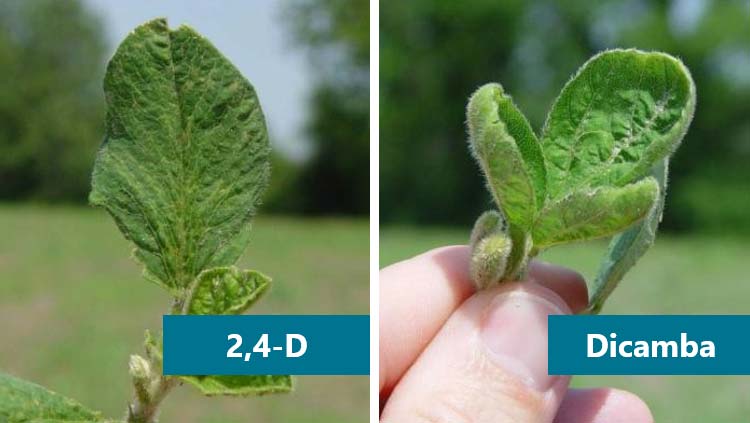
Figure 1. Side-by-side comparison of 2,4-D and dicamba symptoms from a Pioneer soybean herbicide response demonstration. Plants exposed to 2,4-D display leaf strapping, with the veins pulled into a more parallel orientation, while leaves exposed to dicamba show more of an upward cupping/drawstring effect.
Plant Growth Regulator Herbicides
- At field application rates, injury symptoms of 2,4-D and dicamba to sensitive soybeans are often similar, with drooping leaves and stem twisting showing up within hours after application.
- At lower exposure levels, commonly associated with off-target movement, symptoms are generally more distinct and will also take a longer time after exposure to develop (Figure 1).
Dicamba
- Dicamba injury symptoms in soybeans include:
- Symptoms typically appear on new growth 1-3 weeks following exposure. Leaves that were already fully developed at the time of exposure usually will not show injury symptoms.
- Soybeans are extremely sensitive to dicamba, so exposure to even a tiny amount can cause crop response. Less than 1/10,000x field rate has been shown to result in dicamba injury symptoms on susceptible plants (Gunsolus, 2018; Hager and Sprague, 2000).
- Dicamba is capable of moving long distances from treated fields, sometime well after the time of application.
- Fine aerosol particles that remain suspended in the air during a temperature inversion can travel as far as 2-3 miles from the site of application (Osipitan et al., 2019).
- Volatilization of dicamba from treated fields has been detected up to four days after application.
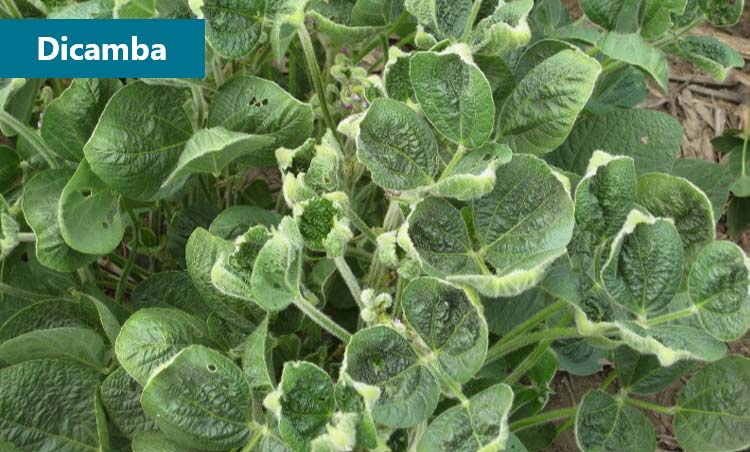
Figure 2. Soybean plants showing upward leaf cupping characteristic of dicamba injury. Symptoms are limited to newer growth, with older leaves unaffected.
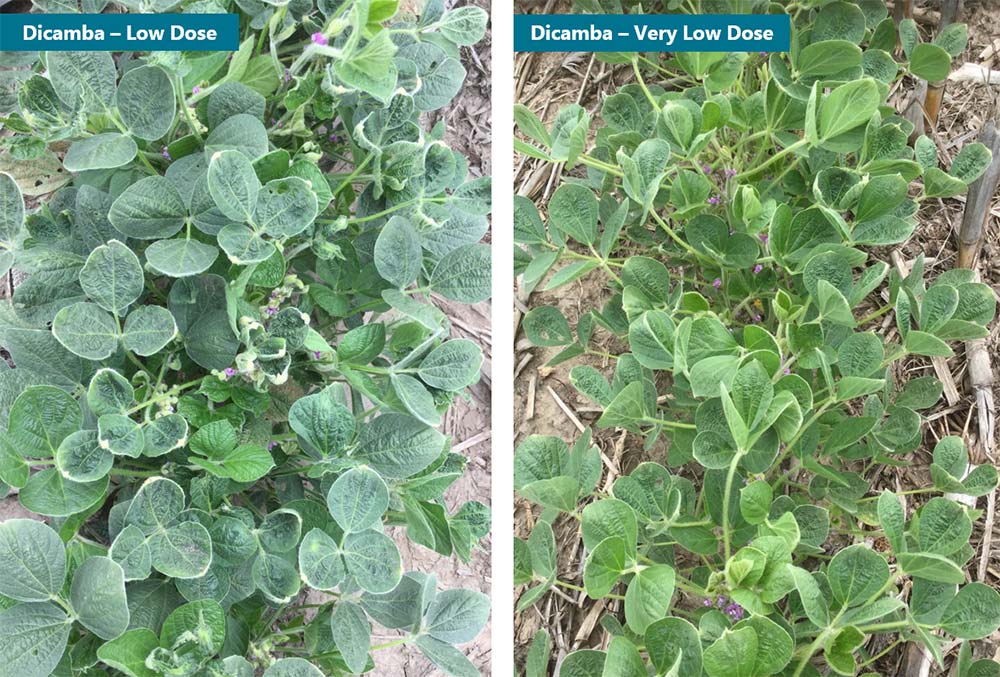
Figure 3. Soybean plants in a field near Waterville, KS showing symptoms of exposure to a low dose of dicamba. Left: Plants showing leaf crinkling, upward leaf cupping, and whitish leaf margins on new growth characteristic of dicamba injury. Right: Symptoms of a very low dose of dicamba exposure, including crinkling at the leaf tips and slight downward cupping.
- Dicamba injury symptoms that appear over an entire field of non-dicamba-tolerant soybeans can be indicative of either sprayer contamination or off-target movement.
- Sprayer Contamination
- Injury due to sprayer contamination is a risk whenever a sprayer used to apply dicamba is later used in non-dicamba-tolerant soybeans.
- Plant growth regulator herbicides readily adhere to plastic and rubber parts, making them difficult to clean from spray equipment.
- Some herbicides, such as glyphosate, can dissolve dicamba residues from the inside of spray tanks.
- The high sensitivity of soybeans to dicamba means that even a tiny amount left in a sprayer can cause injury over the entire area treated with the next sprayer load.
- Off-Target Movement
- Multiple university weed scientists have noted cases of relatively uniform injury across entire fields of non-dicamba-tolerant soybeans associated with off-target movement of dicamba.
- The scale of injury symptoms observed across the countryside in recent years suggests that off-target movement is likely the predominant cause of dicamba injury in soybeans (Hager, 2019).
2,4-D
- Injury symptoms include:
- Leaf elongation and strapping, with parallel veins in affected leaves (Figure 4).
- Formation of callous tissue on stems.
- Soybeans are less sensitive to 2,4-D than to dicamba. It takes a higher dose to cause the same level of injury caused by off-target movement of dicamba.
- Plant height reduction generally doesn’t occur unless exposure levels are high. Death of the apical meristem is also unlikely with 2,4-D injury.
Other Growth Regulator (Group 4) Herbicides
- Other plant growth regulator herbicides, such as clopyralid can also cause injury to soybeans.
- Carryover injury associated with clopyralid applied to corn the previous season will typically show up early in the season at around the V1 growth stage.
- Group 4 herbicides used in hay fields and pastures, such as picloram and aminopyralid, degrade slowly and can cause injury in soybeans via hay or manure brought into the field.

Figure 4. Soybean trifoliate showing symptoms of 2,4-D injury. Leaflets are strapped, with parallel venation.
Other Herbicides Modes of Action
- Foliar-Applied PPOs (Group 14)
- Foliar-applied PPO herbicides can cause leaf distortion in soybeans but can be distinguished by the accompanying leaf burning common with PPOs and a lower degree of cupping than is typical of dicamba (Figure 5).
- PPO response can also be distinguished from dicamba injury by the fact that symptoms will appear on all exposed leaves, while dicamba injury will show up only on new growth.
- Post-Emergence Applied Soil Residual Herbicides (Group 15)
- The post-emergence use of group 15 herbicides in soybeans has increased as a means to achieve better waterhemp control.
- These products can cause malformation of soybean leaves in cold and wet soil conditions, but symptoms differ from those associated with PGRs.
- Crop response to group 15 products can be distinguished by a shortening of the midrib of leaflets, resulting in a heart shape (Figure 6).
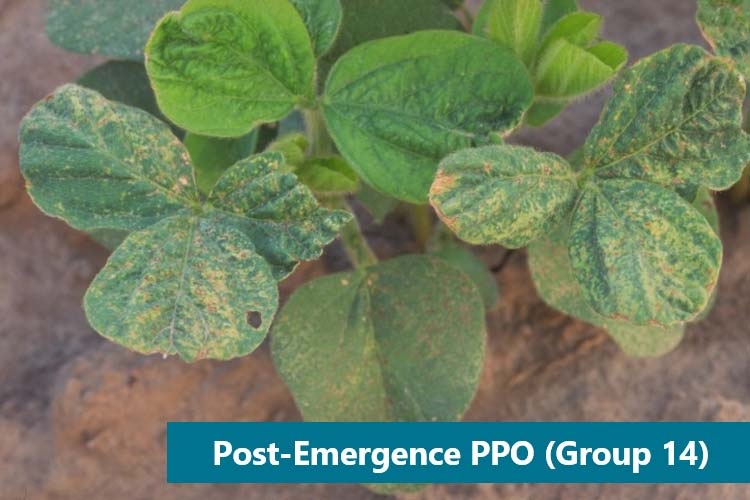
Figure 5. Soybean injury after foliar application of a PPO herbicide. Leaves show some degree of distortion and midrib shortening, which could be mistaken for other types of injury, but also show burning of leaves exposed at the time of application characteristic of PPO damage.
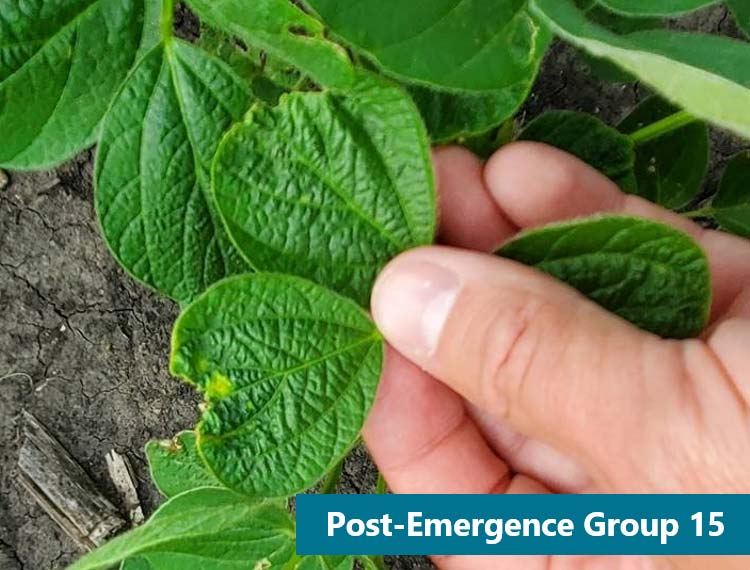
Figure 6. Soybean plants showing characteristic symptoms of Group 15 herbicide injury. The midribs are shortened, resulting in heart-shaped leaflets.
Factors NOT Shown to Cause Soybean Injury
- Ammonium Sulfate (AMS) - Observations of leaf cupping across entire fields of non-dicamba-tolerant soybeans has led to speculation that AMS applied with glufosinate or another post-emergence herbicide could be the cause of the crop response.
- However, multiple university weed scientists have noted that leaf cupping has never been a crop response associated with AMS over the many years of its use as a spray additive (Hager, 2019; Hartzler and Anderson, 2018).
General Considerations for Diagnosing Herbicide Injury
- Plant Symptoms – The nature of injury to the plants and when/where they appear (new growth vs. old growth).
- Spatial Pattern of Symptoms – Spatial differences in the severity of symptoms can often provide a clue as to how the herbicide exposure occurred.
- Timing of Symptoms – When the symptoms appear relative to the timing of herbicide applications.
- Application History – Records of herbicides applied in the field, in neighboring fields, and using the same sprayer.
Non-Herbicide Factors
- Several factors other than herbicide exposure are known to cause malformation of soybean leaves, although they can generally be distinguished from symptoms of herbicide injury.
- Spider mites and piercing/sucking insects such as potato leaf hopper or soybean aphids can cause curling of soybean leaves (Figure 7 and Figure 8).
- Periods of rapid growth can cause a wrinkled or blistered appearance of newly emerged leaves that the plant will quickly grow out of.
- Viral infections, such as bean pod mottle, soybean mosaic, and tobacco streak viruses, can all cause wrinkling and downward cupping of soybean leaves.
- Drought stress will cause soybean leaves to fold in and/or flip over to help the plant conserve water (Figure 9).

Figure 7. Curling and stippling of soybean leaves caused by spider mites.
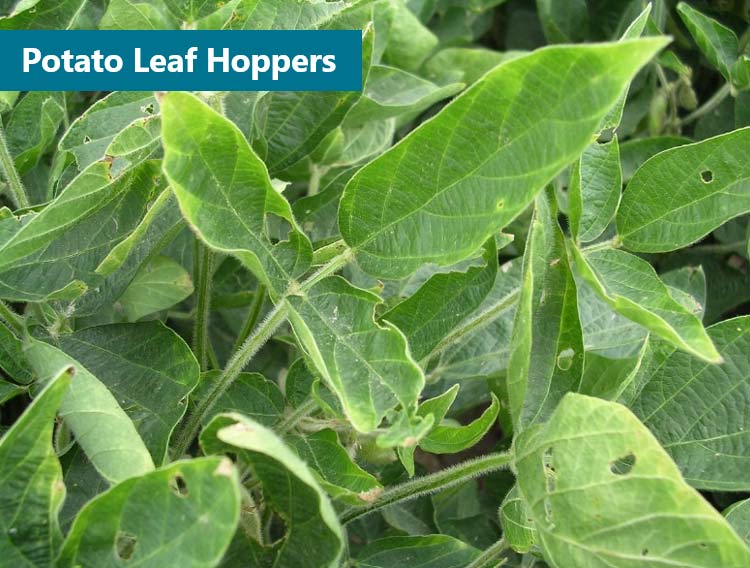
Figure 8. Curling of soybean leaves caused by potato leaf hopper feeding.
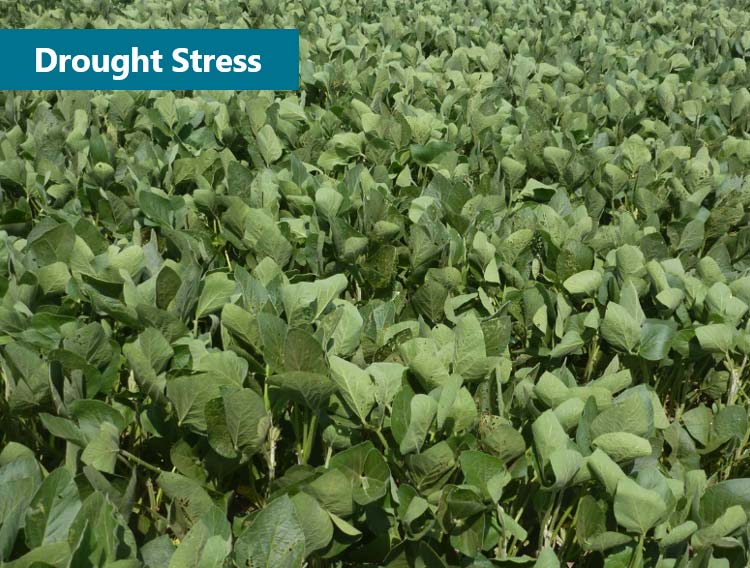
Figure 9. Soybeans with leaves folded in and flipped over in response to drought stress.
Yield Impacts of Dicamba Injury
- Soybean exposure to dicamba resulting in minor symptoms typically will not impact yield; however, the potential for yield loss increases at higher levels of exposure (Werle et al., 2018).
- The potential for yield loss depends on the amount of dicamba and the growth stage of soybeans at the time of exposure.
- Soybeans exposed during vegetative growth are more likely to recover and not experience yield loss.
- Yield loss is more likely when exposure to dicamba occurs after flowering has begun.
References
- Anderson, M., and R. Hartzler. 2020. Identifying Common Herbicide Symptoms in Soybean. Integrated Crop Management. Iowa State University Extension.
- Gonsolus, J. 2018. Symptoms of Dicamba Exposure in Soybean. University of Minnesota Extension.
- Hager, A. 2019. What Causes Cupped Leaves Other than Dicamba? Successful Farming.
- Hager, A., and C. Sprague. 2000. Soybean Leaf Cupping/Puckering. The Bulletin. University of Illinois Extension
- Hartzler, R., and M. Anderson. 2018. Crop Injury Associated with Growth Regulator Herbicides. Integrated Crop Management. Iowa State University Extension.
- Osipitan, O.A., J. Scott, and S. Knezevic. 2019. Effects of Dicamba Micro-Rates on Yields of Non-Dicamba Soybeans. Crop Watch. University of Nebraska-Lincoln.
- Werle, R., R. Proost, C. Boerboom. 2018. Soybean Injury From Dicamba. A4161. University of Wisconsin Extension.
- Zimmer, M., C. Hayden, F. Whitford, B. Young, and W. Johnson. 2019. Differentiating 2,4-D and Dicamba Injury on Soybeans. WS-56/PPP-126. Purdue University Extension.
The foregoing is provided for informational use only. Please contact your Pioneer sales professional for information and suggestions specific to your operation. Product performance is variable and depends on many factors such as moisture and heat stress, soil type, management practices and environmental stress as well as disease and pest pressures. Individual results may vary. Pioneer® brand products are provided subject to the terms and conditions of purchase which are part of the labeling and purchase documents.