
Country Selector
Please enter a valid location
12/12/2024
Plenish® High Oleic Soybeans for Dairy Diets

Shared from Inside the ZONE® newsletter, Pioneer Nutritional Sciences
Why Milk Solids Matter for Dairy Farm Profitability
There has been a surge in demand for milk fat and protein which has resulted in elevated prices for these milk components. To boost milk fat content, dairy farms have widely adopted feeding fat supplements that are such as those high in palmitic acid (C16:0). However, environmental sustainability concerns and cost of fat supplements can impact profitability.
One promising option for reducing feed cost and/or improving fat yield is Plenish soybeans, which offer a high‐energy and high‐protein feed with a desirable fatty acid profile that can replace expensive fats in the ration. The high oleic (C18:1) and low linoleic (C18:2) content of Plenish soybeans allows for higher dietary inclusion levels than commodity soybeans. By incorporating Plenish beans into their feeding regime, dairy farms can potentially reduce costs and improve profitability while maintaining, or even improving, milk fat content.


- Precursors of Milk Fat
- The Role of Fatty Acid Quantity and Quality in Dairy Diets
- Feeds High in Linoleic Acid
- Plenish Soybeans: High in Oleic Acid and Low in Linoleic Acid
- University Research with Plenish Soybeans and High Oleic Oil
- Approaches to Dietary Supplementation
- Roasting and Grinding
- References
Precursors of Milk Fat
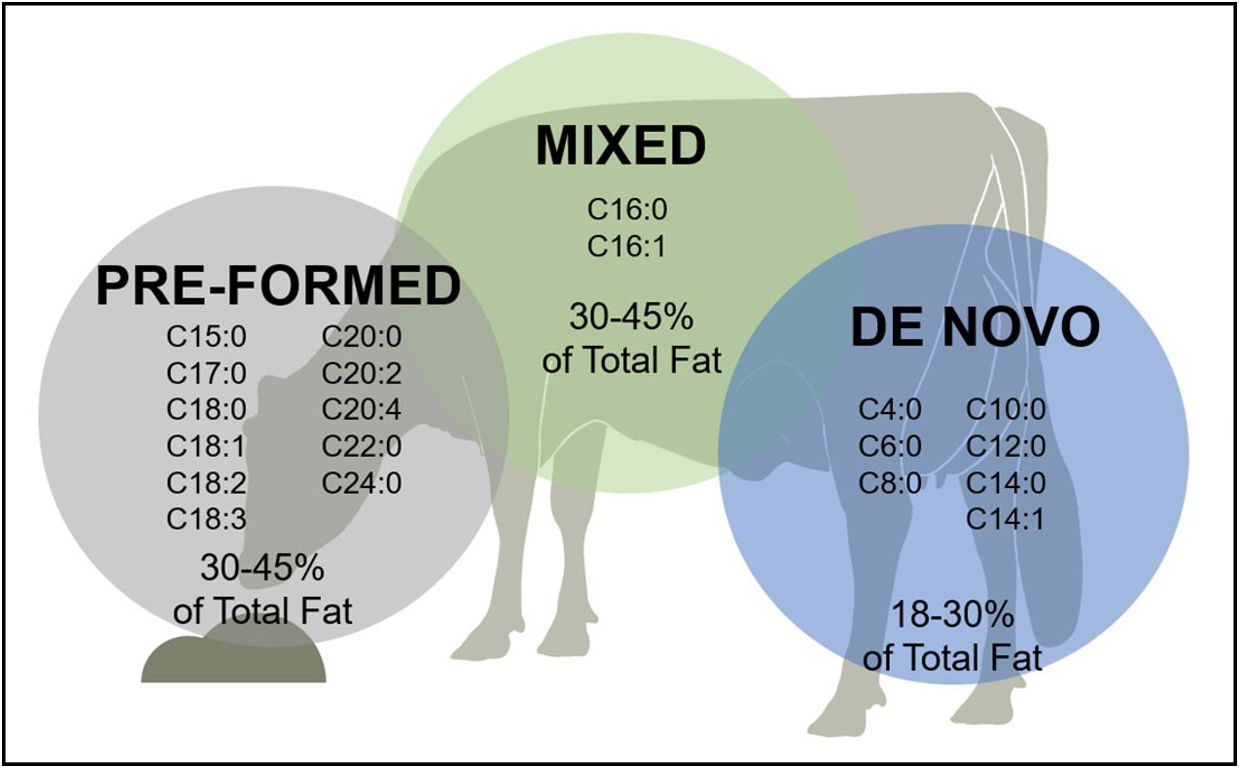
Milk fat is composed of about 40% pre‐formed long‐chained fatty acids (LCFA, >16 carbons in length) derived from the diet or mobilized body reserves, 35% mixed fatty acids (16 carbons in length) and 25% are short chained fatty acids synthesized in the udder (de novo) from rumen produced volatile fatty acids such as acetate and butyrate generated from fiber digestion. Cows cannot synthesize fatty acids longer than 16 carbons so about half of the mixed source come from the diet and half from de novo synthesis in the udder.
The Role of Fatty Acid Quantity and Quality in Dairy Diets
All rations fed to dairy cows contain fat, which come from a variety of sources including forages, grains, by‐products and fat supplements. The type of fat in the diet can be either saturated (no double bonds), such as 16 carbon palmitic acid (denoted as C16:0) or unsaturated (one or more double bonds), such as linoleic acid (denoted as C18:2 with 2 double bonds). Excessive dietary polyunsaturated fatty acids (PUFA), like linoleic acid can be toxic to fiber-digesting rumen microbes.
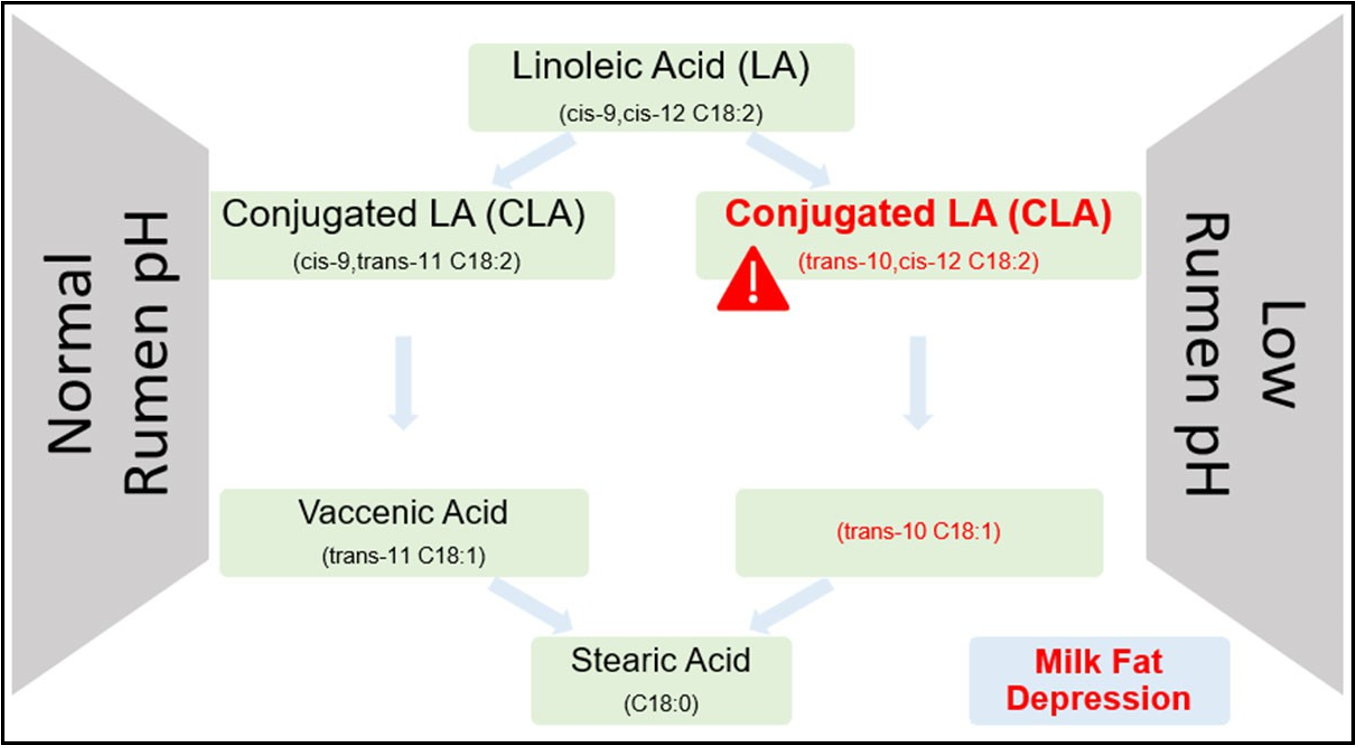
Rumen biohydrogenation is a process that converts unsaturated fatty acids (with double bonds) into saturated fatty acids (with no double bonds), thus detoxifying the PUFAs. Under normal rumen pH’s the biohydrogenation process converts linoleic acid to stearic acid (C8:0).
However, when ruminal fermentation is characterized by low rumen pH, or overwhelmed with excessive PUFA load (often occurring in cows being fed for high milk yield) the pathway is altered resulting in the production of trans‐10, cis‐12 CLA (right side of diagram). This intermediate is a potent, bioactive, and undesirable CLA linked to milk fat depression (MFD). Research shows that even small amounts, just 3‐4 grams reaching the intestines, can dramatically reduce milk fat synthesis1, and lower transfer of LCFA into the mammary gland2.
Feeds High in Linoleic Acid
The germ of a corn kernel contains about 60% linoleic acid. Corn grain and corn silage are the foundation of most dairy diets. Even though corn silage is low in fat, it also contributes significant levels of linoleic acid. The combination of corn grain and corn silage can add to the ruminal linoleic (PUFA) load, which has been clearly linked to MFD3. Likewise, conventional soybeans fed at high levels, especially when the high linoleic oil contained is exposed through fine grinding, can lead to MFD. It's important to note that MFD can be caused by multiple factors, including PUFA intake, fermentable starch, slug‐feeding, and more. To successfully include high levels of corn silage in dairy rations, it’s essential to pay close attention to excessive ruminal starch digestion and lack of dietary effective fiber, to mitigate this MFD risk.
Plenish Soybeans: High in Oleic Acid and Low in Linoleic Acid
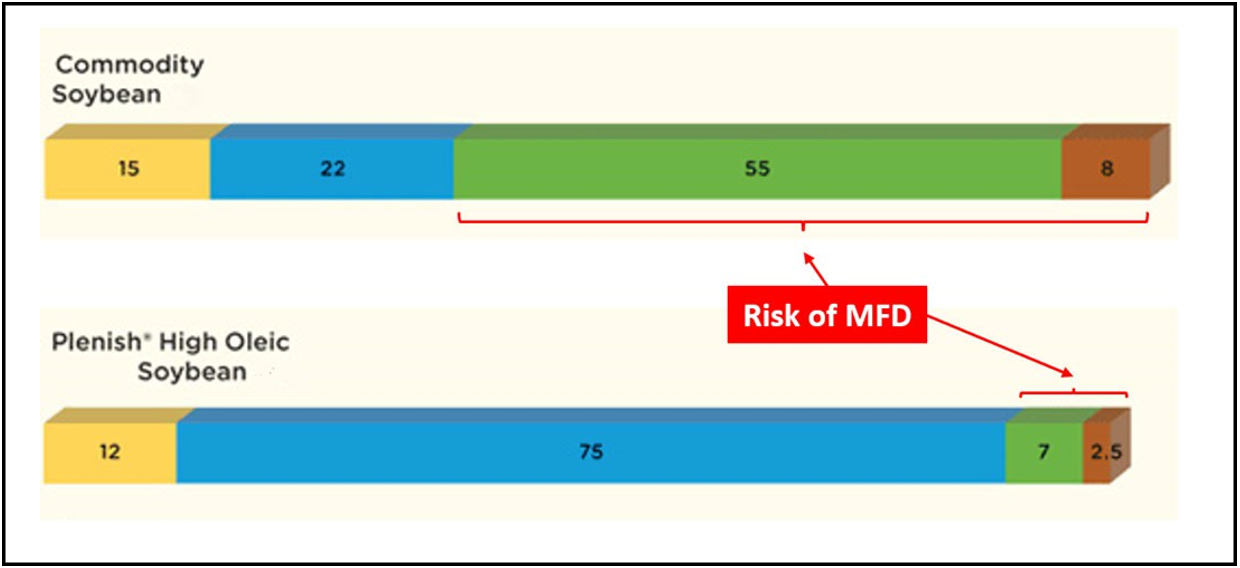
Soybeans are a valuable source of protein, that also contain about 20% fat. Conventional soybeans have about 22% oleic acid and 63% linoleic and linolenic acids (PUFAs). In contrast, Plenish soybeans contain 75% oleic acid and only 9.5% PUFAs. This change represents a groundbreaking innovation in dairy nutrition, allowing for a shift in the way nutritionists can utilize soybeans in formulating rations.
University Research with Plenish Soybeans and High Oleic Oil
- Penn State University4 compared Plenish vs. commodity extruded soybean meal at the same inclusion rate (17% of diet DM), and the same level of fat in the ration (4% of diet DM). Neither intakes (59 lb DM/d), nor milk yield (93 lb/d) were affected. However, milk fat increased 0.2% (from 3.5 to 3.7%). In addition, PUFA in milk decreased ~50% (from 4.93 to 2.49%). Researchers concluded that high oleic soybeans are likely to increase milk fat concentration and yield, with no negative effects on intake, or yields of milk or protein.
- University of Wisconsin2 researchers compared raw, full fat Plenish vs. commodity soybeans fed either whole or ground. Inclusion was ~17% of diet DM with fat at ~7% of diet DM. Intakes were not affected; however, milk fat increased when Plenish soybeans were fed ground (3.09 vs. 3.50%), but not when fed whole (3.40 vs. 3.53%). Similarly, milk fat yield increased significantly when Plenish soybeans were fed ground (3.28 vs. 3.62 lb/d), but not when fed whole.
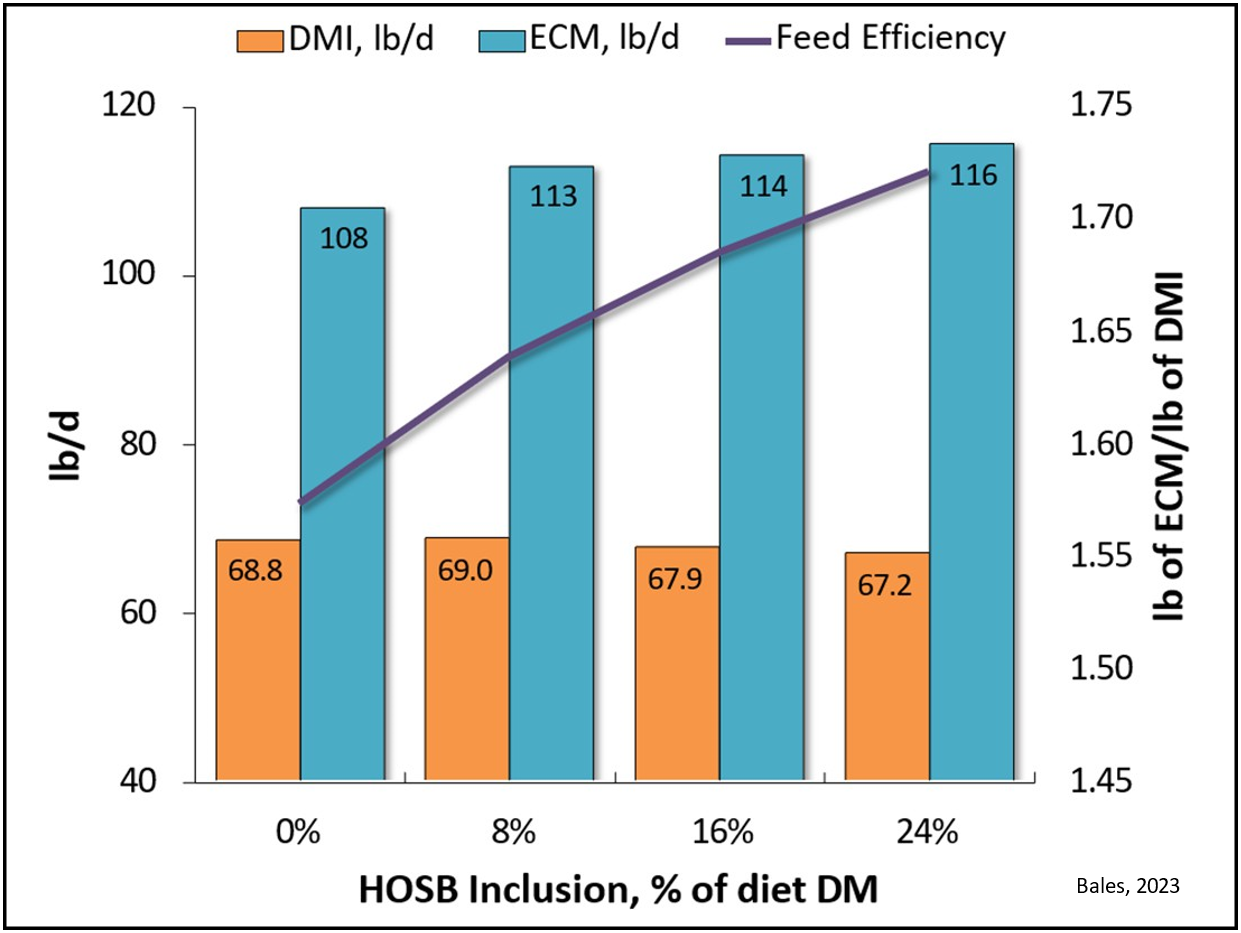
- Michigan State University5 investigated the feeding of roasted, ground Plenish soybeans at 0, 8, 16 and 24% of diet DM. Dietary starch and protein levels were kept constant but fat was increased from 3.25 to 7.1% of DM. Milk and milk fat yield increased by 9 lb/d and 0.35 lb/day respectively from 0 inclusion to the highest inclusion level (16 lb/c/d). Results also showed a decline of 1.6 lb/d in DMI from the 0 inclusion to the highest inclusion rate thus improving feed efficiency.
- Perdue University6 researchers fed supplemental high oleic soybean oil to mid‐lactation cows (87 ± 26 DIM) at 1.5% of diet DM, resulting in 5.5 vs 6.8% fat diets. No effects on intake, or milk yield; but milk fat (0.16%) and protein (0.07%) were increased. Positive effects of high oleic oil on the apparent increase in total‐tract fat digestibility were attributed to being fed as oil which might have a faster rate of passage from the rumen to intestines. Multiparous cows gained weight and body condition score, but not primiparous cows reflecting differences in energy partitioning among immature cows. Back fat depth in all cows was increased, suggesting high oleic soybean oil may have reduced lipolysis and increased insulin sensitivity.
Approaches to Dietary Supplementation
All Plenish soybeans must be fed on‐farm or delivered to an approved processor for oil extraction. There are several ways to access Plenish soybeans or high oleic oil for use in dairy cow diets. Producers (or their contract grower) can sign on‐farm feeding agreements to grow Plenish soybeans on their farm. Alternatively, producers can access Plenish soybeans from approved grower/processors. Finally, certain approved crush plants are marketing Plenish soybean meal containing 7‐9% high oleic oil versus only 1‐2% oil in commodity soybean meals.
Roasting and Grinding
Soybean protein is highly soluble. Feeding raw soybeans lowers their nitrogen use efficiency and leads to higher ruminal ammonia, lower rumen undegraded protein (RUP, bypass protein) and increased milk urea nitrogen (MUN). It may also result in lower yields of milk and milk protein7. Roasting soybeans can double the protein escape from the rumen8 thus increasing RUP. Heating soybeans to effective levels will denature urease (thus allowing for urea use in diets) and denature trypsin inhibitor (not a concern in mature ruminants). It is also a common practice to prevent rancidity and enhance soybean palatability. Feeding quartered soybeans is preferred to whole. Research has shown that fine grinding may not to be justified9 and due to increased surface area, may reduce the RUP of the soybeans.
Roasting typically costs $25‐$35 per ton. Losses by open flame roasting are near 12% as water and pods/hulls. Losses when using electric or hot air are mostly water. Roasting too hot or too long can decrease protein value by binding them with sugars (Maillard reaction). Low roasting temperatures will reduce RUP and may fail to denature urease. Steeping the roasted soybeans (~30 minutes) to allow time for heat to penetrate is also required. The protein dispersibility index (PDI) laboratory method can be used to evaluate roasting effectiveness. A PDI value of between 9‐11 indicates optimal roasting and steeping.
References
- 1 Overton, T.R. Feeding for high components in Herd Health and Nutrition Conference. 2017. Liverpool, NY: PRO‐DAIRY, Cornell University.
- 2 Weld, K.A. and L.E. Armentano. 2018. Feeding high oleic acid soybeans in place of conventional soybeans increases milk fat concentration. JDS. 101(11):9768‐9776.
- 3 Diaz, F. Effects of linoleic fatty acid intake on milk fat production. Dellait, 2020.
- 4 Lopes, J.C., et al. 2017. Effect of high‐oleic‐acid soybeans on production performance, milk fatty acid composition, and enteric methane emission in dairy cows. JDS. 100(2):1122‐1135.
- 5 Bales, A.M. and A.L. Lock. Harnessing the potential of a high oleic acid soybean to improve milk production responses of high producing dairy cows in Great Lakes Regional Dairy Conference. 2023. Mt. Pleasant, MI: Michigan State University.
- 6 Hanno, S.L., et al. 2024. High oleic soybean oil maintains milk fat and increases apparent total tract fat digestibility and fat deposition in lactating dairy cows. JDS Communications.
- 7 Faldet, M.A. and L.D. Satter. 1991. Feeding heat‐treated full fat soybeans to cows in early lactation. JDS. 74(9):3047‐3054.
- 8 Faldet, M.A., et al. 1992. Determining optimal heat treatment of soybeans by measuring available lysine chemically and biologically with rats to maximize protein utilization by ruminants. J Nutr. 122(1):151‐60.
- 9 Dhiman, T., et al. 1997. Particle size of roasted soybeans and the effect on milk production of dairy cows. JDS. 80(8):1722‐1727.
Pioneer® brand products are provided subject to the terms and conditions of purchase which are part of the labeling and purchase documents.