
Country Selector
Please enter a valid location
Corn Stunt Disease and Corn Leafhopper Sampling in 2025
Agronomy Research Update
From Pioneer Research & Development and Agronomy Sciences - Written by Débora Montezano, Stacie McNinch,
Kassandra Breckenridge, Krystel Navarro and Mark Jeschke
Key Findings
- A comprehensive field sampling program was conducted in 2025 to monitor the incidence and distribution of corn stunt pathogens and the corn leafhopper vector.
- Corn leafhopper presence was confirmed in 185 counties across 16 states during the 2025 growing season.
- Only 3.8% of corn leafhopper specimens tested positive for corn stunt pathogens, indicating that leafhoppers spread more rapidly than the corn stunt pathogens they transmit.
- 2025 data strongly suggest that the 2024 corn stunt outbreak was an anomalous occurrence driven by unusual weather patterns that facilitated northward migration of the vector from its origin in Mexico.

- Background and Rationale
- Project Overview
- Methods
- Results
- Discussion
- Reference
- Acknowledgements
Background and Rationale
- Corn stunt is one of the most economically important diseases affecting corn in South America.
- The primary causal organism for corn stunt disease is Spiroplasma kunkelii, a group of small bacterial pathogens commonly referred to as corn stunt spiroplasma (CSS).
- S. kunkelii is transmitted by corn leafhoppers (Dalbulus maidis), which acquire the pathogen by feeding on infected plants and spreading it by feeding on healthy plants.
- This bacterial pathogen is transmitted singly or in combination with maize bushy stunt phytoplasma (MBSP), maize rayado fino virus (MRFV). Sugarcane mosaic virus (SCMV) is often found to be part of the corn stunt disease complex, although this virus is transmitted by aphids.
- The presence of corn stunt is limited in the U.S. by the range of corn leafhoppers, which require living host plants to survive and do not typically overwinter in the U.S.
- Outbreaks of corn stunt in the U.S. are driven by leafhopper populations moving northward on prevailing winds from Mexico, where corn is under continuous cultivation and is the center of origin of the leafhopper.
- An unprecedented outbreak of corn stunt disease in 2024 that impacted corn in several states has led to some concern that occurrence of corn stunt disease could become more frequent and widespread.
Project Overview
- A comprehensive field sampling program was conducted in 2025 across Southern and Mid-South states to monitor the incidence and distribution of the corn leafhopper vector (Dalbulus maidis) and the associated pathogens, corn stunt spiroplasma (CSS), maize bushy stunt phytoplasma (MBSP) and maize rayado fino virus (MRFV).
- The primary goal of this program was to help understand the risk that corn stunt disease may pose to U.S. corn production going forward and determine the risk of overwintering of corn leafhopper populations in the Southern U.S.
- This effort was conducted in partnership with Oklahoma State University, Kansas State University and Texas A&M University, along with Pioneer Field teams and Corteva Plant Diagnostic Services.
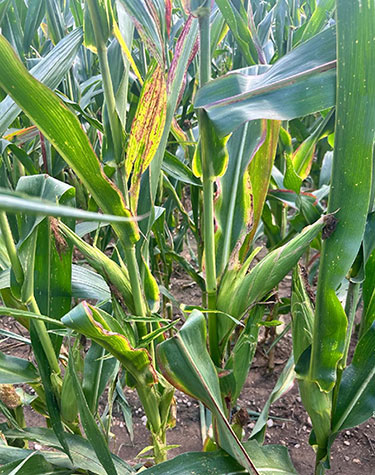
Figure 1. Corn plants exhibiting characteristic foliar symptoms of corn stunt complex, including interveinal chlorosis, reddening and stunting.
Methods
- Corn leafhoppers were collected using multiple trapping systems, depending on the collaborating institution. Trapping methods included PHEROCON AM/NB sticky traps, sweep nets and vacuum sampling.
- Sampling frequency and intensity varied with the method:
- Sticky traps: Three to six traps were placed in corn fields of interest. Traps were checked and replaced weekly, and the number of leafhoppers captured was recorded and submitted for analysis.
- Vacuum and sweep net sampling: Conducted by academic partners following standardized protocols.
- Fields were selected based on pest pressure history, geographic location, collaboration with local farmers and the presence of plants showing characteristic symptoms.
- Sampling was conducted by Pioneer field teams and academic partners from March to October 2025.
- Insect and plant samples were submitted to Corteva Plant Diagnostic Services for molecular analysis.
- Insects: Analyses confirmed species identification as Dalbulus maidis and determined infection with corn stunt, maize bushy stunt and maize rayado fino. Total DNA and RNA were extracted, and real-time PCR was performed using species-specific primers for leafhoppers and pathogens.
- Plants: Leaf tissue samples were collected from symptomatic corn plants and tested for the presence of corn stunt, maize bushy stunt, maize rayado fino and sugarcane mosaic virus. DNA and RNA were extracted and analyzed by real-time PCR using species-specific primers.
Results
Corn Leafhopper Analysis
- Over 2,400 insect samples were submitted to the Corteva Plant Diagnostic Services.
- 75.1% of submitted samples were confirmed by laboratory analysis as corn leafhopper (Dalbulus maidis).
- The aster leafhopper (Macrosteles quadrilineatus), which resembles corn leafhopper but does not transmit corn stunt pathogens, was frequently mistaken for corn leafhopper.
- Of the 1,814 specimens confirmed to be corn leafhopper, further analyses were performed to determine the presence of corn stunt, maize bushy stunt and maize rayado fino.
- The vast majority of leafhoppers (96.2%) were negative for all target pathogens. Only 3.8% carried one or more of the diseases, with corn stunt being the most common, but only in 3.2% of the specimens.
- The first detection of corn leafhoppers in the USA in 2025 was in Texas in February and spread through most of the counties in the Rio Grande Valley in the following months.
- Through the growing season, corn leafhopper reports expanded throughout the country, and most of the reports came from Oklahoma, Kansas, Arkansas and Missouri.
- By the end of the 2025 growing season, corn leafhopper presence was confirmed in 185 counties across 16 states (Figure 2).
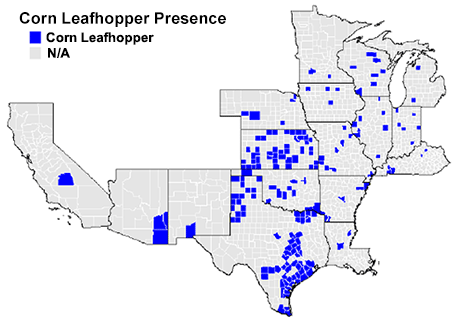
Figure 2. U.S. counties with confirmed presence of the corn leafhopper (Dalbulus maidis) based on molecular diagnostics, as of October 15, 2025.
- Outside of Texas, corn leafhoppers were first detected in Oklahoma on June 23rd, then in Reno County, Kansas on July 9th, followed by Lawrence County, Missouri on July 10th.
- By July, corn leafhoppers were present across all major corn-growing regions in Texas, although populations remained lower than at this time in 2024.
- By early August, we observed an expansion of corn leafhopper detections in the SE corner of Kansas and its expansion across central Oklahoma.
- Sporadic detections in Missouri, Arkansas and Louisiana were also reported during August.
- By the end of August, corn leafhopper presence continued to expand and was detected in Nebraska (Clay County) and western counties of Kentucky, in addition to ongoing findings across Kansas, Missouri and the Mid-South.
- Texas had high populations in the south, specifically in the Lower Rio Grande Valley, where the corn leafhopper is present year-round. After May, the population increased in the Upper Rio Grande Valley and North Texas.
- Additionally, field collections performed by academics led by Dr. Doris Lagos-Kutz of the University of Illinois also conducted corn leafhopper sampling using a suction sampling system (suctiontrapnetwork.org) that covers most of the Midwest.
- According to their findings (Lagos-Kutz et al., 2025), the 2025 presence was significantly lower than in 2024. They are currently analyzing samples for the presence of the disease complex, and the results will be published in 2026. The counties where Dr. Lagos-Kutz team reported corn leafhopper presence are accounted for in Figure 2.
- Kansas State University also conducted winter trapping collections across 54 counties in Kansas. Traps were active from December 2024 through April 2025. A total of 53 corn leafhoppers were collected between November and January, with no captures from February to March, indicating that corn leafhoppers are not overwintering in the Midwest. Of the 53 insects collected, only two tested positive for corn stunt pathogen.
Leaf Tissue Analysis and Corn Stunt Confirmation
- Over 200 leaf tissue samples from plants displaying symptoms consistent with corn stunt disease were submitted to the Corteva Plant Diagnostic Services for analysis.
- Of the tissue samples submitted for analysis, 35% tested positive for corn stunt, 10% tested positive for maize bushy stunt phytoplasma, and 4% tested positive for both (Figure 3). No samples tested positive for maize rayado fino.
- The relatively low rate of pathogen detection in U.S. plant samples in 2025 may reflect both the low prevalence of infected vectors and misidentification of field symptoms when submitting samples.
- Disease presence (corn stunt or maize bushy stunt) was confirmed in symptomatic tissues from 51 counties across six states (AZ, CA, KS, NM, OK and TX) (Figure 3).
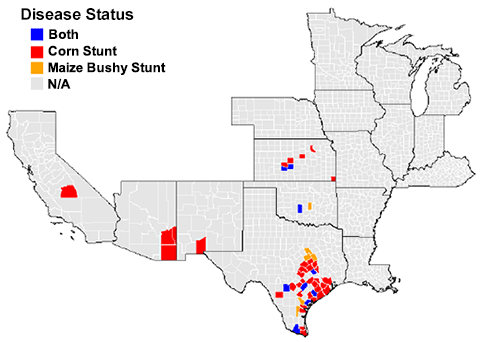
Figure 3. U.S. counties with confirmed presence of corn stunt (Spiroplasma kunkelii) and maize bushy stunt (phytoplasma) as of October 15, 2025. Molecular analyses confirmed pathogen detections in 51 counties across six states.
- The first confirmed case of corn stunt occurred in Texas on May 5, 2025, in the Rio Grande Valley, coinciding with areas that experienced high leafhopper populations in 2024.
- Despite confirmed cases in Texas in May, corn leafhopper populations were lower than the previous year, averaging one adult per 10 plants according to academic partners.
- By mid-June 2025, corn stunt was confirmed in 20 Texas counties, primarily in the Rio Grande Valley.
- By the end of June, confirmations increased to 28 counties for corn stunt and 10 counties for maize bushy stunt; no maize rayado fino was detected.
- In early July, corn stunt was visually identified and later confirmed in Grady County, Oklahoma, marking the first case outside Texas in 2025.
- By August 4, maize bushy stunt was confirmed in Pottawatomie County, Oklahoma. No other Midwest states had reported disease at that time.
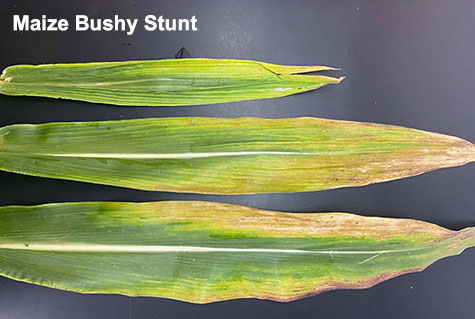
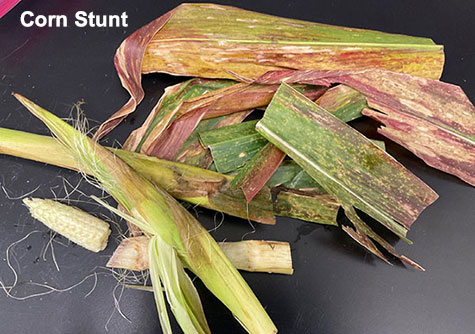
Figure 4. Laboratory images showing symptomatic corn tissues collected from confirmed cases of maize bushy stunt (top) and corn stunt spiroplasma (above). Samples display interveinal yellowing, reddening and necrosis typical of disease progression.
- The first Kansas case of corn stunt was confirmed on August 11 in Saline County. By the same period in 2024, 26 Kansas counties had confirmed infections.
- By the end of the 2025 season, only seven Kansas counties and three Oklahoma counties reported corn stunt, with no other confirmed cases in the broader Midwest.
- Arizona samples, received later in the season, showed corn stunt in three counties in September 2025.
- California samples were submitted in October from Uvalde County, confirming positive corn stunt detection at that time.
- Later in the season, a corn leafhopper population and corn stunt were detected in second-season corn in Texas (Figure 5). This is attributed to the migration of a leafhopper population from the maturing first crop to the second crop. While infection rates were higher compared to the summer, field observation indicated considerable variability, ranging from 10 to 50%.
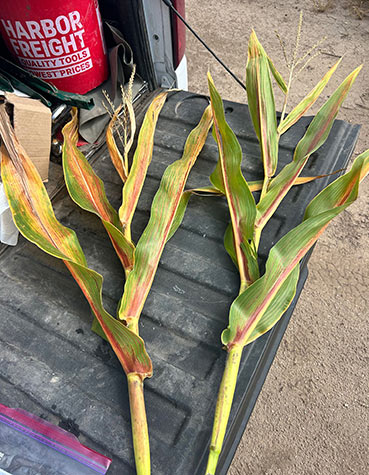
Figure 5. Later in the season, increased corn leafhopper populations and additional corn stunt cases were detected in second-season corn fields in Texas.
Discussion
- The 2024 outbreak of corn leafhopper raised major concerns regarding its dispersal, migratory behavior, and — most importantly — its potential to transmit corn stunt disease and affect U.S. corn production.
- Given that corn stunt outbreaks have been sporadic, and that the insect vector is not considered a major pest in U.S. corn systems, systematic data collection in 2024 was limited. Most field observations began late in the season, only after symptoms appeared in the field, which increased awareness ahead of 2025 and prompted earlier scouting for corn leafhoppers and corn stunt starting during the winter months.
- Although a coordinated sampling network was not established in 2024, data collected in 2025 through trials and the suction-trapping network (Lagos-Kutz et al., 2025) strongly suggest that the 2024 outbreak was primarily driven by unusual weather patterns that facilitated northward migration of the vector from its origin in Mexico.
- In contrast, the absence of similar conditions in 2025, combined with enhanced trapping and surveillance efforts, corresponded with markedly lower corn leafhopper activity and reduced disease pressure.
- Comparison between years clearly illustrates the contrast. By July 2024, corn leafhopper populations were well established in Kansas, and corn stunt was confirmed in 26 counties by the end of the season.
- In 2025, first detections again occurred in July but in much smaller numbers, even with a larger trapping network, and by October only seven Kansas counties had confirmed corn stunt cases. These findings reinforce that environmental conditions in 2024 played a decisive role in promoting corn leafhopper spread and disease transmission.
- The suction-trapping network also documented a consistent seasonal trend, with peak CLH abundance occurring in late September and October in both years, though populations were higher overall in 2025. This late season peak likely reflects either fall migration or local summer breeding. Regardless of source, corn leafhopper is not expected to overwinter in the Midwest due to its tropical biology. Eggs typically fail to hatch below 20°C, making winter survival unlikely.
- This was confirmed by the University of Kansas winter trapping efforts, which recorded no corn leafhopper captures between January and April.
- Quantitative PCR analyses confirmed that only a small proportion of corn leafhopper specimens carried pathogens associated with corn stunt. Thus, the presence of corn leafhopper does not necessarily indicate disease presence. Disease establishment depends on a complex interplay of biological and environmental factors.
- Unlike tropical regions, where infected corn is available year-round and sustains continuous transmission cycles, infected plants are not as common in the USA, explaining the low infection rates in corn leafhopper populations.
- This analysis confirmed that leafhoppers spread more rapidly than the corn stunt pathogens they transmit. In 2025, corn leafhopper was reported in 16 states and 185 counties, yet only 3.8% of samples analyzed tested positive for corn stunt or maize rayado fino.
- This pattern aligns with disease incidence data: only 51 counties reported corn stunt, and 75% of those cases were concentrated in Texas, where temperatures and planting windows differ significantly from the Midwest and are more favorable for corns stunt spread.
- Although corn leafhoppers can acquire pathogens within approximately one hour of feeding, they require a latent period of about 20 days to become infective. This latency, combined with their migratory timing in the Midwest, limits the potential for disease transmission, since many insects that acquire pathogens after arrival may not survive long enough to infect new plants. Insects already infected before migration can transmit the pathogen sooner; however, the combination of biological latency and migratory timing effectively slows disease spread.
- Field studies from South America further indicate that corn is most vulnerable to infection up to the V8 growth stage. By the time corn leafhoppers typically arrive in the Midwest, most fields have already surpassed this stage, reducing the likelihood of corn stunt development.
- Yield data reflects these dynamics. In 2024, Kansas and Oklahoma reported yield losses ranging from 10% to 55% depending on disease severity and environmental factors. Some Oklahoma fields were unaffected, while others suffered substantial losses. In 2025, with lower corn leafhopper and disease incidence, similar yield impacts are not anticipated.
- Collectively, results from 2024 and 2025 demonstrate that the presence of the corn leafhopper does not necessarily lead to corn stunt outbreaks. The disease requires a combination of biological and environmental conditions, most of which are not prevalent in U.S. corn systems, suggesting that the overall risk of this pest–disease complex becoming a major issue remains low.
- Overall, these observations highlight the importance of continuous insect and pathogen monitoring to better understand the timing, frequency and population dynamics of corn leafhopper and its role in corn stunt transmission.
- Establishing these parameters will be crucial for assessing future risks to U.S. corn production and guiding breeding, hybrid selection and management strategies aimed at mitigating potential impacts.
Reference
Lagos-Kutz, D. M., Plasencia, I., Dietrich, C. H., LaForest, J., McCornack, B., Hodgson, E., Villanueva, R. T., Seiter, N. J., McMechan, A. J., Crossley, M. S., & Clough, S. J. (2025). First report of corn leafhopper (Hemiptera: Cicadellidae) in the USA Midwest Suction Trap Network. Insecta Mundi, 1110, 1–10.
Acknowledgements
From Pioneer & Corteva™ Agriscience:
- Ryan Lenz, Ann Fehrle (Plant Pathology Technology)
- Raju Jetty, Rick Sanders, Alyssa DeLeon (Native Traits)
- Balaji Boovaraghan, Nikki Omiotek, Andrew Worden (PMT)
The foregoing is provided for informational use only. Please contact your Pioneer sales professional for information and suggestions specific to your operation. Product performance is variable and depends on many factors such as moisture and heat stress, soil type, management practices and environmental stress as well as disease and pest pressures. Individual results may vary. Pioneer® brand products are provided subject to the terms and conditions of purchase which are part of the labeling and purchase documents.