
Country Selector
Please enter a valid location
Corn Tissue Sampling in Southern Ontario
Agronomy Research Update
Written by Holly Loucas, Sales Agronomist, Corteva Agriscience Canada Company
Key Findings
- Soil tests tell you the potential availability of each nutrient. In-season tissue tests can indicate how well the crop is using the nutrients available in the soil.
- Tissue sampling measures key nutrients critical to crop growth and development. The industry has lacked clear guidelines on nutrient sufficiency levels for high-yielding crops, so the use of tissue sampling has been limited.
- Pioneer multi-year research indicated that nutrient levels differed significantly by yield level and that high-yielding crops have higher total nutrient concentrations.
- Pioneer has identified sufficiency ranges for key crop nutrients.
- With these defined sufficiency values, growers can use tissue sampling to evaluate inputs based on the ability to reach these values, even in the absence of yield.
- Using Tissue Sampling in Crop Production
- The Value of Tissue Sampling
- Pioneer Tissue Sampling Research
- 2025 Southern Ontario Research
- Results
Using Tissue Sampling in Crop Production
Plant tissue analysis, or tissue sampling, involves testing a sample of tissue from a growing plant to quantify nutrient levels in the tissue. In crop production, the goal is to determine if nutrient levels are sufficient to maximize yield. Plant nutrient deficiency symptoms indicate that the crop did not or is not receiving adequate nutrients. However, the crop has undergone stress by the time visual deficiencies appear, and application of nutrients following the appearance of deficiency symptoms may not fully recover yield. Tissue testing provides an opportunity to measure nutrient levels before the crop shows visual symptoms of deficiency.
As farmers work to incrementally boost yields, it becomes increasingly important to understand nutrient levels needed for maximizing crop yields and nutrient management programs necessary to achieve those levels. A defined set of tissue sample ranges for high-yield scenarios could potentially guide crop management for greater yields.
The Value of Tissue Sampling
Adoption of tissue sampling as a routine crop management practice has been limited for several reasons, including, cost and workload, variability of results, perceived lack of correlation between nutrient guidelines on nutrient sufficiency levels for high-yielding crops as well as actions that can be taken to achieve those levels.
Pioneer Tissue Sampling Research
In 2017-2019, Pioneer conducted a study in which plant tissue samples were collected from select corn on-farm trials to explore the relationships between plant nutrient levels during the growing season and yield. The goal of the study was to characterize correlations between corn yield and plant nutrient levels at key growth stages and to use data from the highest-yielding locations to create recommended nutrient sufficiency ranges for maximum yield.
Tissue samples were collected at three different timings in corn (V5, VT/R1, R5) during the growing season. These growth stages represent key periods in yield determination. The result of this study was published tissue sufficiency ranges for high-yielding corn, modified to account for modern hybrids and newer management practices. The ranges can be used to monitor corn growth during the growing season.
2025 Southern Ontario Research
The goal of the current study was to verify the tissue sufficiency ranges for high-yielding corn in Ontario and provide guidelines for growers to use to make decisions on in-season nutrient inputs to maximize yields. In this study, we followed the collection times of the previous study (V5, VT/R1, R5). Tissue and soil samples were taken from PKP plots across Southern Ontario from one of three Pioneer® brand corn products — P9466AML (AML,LL,RR2), P0035Q (Q,LL,RR2) or P0529Q (Q,LL,RR2) to minimize any hybrid differences.
Tissue samples were sent to Honeyland Ag Research, Ailsa Craig, ON for analysis. Yields were recorded at harvest. In addition to tissue sampling, a soil sample was collected in the same location as the tissue sample. This was done to identify if the nutrient lacking in the tissue was due to a lack of soil nutrient or the lack of availability of the nutrient due to any number of reasons including, lack of water availability, inadequate root growth, nutrient interactions or any other issues limiting nutrient uptake.
Results
Soil sample nutrient content in most locations was within the parameters outlined for high-yield corn (Figure 1).
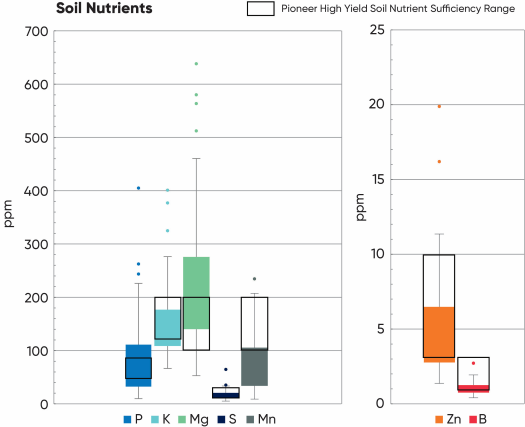
Figure 1. Soil sample results for key nutrients collected across 78 locations in Southern Ontario in 2025.
Boron was on the low side in most of the samples but was still within the range for high-yield corn. Manganese was low in all samples and continued to be low in all tissue samples throughout the growing season, most likely this is due to the cool spring and lack of rainfall in Southern Ontario most of the season.
The weather in spring of 2025 was cool for an extended period which may have affected nutrient uptake at V5 at some locations (Figure 2).
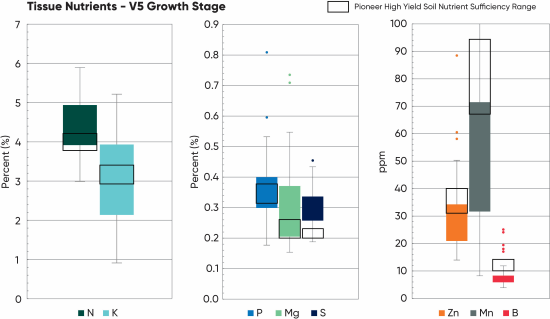
Figure 2. Tissue sample results for key nutrients collected at the V5 growth stage across 73 locations in Southern Ontario in 2025.
Overall, the only nutrients affected were sulphur and boron, which isn’t surprising with the weather pattern. Mn continued to be low. Yield levels reflected rainfall amount across the region. Sorting the tissue nutrient data by yield level didn’t reveal any differences at V5.
By VT, nutrient levels changed with the weather. Some areas of Southern Ontario had barely sufficient rainfall for high yields while other areas fell to below adequate levels of moisture and nutrient levels fell accordingly (Figure 3).
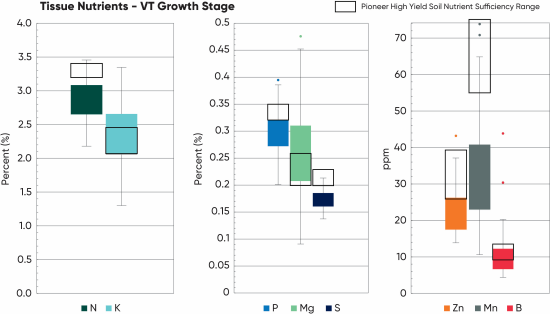
Figure 3. Tissue sample results for key nutrients collected at the VT growth stage across 58 locations in Southern Ontario in 2025.
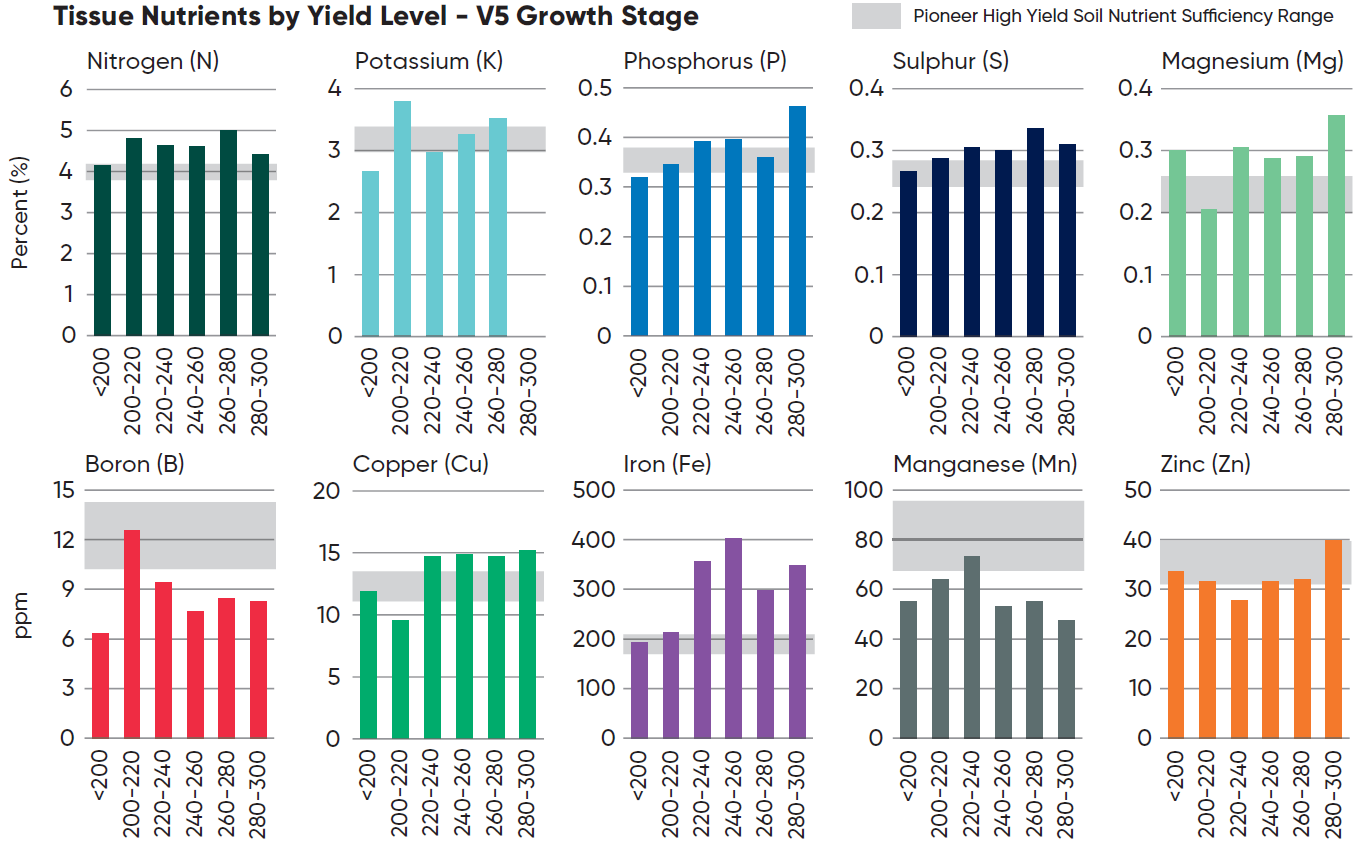
Figure 4. Average concentrations of key nutrients by corn yield level in tissue samples collected at the V5 growth stage across 73 locations in Southern Ontario in 2025. Click here or on the image above for a larger view.
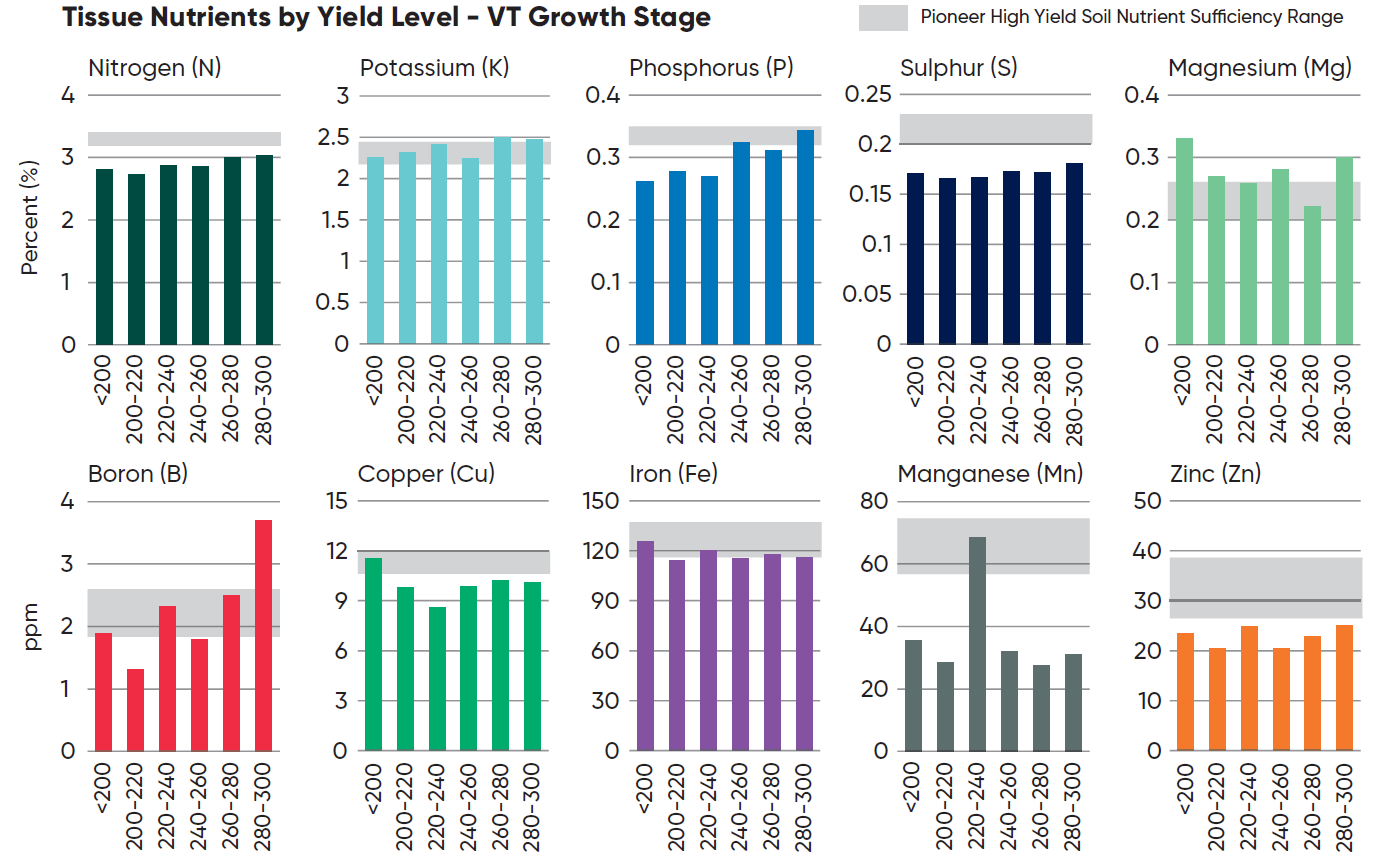
Figure 5. Average concentrations of key nutrients by corn yield level in tissue samples collected at the VT growth stage across 58 locations in Southern Ontario in 2025. Click here or on the image above for a larger view.
As yield levels increased, nutrient levels started to coincide with the tissue sufficiency guidelines. Overall, nitrogen was lower than ideal and may be more of a factor of the high temperatures that accompanied the lower-than-average rainfall. Phosphorous levels in tissue also follow the rainfall pattern and are lower than ideal where yield was less than expected. Boron levels increased in the vegetative growth phase and were adequate by tasselling, however, sulphur levels remained low throughout the vegetative phase and would be something to consider addressing in crop. Zinc levels also were below ideal at tasselling.
Soil conditions at planting can affect root growth and nutrient uptake, so ensuring soils are fit to plant and making sure the seed trench maximizes soil to seed contact will ensure roots develop quickly and adequately during the vegetative stages to uptake nutrients that are available in the soil. Starter fertilizer and/or banding fertilizer can also play a role in early nutrient uptake, so identifying nutrients that can be added to starter blends to allow roots to absorb key nutrients early in development is key.
Once early nutrient uptake has been maximized, foliar applications can be explored, however, timing of applications needs to be around V5 to maximize nutrient levels during key vegetative stages to set up the plant to maximize grain fill.
This study will be continued to develop a good understanding of tissue nutrient levels in different growing environments with the purpose of understanding where nutrient levels should be for Southern Ontario growers to maximize corn yield.





AML - Optimum® AcreMax® Leptra® products with AVBL, YGCB, HX1, LL, RR2. Contains a single-bag integrated refuge solution for above-ground insects. In EPA-designated cotton growing countries, a 20% separate corn borer refuge must be planted with Optimum AcreMax Leptra products. Q (Qrome®) - Contains a single-bag integrated refuge solution for above- and below-ground insects. The major component contains the Agrisure® RW trait, the Bt trait, and the Herculex® XTRA genes. In EPA-designated cotton growing counties, a 20% separate corn borer refuge must be planted with Qrome products.
All Pioneer products are hybrids unless designated with AM, AML, AMT, AMX, AMXT, Q, V, PCU, PCUE, PWE & PWUE, in which case they are brands.
LibertyLink® and the Water Droplet Design are registered trademarks of BASF. ®Roundup and Roundup Ready are registered trademarks of Bayer Group. Agrisure® and Agrisure Viptera® are registered trademarks of, and used under license from, a Syngenta Group Company.
The foregoing is provided for informational use only. Please contact your Pioneer sales professional for information and suggestions specific to your operation. Product performance is variable and depends on many factors such as moisture and heat stress, soil type, management practices and environmental stress as well as disease and pest pressures. Individual results may vary. Pioneer® brand products are provided subject to the terms and conditions of purchase which are part of the labeling and purchase documents.