
Country Selector
Please enter a valid location
Effects of Flooding on Soil Composition and Plant Nutrient Content in Corn

Agronomy Research Update
From Pioneer Research & Development & Rebecca Hensley, Senior Research Associate
Key Findings
- Corn’s recovery from flooding is dependent upon temperature and how long the soil stays saturated; survival rate drops quickly at extended warm temperatures.
- Flooding reduces soil nitrogen availability and impairs nutrient uptake in corn, resulting in multiple nutrient deficiencies.
- Nutrient losses can occur despite fertilizer applications, highlighting the importance of management strategies.
- Flooding Effects on Corn
- 2025 Study Background
- Methodology
- Results
- Conclusion
Flooding Effects on Corn
- Flooding is a major abiotic stress in U.S. Corn Belt production, causing reduced oxygen in the root zone, impaired nutrient uptake and potential yield loss.
- Corn’s recovery from flooding depends on the temperature and how long the soil stays saturated, with survival dropping quickly at warm temperatures.
- Young corn (before V6) is especially vulnerable with prolonged saturation causing root death, nitrogen loss and reduced yield potential.
- Since weather is a key uncontrollable factor in corn yield, understanding corn’s response to extreme stress, like flooding, is essential for supporting farmers and improving management decisions.
- Late spring and early summer 2025 provided excessive postplanting rainfall in central Indiana (11.5 inches recorded between planting and flowering), which caused standing water and crop stress.
2025 Study Background
- An opportunistic study of flooding effects was conducted in a research field located near Windfall, Indiana in 2025 after excessive rainfall rendered the experiment originally planned for the site unusable (Figure 1).
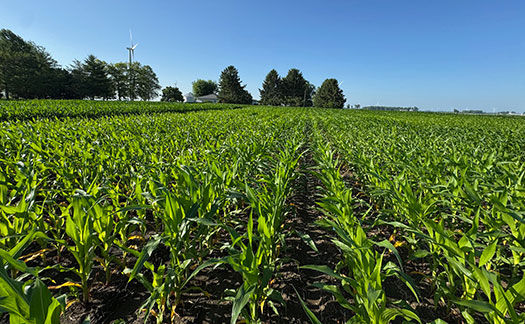
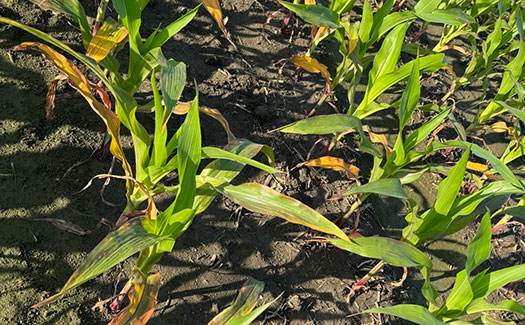
Figure 1. An opportunistic study of flooding effects was conducted in a research field located near Windfall, Indiana in 2025 after excessive rainfall rendered the experiment originally planned for the site unusable.
- The original experiment involved crop growth model validation and included numerous corn hybrids planted at different populations, and – most importantly – blocks that received a 300 lbs N/A nitrogen application or zero nitrogen application.
- Starting on April 30, consistent rainfall in both May and June resulted in 9.62 inches of rainfall on the field with extended periods of excessive ponding.
- Average rainfall during this time for the area is around 4.49 inches. In July, another 1.92 inches of rainfall was received, again resulting in excessive ponding.
Methodology
- The original experiment area was split into blocks that received a 300 lbs N/A nitrogen application or zero nitrogen application.
- Planting and application of 300 lbs/A of pre-emergence nitrogen occurred on April 28, with 50% emergence on May 8.
- Each nitrogen block contained planting densities of 22,000 and 44,000 plants per acre.
- The field had 396 lbs/A potash and 297 lbs/A of MAP-monoammonium phosphate applied on February 20.
- Sampling areas in the 300 lbs N/A and 0 lbs N/A nitrogen blocks with differing levels of flooding damage were identified by NDVI maps by using drone flight imagery on June 17.
- Figure 2 shows the boxes that indicate the areas of “poor”, “average” and “good” crop condition. These were determined based on the images and confirmed in the field by how the plants physically looked in these areas.
- Drone images were collected again on June 30 (middle image below) and July 15 (right image below) as we continued to monitor the site.
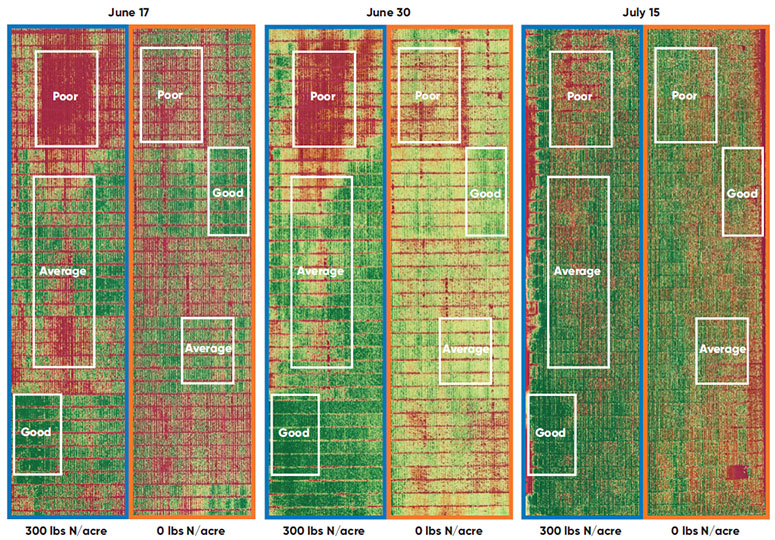
Figure 2. NDVI imagery of the experiment field taken on June 17, June 30 and July 30 showing sampling areas representing poor, average and good crop conditions within the 300 lbs N/A and 0 lbs N/A blocks. Click here or on the above image for a larger view.

- Leaf samples (V11 and R1) and soil samples (R1) were collected from these plots and sent to the lab for analysis.
- As shown in Figure 1, significant nutrient deficiency, stunting and saturated soils were observed in late June.
- Combine yield was recorded on October 2.
Results
- Flooded areas had lower soil nitrate (NO3-N) and ammonium (NH4-N), indicating significant nitrogen loss from leaching and denitrification (Figure 3).
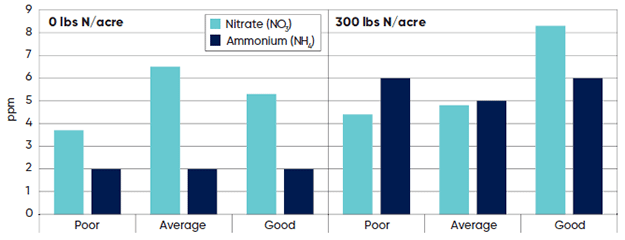
Figure 3. Soil nitrate (NO3) and ammonium (NH4) levels in the poor, average and good crop condition areas of the 0 lbs N/A and 300 lbs N/A blocks sampled at the R1 crop growth stage.
- Soil NO3-N levels are considered very low when values are less than 5 ppm, low from 6 to 10 ppm, medium from 11 to 20 ppm and high from 21 to 35 ppm.
- The lowest NH4-N value recorded was in the plots with 0 nitrogen applied pre-emergence; here values were consistently around 2 ppm.
- Post-application NH4-N generally decreases or remains stable, except in some good-performing plots.
- The highest NO3-N value was 9 ppm in the 300 lbs N/A applied plots that were least affected by the flooding (“good” crop condition) while the 300 lbs N/A applied plots in the flooded area had NO3-N values ranging from 6.5 to 3.5 ppm still putting all areas of the field in the low to very low category.
- Corn plants from flooded plots showed lower concentrations of nitrogen, reflecting impaired nutrient uptake under saturated conditions (Figure 4).
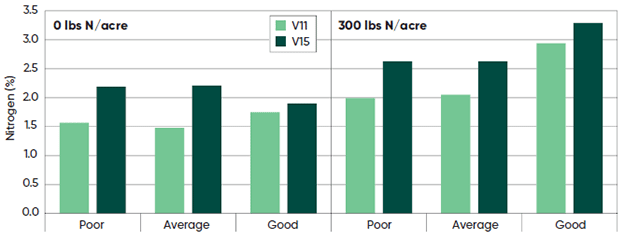
Figure 4. Corn leaf nitrogen levels of plants sampled at the V11 and V15 growth stages in the poor, average and good crop condition areas of the 0 lbs N/A and 300 lbs N/A blocks.
- These nutrient losses and deficiencies were observed even where fertilizer was applied, as confirmed by tissue analysis, drone imagery and field observations of increased crop stress through the R1 growth stage.
- At the V11 growth stage, we would expect to see leaf tissue values ranging from 3.5 to 5%. The average nitrogen value at V11 for 300 lbs N/A was 2.2% while 0 lbs N/A was 1.7%, showing that there was not much of an advantage to the 300 lbs N/A rate in the flooded area.
- Corn yield differences were observed between 0 and 300 lbs N/A areas, which were expected.
- Hybrid differences within each nitrogen treatment were also observed, possibly indicating differences in flooding stress tolerance.
- Yield differed among the good, average and poor areas of the 300 lb. treatment block (Table 1).
Table 1. Average corn yield in the good, average and poor condition areas of the 300 lbs N/A block.
Sampling Area Yield (Bu/A) Good 251 Average 234 Poor 201
Conclusion
- Flooding reduces soil nitrogen availability and impairs nutrient uptake in corn, resulting in nitrogen deficiencies.
- Nutrient losses can occur despite fertilizer applications, highlighting the importance of all management strategies.
- Recommendations would include split nitrogen applications, use of nitrogen stabilizers or rescue nitrogen application pre flowering via aerial application.
- Improvements in field drainage may help reduce nutrient loss and crop stress in flood-prone areas.
- Plant tissue analysis is important for monitoring the effectiveness of fertilizer applications, especially after heavy rainfalls.
- Pairing tissue tests with soil samples provides an understanding of nutrient availability and uptake.
- Significant yield loss is likely to occur in portions of fields where excessive ponding occurred for more than 1 to 2 days.
- Depending on the timing of the rain and how much growing season is left, replanting portions of the field may be justified.
The foregoing is provided for informational use only. Please contact your Pioneer sales professional for information and suggestions specific to your operation. Product performance is variable and depends on many factors such as moisture and heat stress, soil type, management practices and environmental stress as well as disease and pest pressures. Individual results may vary. Pioneer® brand products are provided subject to the terms and conditions of purchase which are part of the labeling and purchase documents.