
Country Selector
Please enter a valid location
Managing Late-Season Flooding Damage in Corn
Crop Insights
Written by Mark Jeschke, Ph.D., Pioneer Agronomy Manager
Key Points
- When late-season flood damage to corn has occurred, the first step should be to contact your crop insurance agent.
- Grain that has been submerged by uncontrolled flood waters — such as streams or rivers overflowing their banks — is considered adulterated under the Federal Food, Drug and Cosmetic Act.
- If ears have been submerged by ponded rainfall within a field, the grain is not bound by FDA restrictions and guidelines regarding flooded crops.
- Ponded water can move fungal spores from infected residue in the soil to the ears, leading to development of fungal ear rots which may produce mycotoxins.
- Flooding or ponding that only submerges the lower portion of the plant will have less potential for ear rots and mycotoxins than if the ears had been submerged but can inhibit further dry matter accumulation in the ears and can lead to the development of stalk rots.
- Appropriate personal protection equipment should be utilized when harvesting and handling moldy grain and when entering previously flooded areas.
- Late-Season Flooding
- Management of Submerged Grain
- Corn With Flooding or Ponding Below Ear Level
- Destroying Unharvestable Corn
- Safety Considerations
- References
Late-Season Flooding
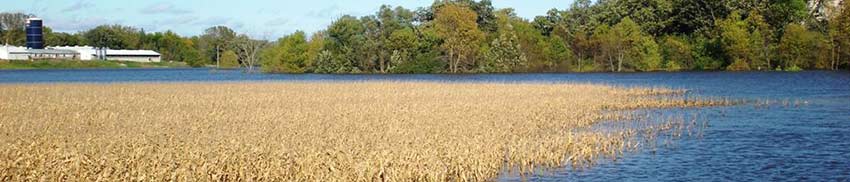
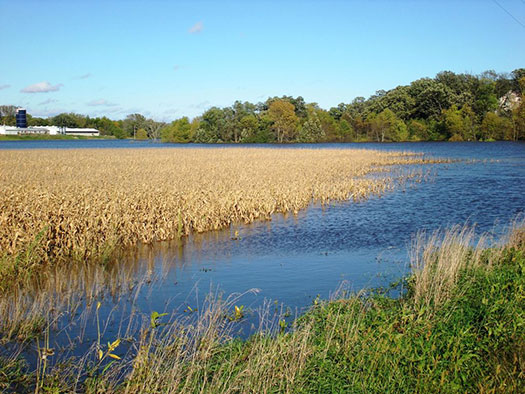
Although spring flooding of crops is a much more common problem, heavy rainfall in late summer and fall occasionally leads to flooding of fields at or near crop maturity. In many cases, late-season flooding is associated with landfall of tropical storms or hurricanes, which may cause severe wind damage in addition to flooding damage. By virtue of ear height alone, corn fields at maturity are tolerant to moderate levels of flooding; however, flood waters that submerge the ears can cause severe grain quality reductions.
The extent of damage from fall flooding can depend on the source and depth of flood waters, the stage of crop maturity, the duration of flooding, the amount of lodging caused by flowing water, and other environmental factors. The best course of action for dealing with flood-damaged corn will greatly depend on the specific circumstances and conditions of the flooded field. In some cases, quick action may be necessary to determine the best course of action and salvage as much of the crop as possible.
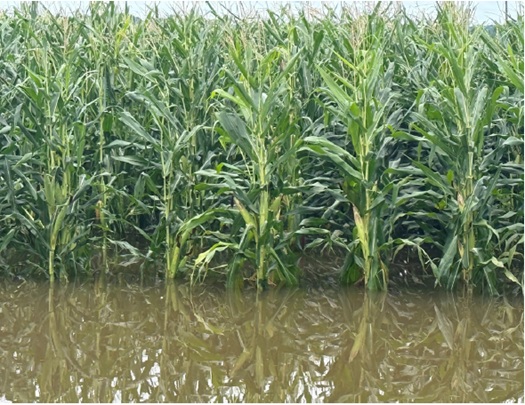
When flood damage to corn has occurred, the first step should be to contact your crop insurance agent. Per the USDA Risk Management Agency website: “Producers with Federal crop insurance coverage administered by RMA — and the Federal Crop Insurance Corporation (FCIC) — should contact their crop insurance agent to file a Notice of Loss in the event of crop damage. Producers should report crop damage within 72 hours of damage discovery and follow up in writing within 15 days.”
Management of Submerged Grain
When dealing with late-season flooding in corn two important questions must be immediately addressed because they have major implications for subsequent courses of action:
- Did the flooding cause the ears to be submerged?
- What was the source of the flood water?
Grain that has been submerged by uncontrolled flood waters is considered adulterated under the Federal Food, Drug and Cosmetic Act. Adulterated grain is prohibited from entering human food channels and cannot be put in commercial facilities of any type where there would be a chance of the grain entering human or animal food. This makes it very important to identify any portions of a field in which some or all the ears were submerged in water.
| Uncontrolled flowing water that originated outside a field may have picked up contaminants — such as sewage, chemicals, heavy metals or pathogenic microorganisms. |
The source of the flood water is important because of how the FDA defines flooding. Flooding, as defined by the FDA, “is the flowing or overflowing of a field with water outside a grower’s control,” which would include water from streams or rivers overflowing their banks that cause the field to be flooded with water that originated outside the field. The reason for this distinction is that uncontrolled flowing water that originated outside a field may have picked up contaminants – such as sewage, chemicals, heavy metals or pathogenic microorganisms – whereas “ponding” of water in low-lying areas of a field after heavy rainfall is less likely to contain contaminants and therefore is treated differently than “flooding” by the FDA.
If Grain is Considered Adulterated
If grain is considered adulterated due to exposure to uncontrolled flood water, there is no practical method of reconditioning the grain that will provide a reasonable assurance of human food safety. Therefore, the FDA recommends that these crops be disposed of in a manner that ensures they are kept separate from crops that have not been flood damaged to avoid adulterating clean crops.
In some cases, it may be possible to recondition adulterated grain for use as livestock feed after drying and extensive testing. The FDA will work with producers to consider requests to recondition an adulterated crop into animal feed on a case-by-case basis. Those requests should be directed to the public affairs specialist located at the closest FDA field office. Before being used in animal feed, adulterated grain should, at a minimum, be tested for mold, bacteria, chemicals and heavy metals contamination.
Depending on conditions near the flooded crop — such as any known release of specific chemical, industrial or environmental contaminants during the flood — additional testing may be necessary to ensure the safety of grain for use in animal food. Adulterated grain should never be fed to dairy animals — which are very sensitive to mycotoxin transmission to milk — or to laying hens, and only to other types of livestock after a documented on-farm livestock feeding plan is approved by a veterinarian. Without an approved reconditioning plan, adulterated grain is effectively a total loss and not recoverable for marketing.
| Without an approved reconditioning plan, adulterated grain is effectively a total loss and not recoverable for marketing. |
Grain Exposed to Ponding
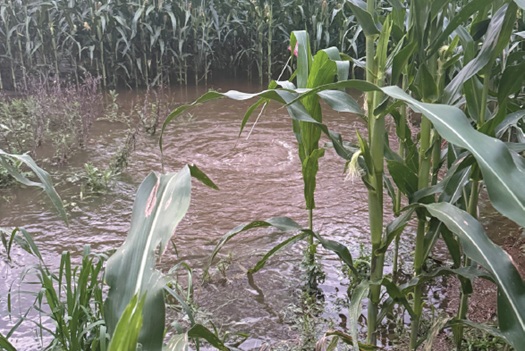
If ears have been submerged by ponded water within a field — as opposed flood waters flowing in from outside the field — the grain is not bound by FDA restrictions and guidelines regarding flooded crops. In this case, ear rot will likely be the primary concern for growers. Ponded water can move fungal spores from infected residue in the soil to the ears, leading to development of fungal rots such as Fusarium, Gibberella or Aspergillus.
Ears caked in mud or submerged for extended periods often experience premature kernel sprouting, known as vivipary, which can further fuel the growth of fungal ear rots. Fungal rots will reduce grain quality, and also have the potential to produce mycotoxins, which are toxic compounds produced by certain fungi that are harmful to livestock.
Ears exposed to flooding or ponding are also susceptible to bacterial ear rot. Bacterial ear rot is caused by one of several species of soft rot bacteria that live as saprophytes on plant debris in the soil. Bacterial ear rot is rare in corn and typically only associated with situations in which ears are immersed in water.
Ear Rots and Mycotoxins
Aspergillus
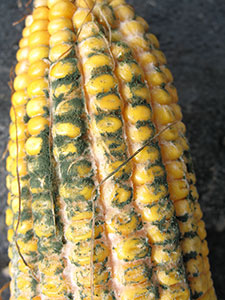
Aflatoxins, produced by A. flavus and A. parasiticus, are the only mycotoxins for which the FDA has established action levels.
Mycotoxin levels can vary among infected ears and do not necessarily correlate to the severity of visible infection.
If Aspergillus ear rot is present in a field, the harvested grain should be tested for aflatoxin.
Gibberella
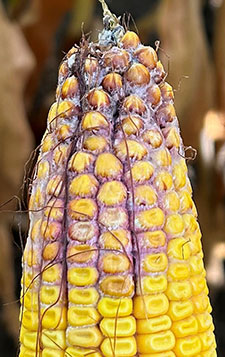
Gibberella zeae can produce two mycotoxins in the infected kernels: deoxynivalenol and zearalenone.
These mycotoxins can be harmful to many monogastric animals, especially swine.
Mycotoxin contamination of grain may or may not accompany ear mold symptoms.
Fusarium
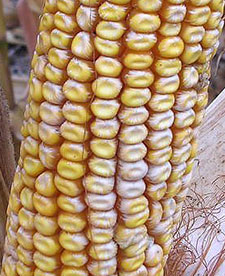
Fusarium verticillioides and Fusarium proliferatium produce fumonisins, the most commonly occur ring mycotoxins in the Corn Belt.
Fumonisins can be fatal to horses and pigs.
Fumonisins can damage organs in other mammals and are carcinogenic.
Harvest Management of Submerged Grain
Scouting fields and scheduling harvest based on crop conditions, as well as grain moisture, are essential in fields impacted by flooding or ponding. If grain from portions of a field affected by flooding or ponding is deemed harvestable based on condition and maturity, harvest should be done as soon as possible to minimize further deterioration of grain quality, even if it means harvesting at a higher-than-usual moisture content. Fungi continue to grow and produce toxins until grain moisture drops below 15%. Grain from affected areas should be harvested, handled and stored separately to avoid contamination of clean grain.
| Grain from affected areas should be harvested, handled and stored separately to avoid contamination of clean grain. |
When harvesting corn near a flooded area, the FDA requires maintaining a 30-foot buffer zone between the standing water/flood line and the crop being harvested. Do not harvest any corn located inside the 30-foot buffer zone for food or commercial markets, even if those specific plants look dry or unaffected. This space serves as a safe barrier against cross-contamination from mud splashing, overhead irrigation or equipment tires.
| Corn affected by ear rots should be dried as quickly as possible after harvest at high temperature to stop further degradation or mycotoxin production. |
Adjusting combine setting to minimize damage to the grain and increasing the fan speed will help to remove lightweight kernels, fines and dust particles, which can help reduce the overall level of mycotoxin contamination of the grain. Diseased kernels can break easily during harvest and handling, increasing the amount of particulate matter and dust in the grain. Fines and dust include pieces of cobs that are often more contaminated with mycotoxins than the grain itself.
Corn With Flooding or Ponding Below Ear Level
The placement of ears on corn plants provides some degree of protection for the grain against moderate levels of flooding or ponding, so a more common scenario is water levels that submerge the lower portion of the plants but not the ears. If corn kernels have not reached physiological maturity, prolonged flooding may inhibit further yield accumulation. Yield losses would be similar to those caused by other weather conditions that result in premature plant death, including drought, frost or disease. In such cases, yield loss is closely tied to the stage of maturity when damage occurs, and the extent of damage to the plant as a whole.
Stage R5 — Beginning Dent
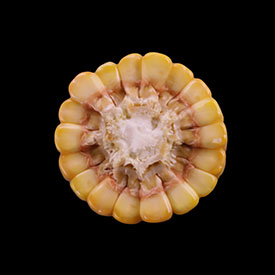
Grain Moisture: 50-55%
400 GDUs to maturity
Yield loss from plant death at this stage: 35-40%
Stage R5.25 — 1/4 milk line
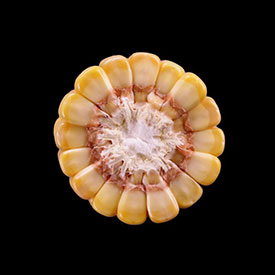
Grain Moisture: 45-35%
300 GDUs to maturity
Yield loss from plant death at this stage: 25-30%
Stage R5.5 — 1/2 milk line
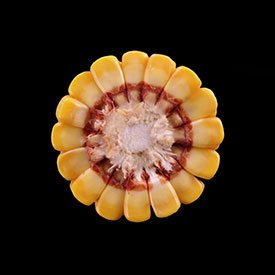
Grain Moisture: 40-45%
0 GDUs to maturity
Yield loss from plant death at this stage: 12-15%
Stage R5.75 — 3/4 milk line
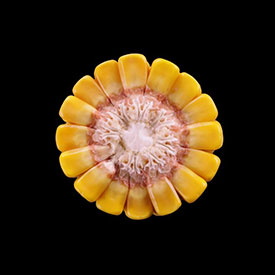
Grain Moisture: 35-40%
100 GDUs to maturity
Yield loss from plant death at this stage: 5-6%
Stage R6 — Physiological Maturity
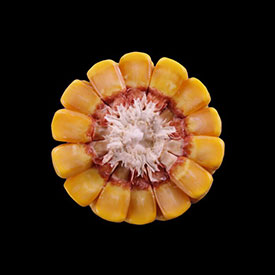
Grain Moisture: 30-35%
0 GDUs to maturity
Yield loss from plant death at this stage: 0%
Plants that were partly submerged in water will be more vulnerable to stalk rots, increasing the likelihood of stalk lodging. As soon as the water has subsided and plants have dried, stalks should be inspected to determine the degree of rot. If rot is extensive, affected areas should be harvested first to minimize further yield loss.
Destroying Unharvestable Corn
For corn that is unharvestable, the main management goal is to destroy the crop in a way that minimizes any negative impacts on the subsequent season’s crop. This includes managing residue and minimizing the amount of volunteer corn the following year. However, before taking any equipment into the field, you must contact your crop insurance agent. An insurance adjuster must inspect the field and officially release it before you destroy, mow or till the crop.
The first objective in managing unharvestable corn is to chop up and evenly distribute crop residue to encourage decomposition. How to best achieve this objective will depend on equipment availability and the condition of the crop in the field (i.e., the degree to which it is standing vs. flat on the ground). Field research in Iowa following the 2020 derecho – in which thousands of acres of corn were rendered unharvestable by storm damage – found that vertical tillage tools and high-speed discs provided good results in terms of sizing and distributing residue. Flail choppers can provide a finer, uniform mulch that decomposes rapidly, but are not as practical over larger acreages. Batwing mowers are another tillage alternative but may struggle with lifting and cutting lodged or flattened corn and may tend to windrow residue rather than distribute it evenly.
The second objective in managing unharvestable corn is to minimize the impact of volunteer corn the following year. The impact of volunteer corn will depend on the stage of development at the time of flooding/ponding. Corn that is stopped during the milk or early dough stages will have poor, weak germination. If the plant was cut off closer to maturity – such as the late dent stage – the germination percentage will be much higher. Tilling flooded or ponded areas in the fall may help reduce volunteer corn the following year by encouraging as much germination as possible during the fall. Maximizing fall germination, and subsequent winter kill, reduces the amount of viable seed left in the soil to germinate the following spring. Shallow spring tillage can kill emerged volunteer corn but may also promote a flush of new emergence by moving ungerminated kernels into the soil.
Delaying planting in areas likely to have abundant volunteer corn will increase the amount of germination prior to planting vs. after planting, thereby reducing the amount of volunteer corn that must be dealt with in-crop. The best management strategy for minimizing the impact of volunteer corn is to rotate into soybeans or another broadleaf crop the following year. Some amount of volunteer corn emergence after planting is unavoidable, and rotating into soybean enables the use of Group 1 grass herbicides for control.
Safety Considerations
Respiratory safety is important whenever working around moldy grain. Harvesting and handling moldy grain may expose farmers to mycotoxins and molds in the grain dust. Breathing grain dust can have adverse effects on the human respiratory system. When dust also has the potential to contain mycotoxins, it is especially necessary to take precautions. Wearing a disposable, 2-strap N95 mask or respirator helps protect against breathing in dusty, moldy, and toxic substances. This type of personal protection equipment will filter out at least 95% of the dust and mold in the air.
| Respiratory safety is important whenever working around moldy grain. |
Additional precautions should be taken when scouting or working in previously flooded areas because of the potential for contaminants brought into the field by the flood water. Growers should avoid touching the soil or dried silt deposits with bare skin. Wearing long sleeves and pants, as well as rubber boots and gloves is recommended when entering previously flooded areas.
References
- Carrijo, D., A. Murillo-Williams, J.C. Williams. R.J. Van Saun, P.D. Esker, N.S. Thompson, and G. Wang. 2024. Managing Crops Damaged by Mid to-late Season Flooding. PennState Extension. https://extension.psu. edu/managing-crops-damaged-by-mid-to-late-season-flooding
- Cavanagh, A., R. Bonanno, and R. Hazzard. 2013. Flooded Crops: Food Safety and Crop Loss Issues. UMass Extension Vegetable Program. University of Massachusetts Amherst. https://www.umass.edu/ agriculture-food-environment/vegetable/fact-sheets/flooded-crops-food safety-crop-loss-issues
- Darr, M., R.W. Bergman, M. Licht, M. Anderson, and A. Rieck-Hinz. 2020. Tillage Options for Unharvestable Corn. Integrated Crop Management News. Iowa State University Extension and Outreach. https://crops. extension.iastate.edu/post/tillage-options-unharvestable-corn
- Faske, T., A. Allen, M. Chilvers, T. Isakeit, D. Mueller, T. Price, D. Smith, A. Tenuta, and K. Wise. 2025. Storing Mycotoxin-Affected Corn Grain. Crop Protection Network. CPN-2004 (revision). doi.org/10.31274/cpn 20190620-007.
- Hartschuh, J., and P. Paul. 2022. Harvesting and Handling Ear Rot-Affected Corn. C.O.R.N. Newsletter 2022-34. Ohio State University Extension. https://agcrops.osu.edu/newsletter/corn-newsletter/2022-34/ harvesting-and-handling-ear-rot-affected-corn
- Hurburgh, C.R., J. Michel, R. Vittetoe, M. Anderson. 2021. Management of Flood-submerged Grain. Integrated Crop Management News. Iowa State University Extension and Outreach. https://crops.extension.iastate.edu/ cropnews/2021/09/management-flood-submerged-grain
- Karisch, B., and J. Parish. 2021. Feeding Flood-Damaged or Sprouted Crops to Livestock. Publication 2596. Mississippi State University Extension. https://extension.msstate.edu/publications/feeding-flood-damaged-or sprouted-crops-livestock
- Thomison, P.R., and A. Geyer. 2017. Effects of Flooding and Ponding on Corn. Ohioline AGF-118. Ohio State University Extension. https:// ohioline.osu.edu/factsheet/agf-118
- Thomison, P.R., P. Paul, and D. Mills. 2007. Late Season Flood Damage to Corn: Management Considerations. C.O.R.N. Newsletter 2007 28. Ohio State University Extension. https://agcrops.osu.edu/ newsletters/2007/28#1
- U.S. Food and Drug Administration. 2011. Guidance for Industry: Evaluating the Safety of Flood-affected Food Crops for Human Consumption. https://www.fda.gov/regulatory-information/search-fda guidance-documents/guidance-industry-evaluating-safety-flood-affected food-crops-human-consumption
- U.S. Food and Drug Administration. 2024. Crops Harvested from Flooded Fields Intended for Animal Food: Questions and Answers. https://www. fda.gov/animal-veterinary/resources-you/crops-harvested-flooded-fields intended-animal-food-questions-and-answers
- U.S. Food and Drug Administration. 2026. Resources for Human and Animal Food Producers Affected by Flooding. https://www.fda.gov/ about-fda/food-products-inspectorate-fpi/resources-human-and-animal food-producers-affected-flooding
The foregoing is provided for informational use only. Contact your Pioneer sales professional for information and suggestions specific to your operation. Product performance is variable and subject to any number of environmental, disease, and pest pressures. Individual results may vary. Pioneer® brand products are provided subject to the terms and conditions of purchase which are part of the labeling and purchase documents.