
Country Selector
Please enter a valid location
New Opportunities with Winter Canola

Crop Insights
From Corteva™ Agriscience — Rayda Krell, Ph.D., Technical Knowledge Solutions Scientist; Mark Jeschke, Ph.D., Agronomy Manager; José Rotundo, Ph.D., Research Scientist and Chad Berghoefer, M.S., Global Product Director for Biofuels
Key Points
- In 2023, Corteva Agriscience, Bunge and Chevron U.S.A. announced a commercial collaboration to introduce proprietary winter canola hybrids that produce plant-based oil with a lower carbon profile.
- Farmers in the Southern U.S. have the opportunity to increase revenue by introducing winter canola into their cropping systems.
- Winter canola can be planted on acres that would have otherwise been left fallow over the winter, in rotation with wheat or other winter crops every 2-3 years.
- Planting is the most critical management stage for establishing a high-yielding winter canola crop.
- Winter canola requires an extended period of cold temperatures to induce flowering the following spring: a process called vernalization.
- Key management practices for winter canola during the spring are nitrogen and fungicide applications.
- A New Revenue Opportunity
- Introduction to Winter Canola
- Adding Winter Canola to Cropping Systems
- Agronomic Management
- Future Innovation for Winter Canola
A New Revenue Opportunity
As agricultural markets face growing complexity and uncertainty, farmers have a new opportunity to secure contracts through an innovative partnership. In 2023, Corteva Agriscience, Bunge and Chevron U.S.A. announced a commercial collaboration to introduce proprietary winter canola hybrids that produce plant-based oil with a lower carbon profile. The goal of this collaboration is to increase the availability of vegetable oil feedstocks for the growing renewable fuels market. Demand for biofuels in North America and Europe is expected to reach 22 billion gallons by 2040. The companies introduced the winter canola crop into the Southern U.S. with an intention to create a new revenue opportunity for farmers to meet this growing demand.
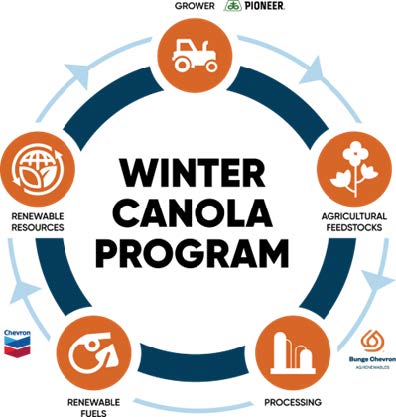
This “field to fuel” partnership secures a market for farmers who plant Pioneer canola seed. Bunge agrees to buy the harvested seed and process the oil. Chevron obtains the oil for processing into renewable fuels. Farmers know they have a secure market for their crop before it is even planted, and it’s grown as a winter rotation crop on ground that might have otherwise been fallow, creating an additional source of income. The program launched in 2023 with a pilot of 5,000 acres. In the second year, the program expanded to 35,000 acres, and in 2025 approximately 115,000 acres were contracted.
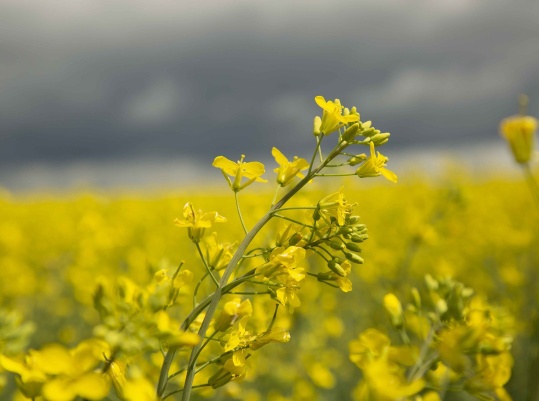
Figure 1. More than 2.7 million acres of canola are currently grown in the United States.
There are several benefits that make growing winter canola hybrids a wise choice, from its high yield potential to enhanced reliability across farming environments to help better manage financial risks. It can be used as a feedstock to produce renewable diesel, biodiesel and sustainable aviation fuel as replacements for petroleum-based chemicals. By pairing unique genetics with recommended agronomic practices, this crop can achieve lower carbon intensity levels while bringing opportunities to adopt sustainable practices and benefit the entire cropping system. And because it is incorporated into the crop rotation as part of a double cropping system, it doesn’t take acres away from food production.
| “There hasn’t been a new cropping system in the United States in quite some time to this size and degree… it would maybe be soybeans back in the 70s… otherwise I can’t think of one.”— Chad Berghoefer, Global Product Director for Biofuels |
Introduction to Winter Canola
Canola is in the Brassicaceae plant family, closely related to mustard and cabbage. Canadian plant breeders developed canola in the 1960s and 1970s from rapeseed plants to eliminate undesirable components and improve the oil profile. Canola contains about 45% oil, which is more than corn (~4%) or soybean (~19%).
More than 2.7 million acres of canola are currently grown in the U.S., primarily in the Northern Plains, Pacific Northwest and Southern Great Plains. There are two types of canola: spring and winter, named as such for when they are planted. Spring canola is planted in early spring (March) and harvested around September. This type accounts for the majority of U.S. canola production. Winter canola is planted in the fall (September), overwinters and is harvested in June. Under ideal conditions, winter canola can yield 20-30% more than spring canola. It is grown in warmer areas like the Southern Great Plains. In the Pacific Northwest, both spring and winter types of canola are grown. In the Northern Plains, spring canola is typically grown, while in the Southern Plains, the winter type is more common.
| Under ideal conditions, winter canola can yield 20-30% more than spring canola. |
Adding Winter Canola to Cropping Systems
Winter and spring canola are similar in terms of their biological makeup, although winter canola has better tolerance to cold and freezing. Winter canola can be planted on acres that would have otherwise been left fallow over the winter. It can be used in rotation with wheat or other double cropping systems every 2-3 years. Winter canola should not entirely replace winter wheat in a double-cropping system. It is best implemented in rotation with winter wheat, as allowing 2-3 years between canola plantings in a field helps prevent the buildup of canola disease pathogens.
Canola has two main advantages in double cropping systems compared to wheat. Canola generally matures earlier than wheat, which can allow earlier planting of the spring crop. Canola also leaves less residue in the field than wheat, which makes no-till planting of the summer crop easier.
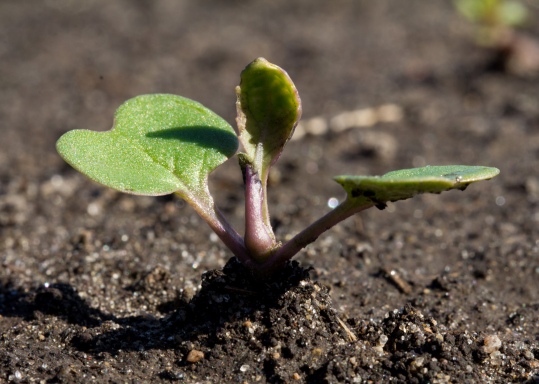
Figure 2. For winter canola, the ideal seedbed is firm, moist and granular, allowing for good seed-to-soil contact.
Winter canola also has some considerations compared to winter wheat, both in terms of suitable environments for production and management practices. Winter canola is slightly more sensitive to low soil pH; significant yield losses for canola can be seen below a pH of 5.7, whereas for wheat, the significant impact occurs below 5.5. Canola is less tolerant of water-logged soil and won’t grow well on land with poor drainage or prone to flooding. The growing point of the canola plant is above ground, making the plant more susceptible to physical damage, environmental conditions (such as early season freezes) and leaf-eating insects during early growth and development.
In terms of management practices, canola has slightly greater demands for nitrogen and sulfur than wheat. It is also sensitive to herbicides typically used in wheat production, so any sprayers used in wheat must be thoroughly cleaned and rinsed.
Agronomic Management
Planting
Planting is the most critical management stage for establishing a high-yielding winter canola crop. Winter canola is susceptible to poor stand establishment if good seed-to-soil contact is not achieved. For winter canola, the ideal seedbed is firm, moist and granular, allowing for good seed-to-soil contact at a depth of ½ to 1 inch, preventing crusting and ensuring emergence. Winter canola prefers well-drained soils vs. soil types that can crust, flood or are prone to stay saturated.
Because of the importance of good seed-to-soil contact, conventional tilled ground is preferrable over no-till. Soil should be firm and finely tilled. A moderate amount of crop residue on the soil surface is desirable to help reduce soil erosion, but it is important to ensure residue does not interfere with seed-to-soil contact. Tillage also helps to ensure a clean, weed-free field for planting. In some instances, a preemergence herbicide is recommended to control grasses including volunteer corn.
Seed is typically treated with insecticide to protect plants from pests such as crucifer flea beetle (Phyllotreta cruciferae), striped flea beetle (Phyllotreta striolata) and cutworms. Insecticide seed treatments such as Lumiderm® offer up to 35 days of protection for critical stages of seedling growth.
Planting dates are important for establishing a successful winter canola crop. Late planting can result in small plants with inadequate reserves to maximize winter survival. Planting too early can also impact winter survival, as excessive fall growth may elevate the growing point of the plants too far above the soil surface, increasing the chance of winterkill. Optimal planting windows differ by geography (Figure 3).
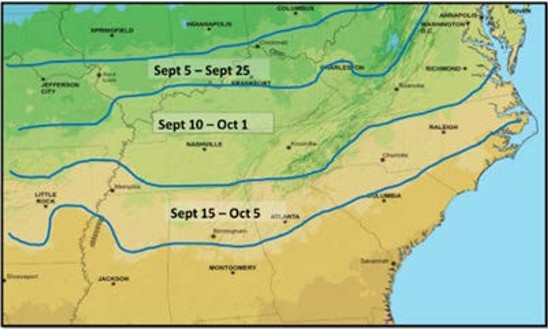
Figure 3. Recommended planting windows for winter canola.
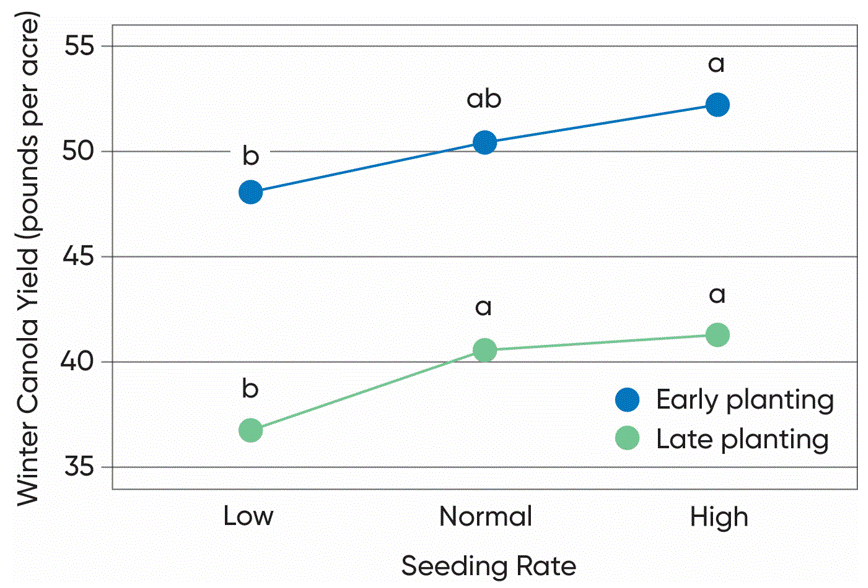
Figure 4. Effect of planting date and seeding rate on winter canola yield from small plot experiments at 10 locations in Arkansas, Illinois, Missouri, Mississippi and Tenessee. Seeding rates were: Low = 3 plants per square foot, Normal = 7 plants per square foot, High = 11 plants per square foot. Planting dates were: Early ~Sept. 15, Late ~Oct. 12.
Seeding rate has a lower impact on yield, but higher seeding rates yielded approximately 2-3 bu/A more than lower rates. Seeding rate should target a plant stand of 6-7 plants per square foot. The number of seed in pounds per acre needed to achieve this stand will depend on seed size (Table 1).
Table 1. Recommended canola seeding rates based on row spacing and seed size.
| Seeds Per Pound | Row Spacing (inches) | ||
|---|---|---|---|
| 7.5 - 15 | 20 | 30 | |
| Seeding Rate (pounds per acre) | |||
| 70,000–80,000 | 4.2 | 2.7 | 2.4 |
| 80,000–90,000 | 3.3 | 2.4 | 2.1 |
| 90,000–100,000 | 3.0 | 2.1 | 1.8 |
| 100,000–110,000 | 2.7 | 1.9 | 1.6 |
| 110,000–120,000 | 2.5 | 1.7 | 1.5 |
Winter canola will sprout in about 5-7 days under the right conditions and requires around 600 GDUs to reach between 5-8 leaves with a stem diameter of ¼ - ½ inch, a height of 6-12 inches and an extensive root system, all of which are ideal for overwintering. The crown should be close to the ground to decrease winter damage. In the rosette stage, the stem thickens and produces smaller leaf cells with a high concentration of soluble substances that increase freeze tolerance. Overwintering is a critical stage for winter canola because it requires an extended period of cold temperatures to induce flowering the following spring. This process is called vernalization.
| Overwintering is a critical stage for winter canola because it requires an extended period of cold temperatures to induce flowering the following spring. |
Vernalization
Vernalization requires exposure to temperatures between 32° and 50°F for a duration of four to 10 weeks. Successful vernalization will help ensure timely flowering and optimal yield, while incomplete vernalization can result in delayed flowering and reduced seed set. Leaves often discolor, turn purple and die in the winter (Figure 5).
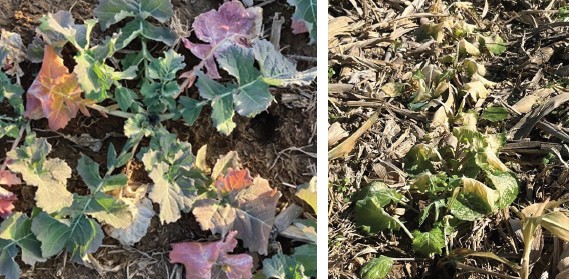
Figure 5. Canola leaves often discolor, turn purple and die during the winter.
Much of the leaf tissue freezes and dies but, as long as the crown does not die, the plants will survive. Winter canola can withstand temperatures as low as -5°F for three to five days, or longer with snow cover (Figure 6).
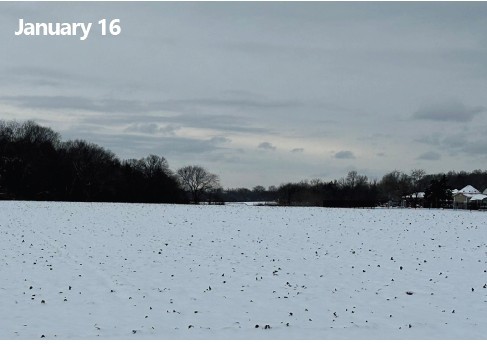
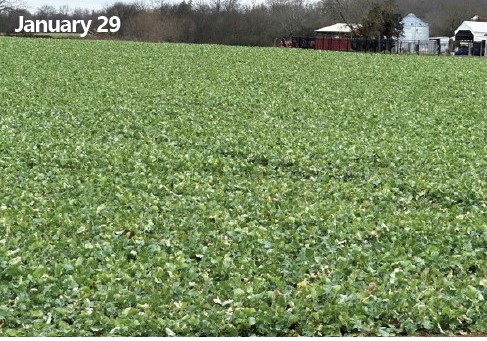
Figure 6. A field planted to winter canola on Jan. 16 (top) following 7 inches of snowfall, and the same field on Jan. 29 (above).
Growth resumes in early spring with new leaves appearing from the plant crown. A cluster of flower buds will become visible at the center of the rosette and rise as the stem rapidly bolts.
Spring Management
In early spring, the winter canola restarts growth. Key management practices during the spring are nitrogen and fungicide applications (Figure 7).
Winter Canola Developmental Stages
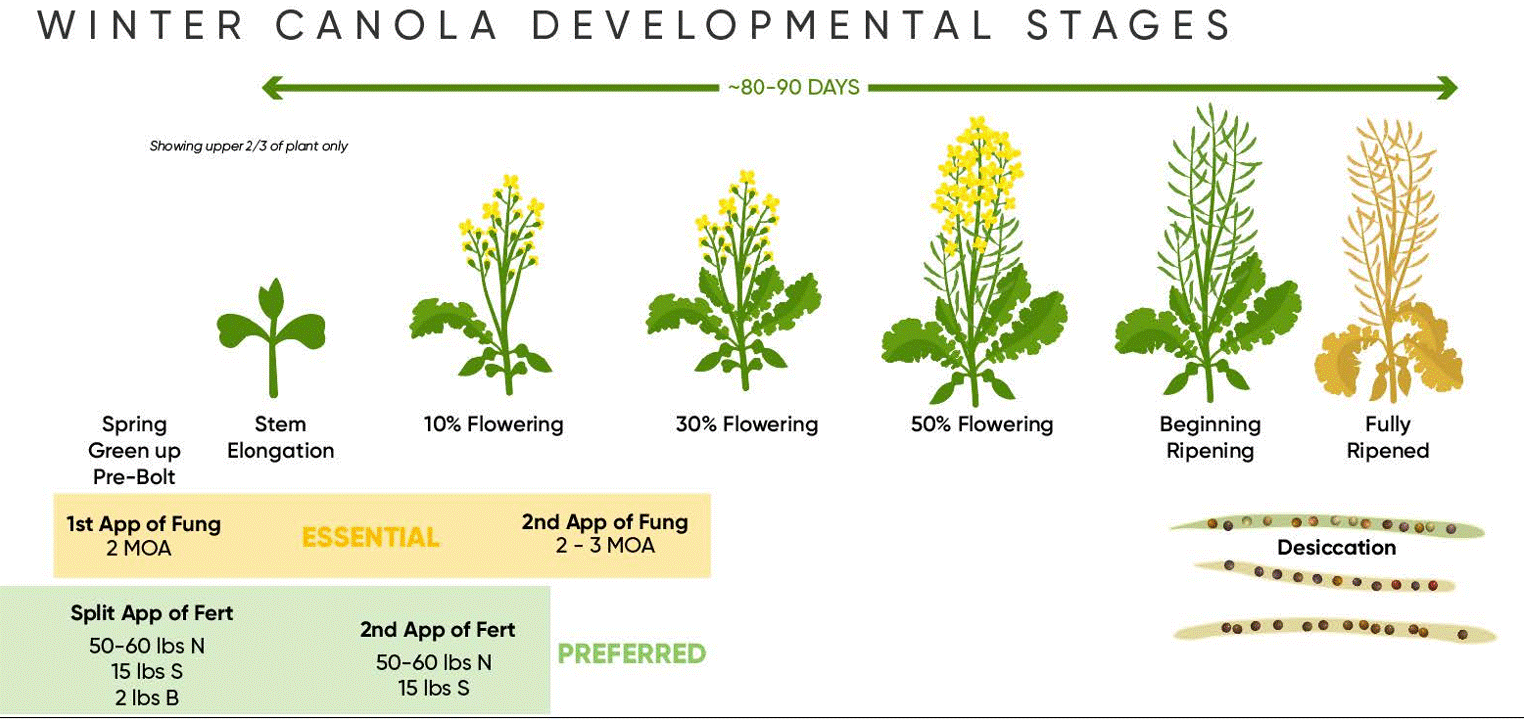
Figure 7. Spring management recommendations for winter canola by crop growth stage. Click here or on the image above for a larger view.
Total nitrogen application of 120-160 pounds per acre as a split application was found to promote yield and lower the nitrogen input by approximately 50 pounds (Figure 8).
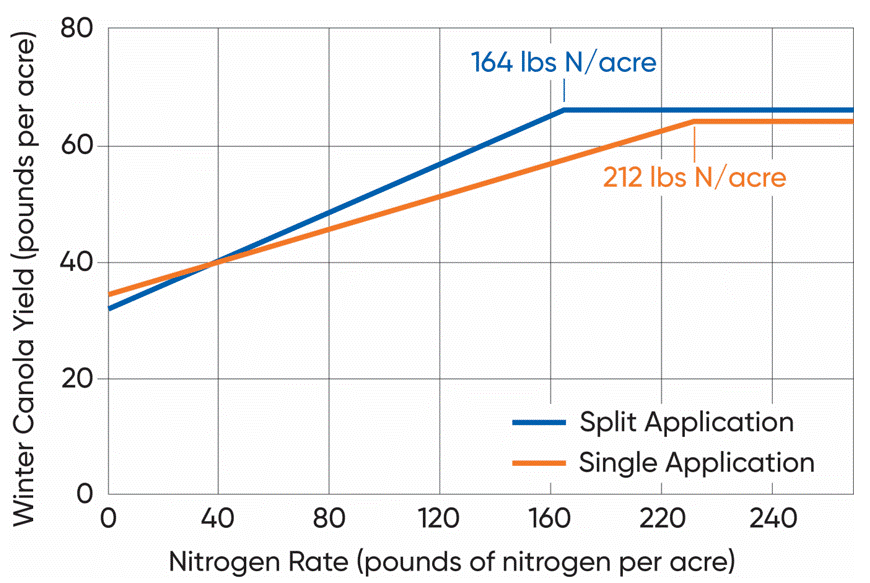
Figure 8. Effect of single and split nitrogen application on winter canola yield at small plot experiments in 10 locations in Alabama, Arkansas, Illinois, Mississippi, Missouri and Tennessee.
The first application can be done in late winter while plants are still dormant. The application can include sulfur (15 pounds per acre) and boron (1 pound per acre). Plants will start to grow when the temperature reaches 40°F. The second nitrogen application can be done approximately one month after the first application when plants are at the 50% flowering stage.
Timely fungicide applications will protect the crop from damaging pathogens such as white mold (Sclerotinia sclerotiorum). The first application should occur at approximately 10% flowering with a single mode of action fungicide. The second application is approximately 21 days later with a dual mode of action fungicide.
Desiccation and Harvest
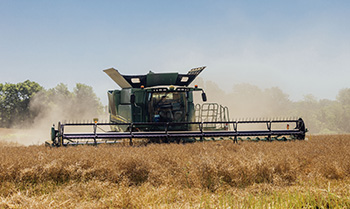
Approximately 70 days after the first flower buds open, canola seeds reach their maximum dry weight. Harvest timing for winter canola is typically between late May and early June. Use of a desiccant is recommended to ensure even moisture and maturity for ease of harvest. Desiccant should be applied when 75-80% of seeds have changed color (Figure 9).
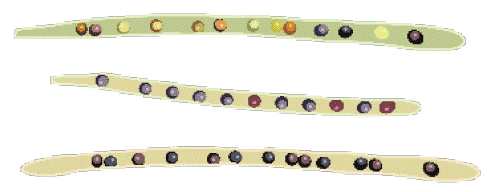
Figure 9. Desiccant should be applied when 75-80% of seeds have changed color. Lower pods will be slightly more mature while upper pods will have a mix of brown and green seeds.
Lower pods may contain completely mature, black seeds, whereas very top pods will contain seeds with a mix of maturation stages and appear green, brown or black. Reglone® is a common desiccant labeled for winter canola and is applied at 1.5-2 pints per acre. Reglone is activated by sunlight and will only desiccate plant material that it comes in contact with, so coverage is important. It’s best to apply on cloudy days or evenings to allow for good coverage. Slight adjustments to harvest equipment may be needed. Canola is harvested at a speed of 2-3 mph.
Future Innovation for Winter Canola
As the global population climbs to 10 billion people, the demand for energy grows with it. The path to meeting the demand will include a mix of energy sources, with renewable fuel supplying an increasing proportion of energy needs each year. The demand for renewable energy sources is driven by consumer sentiment, regulatory requirements and government incentives. The use of renewable fuels helps lower greenhouse gas emissions while meeting increasing energy demands. Today, about 40% of the U.S. corn crop and about 30% of U.S. soybean oil are used to produce biofuels. As demand continues to grow, new agricultural feedstocks are needed, with increased seed crushing and energy refinery capacity.
While current winter canola hybrids already yield well, breeding efforts continue to create new hybrids even better adapted to the southern growing regions. Corteva is continuing to breed for high yield, high oil, shatter-resistance, disease-resistance and compatibility with no-till systems. Additionally, more options for seed treatments that include fungicides are undergoing registration.
As Chad Berghoefer, global product director for biofuels, pointed out, “There are not many times in ag when you get a four-way win. The grower is winning from additional income that is coming in and another cropping system ready to diversify. We win from selling additional seed that would have otherwise been fallow ground, and Bunge and Chevron are winning from a renewable fuels standpoint … this doesn’t happen very often in ag.”
The foregoing is provided for informational use only. Contact your Pioneer sales professional for information and suggestions specific to your operation. Product performance is variable and subject to any number of environmental, disease, and pest pressures. Individual results may vary. Pioneer® brand products are provided subject to the terms and conditions of purchase which are part of the labeling and purchase documents.
