
Country Selector
Please enter a valid location
3/13/2025
Certified Winter Canola Program FAQs
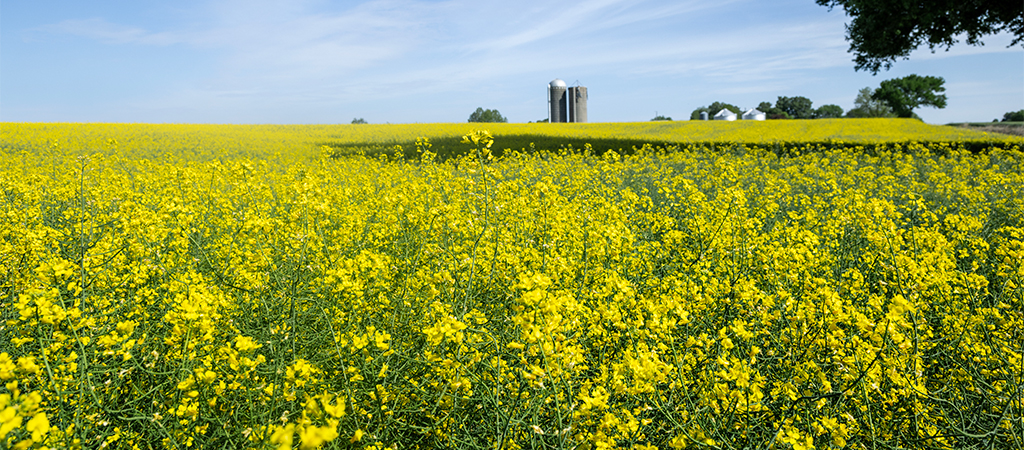
Find answers to your top questions about growing winter canola plus details on the Certified Winter Canola Program provided by Pioneer and Bunge Chevron Ag Renewables.
Certified Winter Canola Program FAQs
Whenever a new crop is available, farmers have lots of questions. We get it. That’s why we’ve gathered the most frequently asked questions about growing winter canola and the Certified Winter Canola Program partnership between Pioneer and Bunge Chevron Ag Renewables right here to help give you all the information you need. Have more questions? You’ll find ways to contact us directly below.
Join the Winter Canola Program Today
Find out if winter canola is a good fit for your operation: visit Grow Gold With Winter Canola.
- Winter Canola Basics
- Winter Canola and Winter Wheat
- Winter Canola Yields
- The Winter Canola Program
- Winter Canola Grain Contracts
- Join the Winter Canola Program Today
Winter Canola Basics
What is winter canola? How is it different from spring canola?
Winter canola is planted in the fall and overwinters to be harvested in the early summer. By comparison, spring canola is planted in early spring and harvested in the fall. The plants are similar in terms of their biological makeup, although winter canola has better tolerance to cold and freezing. Due to its longer growing season, winter canola yields are about 20% to 30% higher than those of spring canola. Winter canola can be used in your current double-cropping system (as a rotational crop following corn or soybeans) or on acres that are fallow in winter.
What is the Certified Winter Canola Program?
The Certified Winter Canola Program provides a contract with farmers to purchase their harvested winter canola crop with the option to use the oil to produce renewable fuel.
Supported by a partnership between Pioneer and Bunge Chevron Ag Renewables, the program is a unique closed-loop system that gives farmers access to a new crop and a new potential source of revenue, with a path to market to sell it. The goal is to increase the availability of vegetable oil feedstocks to help grow the domestic renewable fuels market.

What is the growing season for winter canola?
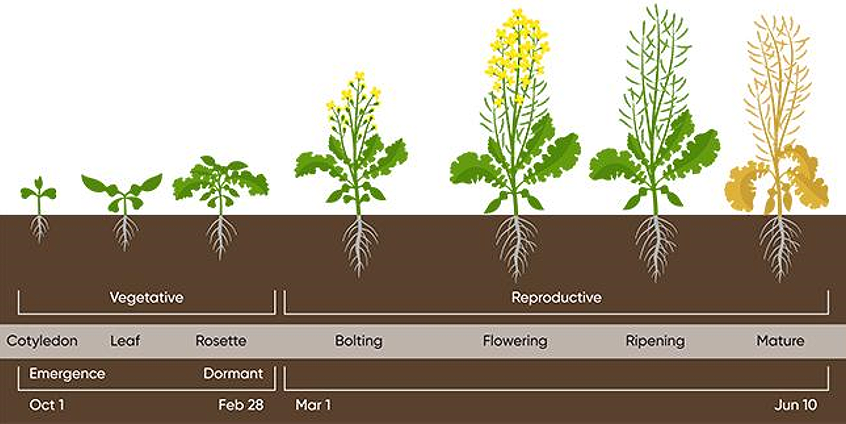
Winter canola is planted in mid- to late September following the summer corn or soybean crop. Winter canola will sprout in about 5 to 7 days under the right conditions and requires around 600 GDUs to reach between 5 and 8 leaves with a stem diameter of 1/4 to 1/2 inch. This ensures the best situation for winter hardiness before becoming dormant (overwintering) during the coldest part of the winter. In early spring, the winter canola restarts growth and is typically harvested in late May or early June, making it a great companion for double-crop soybeans.
How would winter canola fit into my system?
Farmers most often choose one of two ways to work winter canola into their production: (1) planting it in September on what would have been fallow acres, or (2) planting it in rotation with winter wheat or other double-cropping systems every two to three years.
When a new crop (such as winter canola) is added to a rotation, other crops in the rotation tend to have better yields and better resistance to pests. Including winter canola in a crop rotation brings additional key benefits:
- It generally allows for earlier planting of spring crops.
- It permits easy no-till planting of the summer crop.
Winter Canola and Winter Wheat
Does winter canola replace winter wheat in the rotation?
No. Winter canola can be used in rotation with winter wheat since it needs two to three years before planting in the same field for disease prevention. Learn more about how to rotate winter canola and winter wheat.
What does it take to grow winter canola?
Pioneer® brand winter canola hybrids have been specially bred to be planted as a new double-cropping system. Pioneer combined industry-leading research with top genetics to deliver superior disease resistance, winter hardiness, and high oil content.
Production Guidelines
| Planting Dates | Sept. 10 – Oct. 1 on well-drained soils |
|---|---|
| Seedbed Prep | Firm seedbed required |
| Seeding Rate | 2.5 – 3 lbs/acre (depending on seed size) to achieve final stand of 5 – 7 plants per sq ft in late fall |
| Row Spacing | 7.5" – 15" |
| Seeding Depth | 1/4" – 1/2" |
| Weed Control | Preemergence herbicide application is important. Clean seedbed is vital for stand establishment and weed control. Avoid fields with Italian ryegrass or wild mustard/radish. |
| Fertility | An application of nitrogen (along with any other recommended fertilizer components) will be necessary before the bolt phase (stem elongation). This application could be split depending on year. Fall (per acre): Nitrogen=25 lbs, P=80 lbs, K=120 lbs, Sulfur=25 lbs, Boron=2 lbs. Adjust per soil test. Spring (per acre): Applied prior to stem extension: Nitrogen=100 lbs (split applied around 30 days apart to maximize yield), first application to include Sulfur=25 lbs, Boron=2 lbs. |
| Insect Management | Treat per scouting thresholds for aphids and/or cabbage pod weevils. |
| Fungal Disease Management | Aproach® Prima fungicide is highly recommended at early bloom for sclerotinia and other diseases. Application timing: 30% – 50% bloom. An additional application of herbicide may be necessary depending on weed spectrum. |
| Harvest | Late May to early June: Use a desiccant to ensure even moisture/maturity for ease of harvest. Grain moisture needs to be at or below 10% to ensure proper storage. |
How does managing winter canola compare to managing winter wheat?
There are several differences. In comparison to winter wheat, winter canola:
- Is a bit more sensitive to soil pH.
- Does not tolerate soggy fields or water-logged soil; it won't grow well on land with poor drainage or that's prone to flooding.
- Is sensitive to herbicides typically used in wheat production, so any sprayers used in wheat must be thoroughly cleaned and rinsed.
- Needs slightly higher nitrogen and sulfur.
- Has a growth point above ground, making the plant more susceptible to physical damage, environmental conditions (such as early season freezes), and leaf-eating insects during early growth and development.
To increase the chances of plant survival, make sure the crop is planted and has enough time to develop three to four leaves prior to the predicted first freeze date. General guidance is to plant at least six weeks before the first freeze. Learn more about how winter canola and winter wheat compare in this article.
Do I need different equipment to plant and harvest winter canola?
No, you will not need new or different equipment to plant and harvest winter canola. You can use traditional wheat, corn, and soybean planting and harvest equipment with minimal retrofits. Incorporating winter canola into a rotation is easy, as it fits right into current cropping systems. It follows traditional timing and equipment used for winter wheat crop rotations.
Winter Canola Yields
What kind of yields can I expect from winter canola?
Yield results for the inaugural crop of winter canola are exceeding expectations. Based on university trials, we anticipated yields of 45–55 bu/A, with the potential to be higher based on individual operations. On multiple farms covering 3,500+ acres, here are the results:
| Pioneer Yield (Bu/A)* | Pioneer Brand | Farms | Acres | |
|---|---|---|---|---|
| Western Kentucky | 55 | PT303 | 11 | 2,697 |
| West Tennessee | 52 | PT303 | 2 | 860 |
Note: Farm average yields ranged from 43 to 60 bu/A.
*Weighted farm averages
What are the nutrition details of winter canola?
Canola seeds contain approximately 40% oil and 17%–26% protein.
What price can I expect for winter canola?
Like any crop, revenue will vary according to your individual operation and practices. If winter canola is planted on fallow ground, it can offer an opportunity for extra revenue. If you’re familiar with growing winter wheat, the revenue for winter canola is competitive with that crop. Check to see your potential revenue with the local live cash-bid price calculator.
Is crop insurance available for winter canola?
Yes. Talk with your crop insurance provider to discuss options that are available in your area.
What do I need to know about input application requirements for winter canola?
Winter canola does best when weeds are controlled early. The critical weed-free period for canola is from emergence to the plant’s 4-leaf stage1. If you delay weed control until the 6- to 7-leaf stage, you could experience a significant loss in yield2. Because fields and farmers' experiences can vary, consult with your local Pioneer agronomist or sales representative for specific guidance on your land.
1Martin et al., 2001; Harker et al., 2008
220% in a 2008 study from Harker et al.
Herbicide-tolerant canola systems
| HT System | Active(s) | Product* | Group | Application Rate | Crop Stage | Water Volume | Max Passes/ Year |
|---|---|---|---|---|---|---|---|
| Roundup Ready® | Glyphosate | VP480 | 9 | 2 apps. up to 0.5 REL/ac** each or a single app. up to 0.75 REL/ac | Cotyledon to 6-leaf | 5-10 US gal/ac | 2 |
| LibertyLink® | Glufosinate | Interline® | 10 | 1st app: 1.62L/ac; 2nd app: 1.37L/ac; do not exceed 2.97L/ac per season | Cotyledon to early bolting | 10 US gal/ac | 2 |
| Clearfield® | Imazamox/Imazapyr | Ares™ SN*** | 2 | 244ml/ac | 2- to 7-leaf | 5-10 US gal/ac | 1 |
| Optimum® GLY1 | Glyphosate | VP480 | 9 | 2 apps. up to 1.0 REL/ac each | Cotyledon to first flower | 5-10 US gal/ac | 2 |
| Single app. up to 2.0 REL/ac. | Cotyledon to 6-leaf | 1 |

The Winter Canola Program
How does the Certified Winter Canola Program work?
Here’s a quick overview:
- Participating farmers sign a contract with Bunge Chevron Ag Renewables.
- Farmers plant Pioneer brand winter canola.
- At harvest, farmers take winter canola to market at a designated delivery point.
- Bunge Chevron Ag Renewables processes winter canola to create biofuel feedstock.
- Chevron uses biofuel feedstock to produce renewable diesel, biofuels, and sustainable aviation fuel.
Review more specific details on the Winter Canola Program.
Why does the winter canola crop need to be certified?
The increasing demand for renewable energy sources has driven a surge of regulatory requirements and government incentives. To take advantage of the Certified Winter Canola Program, farmers need to certify their farming operation with the International Sustainability and Carbon Certification (ISCC). ISCC certification provides documented proof to crop buyers that your farming operation meets ISCC sustainability requirements, which allows you to:
- Access competitive prices for crops.
- Comply with and access the growing renewable fuels market.
- Demonstrate your commitment to sustainable agriculture.
What are the benefits of participating in the Certified Winter Canola Program?
In addition to providing a potential new income opportunity, adding winter canola to a rotation provides a cover crop that can enhance soil health by holding more nutrients, water, and carbon in the soil. Pioneer winter canola hybrids can be used in a double-crop system following corn or soybeans and won’t interrupt row crop production. Plus, participating farmers get top hybrids and agronomic advice from Pioneer to maximize yield potential. Combined with the demand from Chevron for biofuel and handling, and processing and grain marketing capabilities from Bunge Chevron Ag Renewables, this gives farmers an entirely new opportunity for revenue when they participate in the Certified Winter Canola Program. Read more about the reasons to grow winter canola.
How is the Certified Winter Canola Program different from competitor programs?
Pioneer is building on a century of breeding and agronomic expertise to deliver a locally adapted winter canola hybrid, increasing your chances of a successful harvest. Plus, the partnership with Bunge Chevron Ag Renewables can help provide market stability and contract assurances that all production from enrolled canola acres will be purchased. Simply put: Competitor programs don’t have access to Pioneer technology and agronomic support, and they don’t have the downstream market that we’ve established through this partnership with Bunge Chevron Ag Renewables.
Winter Canola Grain Contracts
Where do I take the winter canola at harvest? What are the delivery locations?
We’ve made it convenient for farmers to get their grain to market. There are multiple elevators designated by Bunge Chevron Ag Renewables that are ready to accept delivery of winter canola. We also continue to expand delivery locations. For specific information on finding a delivery point near you, contact Bunge Chevron Ag Renewables.
Where can I buy Pioneer brand winter canola seed?
Pioneer brand winter canola seed is currently available from authorized retail locations in IL; KY; TN; MO; and AL that sell and service the Pioneer brand. To find a location near you, visit the Winter Canola Program.
Does winter canola replace corn or soybeans in renewable feedstock production?
No. Demand for corn and soybeans is forecasted to continue to be strong, and winter canola isn’t a replacement for those crops.
Will there be future demand for winter canola?
As the world prioritizes reducing greenhouse gas emissions and transitions to lower carbon intensity feedstock sources, the demand for renewable fuels from agricultural crops is expected to increase. As an example of their strong commitment to renewable fuels, Bunge Chevron Ag Renewables LLC is building a new oilseed processing plant in Destrehan, Louisiana, that’s specifically designed to process softseeds, such as winter canola, soybeans, and others.
Can I use biofuels made from feedstocks like winter canola in my operations?
Yes, both biodiesel and renewable diesel can be used in new and existing engines and infrastructure and often without any modification. Go to EnDura Fuels™ to learn more.


