
Country Selector
Please enter a valid location
Corn Hybrid Response to Foliar Fungicide Application – 2025

Agronomy Research Update
Written by Stacie McNinch, Ph.D., Pioneer Agronomy Sciences Leader
Key Findings
- 90% of trial locations showed a positive yield response to foliar fungicide application in 2025 with an average yield advantage of 14.2 bu/A.
- Hybrid selection influenced response consistency — win rates ranged from 100% for top-responding hybrids to less than 50% for others.
- Central Corn Belt locations showed the highest win rates, likely reflecting convergence of foliar disease pressure and trial location placement.
- 2025 was a high-disease-pressure year — a significant southern rust outbreak extended into traditional Corn Belt geographies, likely contributing to above-average fungicide response.
- Objective
- Study Description
- Results
- Conclusions
- References
Objective
- Evaluate fungicide yield response across diverse environments — quantify the magnitude and consistency of fungicide yield response across 32 field locations.
- Identify hybrid-specific fungicide response patterns — determine which seed products show the greatest yield advantage from fungicide application.
- Assess geographic and agronomic factors — understand how latitude, planting timing, CRM and drainage class impact the magnitude of fungicide yield advantage.
Study Description
- Year: 2025
- Locations: 32 trial sites across IA, MN, WI, IN, OH, IL, SD, NE, MI and ND (Figure 1)
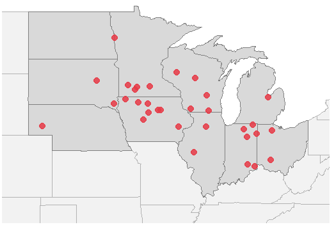
Figure 1. Trial locations of the 32 field sites from the study, 2025.
- Planting Window: April 13 – June 2, 2025
- Experimental Design: Split-plot comparing treated vs. untreated check
- Hybrids Evaluated: 90+ Pioneer® brand corn products across all locations; 78-day to 118-day RM (avg. 16 hybrids per location)
- Fungicides: Forcivo™ (24 locations), Aproach® Prima (1 location), competitive 3-way (1 location), Not specified (6 locations)
- Application Timing: VT to R1 growth stage
- Data Collected: Grain yield adjusted to 15.5% moisture
Results
Overall Response to Fungicide Application
- Foliar fungicide application provided reliable yield protection across the trial network in 2025 — a year marked by significant disease pressure including a southern rust outbreak that pushed further north than typical (Figure 2).
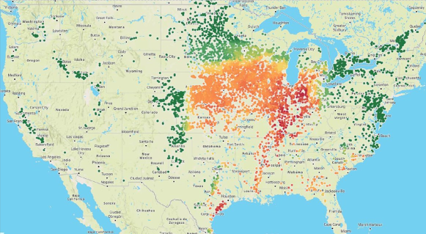
Figure 2. Southern rust disease risk across the U.S. Corn Belt in August of 2025, generated from the Corteva Disease Risk Model.
- On average, locations had a positive response to fungicide application with a 90% win rate.
- The average yield response of hybrids treated with fungicide relative to their untreated check was +14.2 bu/A.
Table 1. Average response to fungicide treatment and yield advantage over the untreated check (UTC), 2025.
Response Trials Value Positive 29 90% Negative 3 9% Avg. Yield Advantage 32 +14.2 bu/A
2025 Disease Pressure
- The 2025 growing season featured atypical disease pressure across much of the trial footprint. A southern rust outbreak — confirmed across multiple states by late July — combined with tar spot, gray leaf spot and northern corn leaf blight to create conditions highly favorable for fungicide response.
Win Rate by Latitude Zone
- North Central and Southern zones showed highest win rates — 100% win rate in both zones (14 combined trials) across N. Iowa, S. Wisconsin, S. Indiana, S. Ohio and C. Illinois.
- Central zone delivered strong results with largest sample size — 90% win rate across 10 trials in C. Iowa, N. Indiana, N. Ohio and Nebraska provides highest confidence estimate.
- Northern zones showed more variable response — Upper Midwest (80%) and Far North (67%) win rates suggest short-season environments and reduced disease pressure limit fungicide ROI.
- All zones remained above 67% win rate — fungicide application is broadly beneficial across the geography.
Table 2. Average response to fungicide treatment and yield advantage over the untreated check (UTC), 2025.
Latitude Region Trials Yield Response (bu/A) <40°N Southern (IN, OH, IL) 5 18.7 40-42°N Central (IA, IN, OH, NE) 10 11.2 42-44°N North Central (IA, WI) 9 21.3 44-45°N Upper Midwest (MN, SD, WI) 5 14.6 >45°N Far North (ND) 3 8.4
15 Hybrids with Greatest Yield Response to Fungicide
- Fungicide yield protection ranged from +10 to +37 bu/A among the most responsive hybrids — Table 3 ranks the top 15 products by average yield advantage across locations.
Table 3. 15 hybrids with the greatest fungicide yield response, ranked by win rate. Win rate = percentage of locations where fungicide outyielding UTC. Only includes hybrids tested at > 4 locations.
Seed Product Wins Locs Win Rate Average Response (bu/A) P12517V (V,LL,RR2,ENL) 9 9 100% 36.8 P1027AM (AM,LL,RR2) 6 6 100% 33.6 P12065Q (Q,LL,RR2) 7 7 100% 25.1 P11056V (V,LL,RR2,ENL) 7 7 100% 22.4 P10625V (V,LL,RR2,ENL) 6 6 100% 19.7 P13050V (V,LL,RR2,ENL) 5 5 100% 18.3 P08527V (V,LL,RR2,ENL) 9 10 90% 21.2 P10300PCE (PW,ENL,RIB) 7 8 88% 24.6 P02405V (V,LL,RR2,ENL) 14 16 88% 12.8 P03115V (V,LL,RR2,ENL) 10 12 83% 10.2 P0859AM (AM,LL,RR2) 10 13 77% 14.1 P13777PCE (PW,ENL,RIB) 6 8 75% 11.5 P05737PCE (PW,ENL,RIB) 8 11 73% 15.3 P014830Q (Q,LL,RR2) 10 14 71% 13.7 P98125V (V,LL,RR2,ENL) 10 14 71% 12.9 - Six hybrids showed consistent yield protection across all locations tested — P12517V (+36.8 bu/A), P1027AM (+33.6 bu/A), P12065Q (+25.1 bu/A), P11056V (+22.4 bu/ A), P10625V (+19.7 bu/A) and P13050V (+18.3 bu/A) responded positively at every trial site.
- All top 15 hybrids averaged at least +10 bu/A yield protection — reinforcing the value of scouting and targeted fungicide application when disease risk is present.
15 Hybrids with Least Yield Response to Fungicide
- Bottom 15 hybrids showed smaller and more variable yield response to fungicide — averaging +2 to +9 bu/A, with several hybrids showing near-zero average response across locations (Table 4).
Table 4. 15 hybrids with the smallest fungicide yield response, ranked by win rate. Win rate = percentage of locations where fungicide outyielding UTC. Only includes hybrids tested at > 4 locations.
Seed Product Wins Locs Win Rate Average Response (bu/A) P12517V (V,LL,RR2,ENL) 10 15 67% 8.7 P1027AM (AM,LL,RR2) 9 14 64% 11.2 P12065Q (Q,LL,RR2) 6 10 60% 5.8 P11056V (V,LL,RR2,ENL) 4 7 57% 9.4 P10625V (V,LL,RR2,ENL) 4 7 57% 6.2 P13050V (V,LL,RR2,ENL) 4 7 57% 4.9 P08527V (V,LL,RR2,ENL) 3 6 50% 3.1 P10300PCE (PW,ENL,RIB) 4 8 50% -2.1 P02405V (V,LL,RR2,ENL) 4 8 50% 4.3 P03115V (V,LL,RR2,ENL) 5 10 50% -0.8 P0859AM (AM,LL,RR2) 2 4 50% 1.7 P13777PCE (PW,ENL,RIB) 3 6 50% 7.9 P05737PCE (PW,ENL,RIB) 3 6 50% 6.4 P014830Q (Q,LL,RR2) 2 5 40% -1.4 P98125V (V,LL,RR2,ENL) 2 5 40% 5.7 - Lower response does not necessarily indicate stronger disease tolerance — differences may reflect lower disease pressure at trial locations, fewer observations or other environmental factors rather than inherent hybrid resistance.
- These hybrids may still benefit from fungicide under the right conditions — individual location results varied widely within this group, and growers should rely on local scouting and disease forecasts rather than assuming fungicide is unnecessary.
Conclusions
- Fungicide application provided meaningful yield protection across most trial locations in 2025 — average yield advantage of +14.2 bu/A across 32 locations, with 28 of 32 locations showing a positive response. The 2025 average exceeded the long-term trial average of +7.4 bu/A (Jeschke, 2025) as well as published meta-analysis estimates of +6-7 bu/A for dual mode of action (MOA) products and +9 bu/A for triple MOA products (Paul et al., 2011; Wise et al., 2019), consistent with elevated southern rust and other disease pressure observed across the Corn Belt in 2025.
- Yield response varied by hybrid — the most responsive hybrids averaged +26.0 bu/A while the least responsive showed near-zero average response. Observed differences reflect a combination of disease pressure at trial locations, hybrid genetic resistance profiles and environmental factors, and should not be interpreted solely as a measure of hybrid disease susceptibility.
- Geography influenced fungicide yield response — the North Central zone (N. Iowa, S. Wisconsin) showed the strongest response, likely reflecting both elevated disease pressure and the highest concentration of trials in this region. Initial analysis suggested CRM and planting date also influenced response, but when examined within a geographically controlled subset of Iowa locations, these effects were not distinguishable from geographic variation and were therefore excluded from the final analysis.
- Results reinforce the value of in-season scouting and disease risk tools — fungicide response was not uniform across locations or hybrids, underscoring the need for site-specific decision-making using tools such as the Corteva Disease Risk Model to identify fields and conditions most likely to benefit from application.
References
- Jeschke, M. 2025. Maximizing the Value of Foliar Fungicides in Corn. Pioneer Crop Insights Vol. 35 No. 5. Corteva Agriscience. Johnston, IA.
- Paul, P.A., L.V. Madden, C.A. Bradley, A.E. Robertson, G.P. Munkvold, G. Shaner, K.A. Wise, D.K. Malvick, T.W. Allen, A. Grybauskas, P. Vincelli, and P. Esker. 2011. Meta-analysis of yield response of hybrid field corn to foliar fungicides in the U.S. Corn Belt. Phytopathology 101:1122- 1132.
- Wise, K.A., D. Smith, A. Freije, D.S. Mueller, Y. Kandel, T. Allen, C.A. Bradley, E. Byamukama, M. Chilvers, T. Faske, A. Friskop, C. Hollier, T.A. Jackson- Ziems, H. Kelly, R. Kemerait, P. Price III, A. Robertson, and A. Tenuta. 2019. Meta-analysis of yield response of foliar fungicide-treated hybrid corn in the United States and Ontario, Canada. PLoS One 14:e0217510.




AM - Optimum® AcreMax® Insect Protection system with YGCB, HX1, LL, RR2. Contains a single-bag integrated refuge solution for above-ground insects. In EPA-designated cotton growing counties, a 20% separate corn borer refuge must be planted with Optimum AcreMax products. Q (Qrome®) - Contains a single-bag integrated refuge solution for above- and below-ground insects. The major component contains the Agrisure® RW trait, the Bt trait, and the Herculex® XTRA genes. In EPA-designated cotton growing counties, a 20% separate corn borer refuge must be planted with Qrome products. V – Vorceed™ Enlist® products with V, LL, RR, ENL. Contains a single-bag integrated refuge solution with multiple modes of action for above- and below-ground insects. The major component contains the Herculex® XTRA genes, the RW3 trait and the VTP trait. In EPA-designated cotton growing counties, a 20% separate corn borer refuge must be planted for Vorceed Enlist products. PCE – Powercore® Enlist® Refuge Advanced® corn products with HX1, VTP, ENL, LL, RR2. Contains a single-bag integrated refuge solution for above-ground insects. In EPA-designated cotton-growing counties, a 20% separate corn borer refuge must be planted with PowerCore Enlist Refuge Advanced products. PCUE – Powercore® UltraEnlist® Refuge Advanced® corn products with AVBL, HX1, VTP, ENL, LL, RR2. Contains a single-bag integrated refuge solution for above-ground insects. In EPA-designated cotton-growing counties, a 20% separate corn borer refuge must be planted with PowerCore Ultra Enlist Refuge Advanced products.
POWERCORE® is a registered trademark of Bayer Group. POWERCORE® multi-event technology developed by Corteva Agriscience and Bayer Group. LibertyLink® and the Water Droplet Design are registered trademarks of BASF. ®Roundup and Roundup Ready are registered trademarks of Bayer Group. Agrisure® and Agrisure Viptera® are registered trademarks of, and used under license from, a Syngenta Group Company. Agrisure® technology incorporated into these seeds is commercialized under a license from Syngenta Crop Protection AG. Always follow IRM, grain marketing and all other stewardship practices and pesticide label directions. B.t. products may not yet be registered in all states. Check with your seed representative for the registration status in your state.
Following burndown, Enlist Duo® and Enlist One® herbicides with Colex-D® technology are the only herbicides containing 2,4-D that are authorized for preemergence and postemergence use with Enlist® crops. Consult Enlist® herbicide labels for weed species controlled. Enlist Duo and Enlist One herbicides are not registered for use or sale in all states and counties; are not registered in AK, CA, CT, HI, ID, MA, ME, MT, NH, NV, OR, RI, UT, VT, WA and WY; and have additional subcounty restrictions in AL, GA, TN and TX, while existing county restrictions still remain in FL. All users must check “Bulletins Live! Two” no earlier than six months before using Enlist One or Enlist Duo. To obtain “Bulletins,” consult epa.gov/espp/, call 1-844-447-3813, or email ESPP@epa.gov. You must use the “Bulletin” valid for the month and state and county in which Enlist One or Enlist Duo are being applied. Contact your state pesticide regulatory agency if you have questions about the registration status of Enlist® herbicides in your area. ALWAYS READ AND FOLLOW PESTICIDE LABEL DIRECTIONS. IT IS A VIOLATION OF FEDERAL AND STATE LAW TO USE ANY PESTICIDE PRODUCT OTHER THAN IN ACCORDANCE WITH ITS LABELING. ONLY USE FORMULATIONS THAT ARE SPECIFICALLY LABELED FOR SUCH USE IN THE STATE OF APPLICATION. USE OF PESTICIDE PRODUCTS, INCLUDING, WITHOUT LIMITATION, 2,4-D-CONTAINING PRODUCTS NOT AUTHORIZED FOR USE WITH ENLIST CROPS, MAY RESULT IN OFF-TARGET DAMAGE TO SENSITIVE CROPS/AREAS AND/OR SUSCEPTIBLE PLANTS, IN ADDITION TO CIVIL AND/OR CRIMINAL PENALTIES. Additional product-specific stewardship requirements for Enlist crops, including the Enlist Product Use Guide, can be found at www.traitstewardship.com.
The foregoing is provided for informational use only. Please contact your Pioneer sales professional for information and suggestions specific to your operation. Product performance is variable and depends on many factors such as moisture and heat stress, soil type, management practices and environmental stress as well as disease and pest pressures. Individual results may vary. Pioneer® brand products are provided subject to the terms and conditions of purchase which are part of the labeling and purchase documents.